A Sense of Sky

I’ve lived in New York City for almost thirty years and love it as much now as I did when I first moved here. But one of the things I miss, something from my girlhood, is the sense of sky — the wide-open vistas of the Midwest.

Image (483)

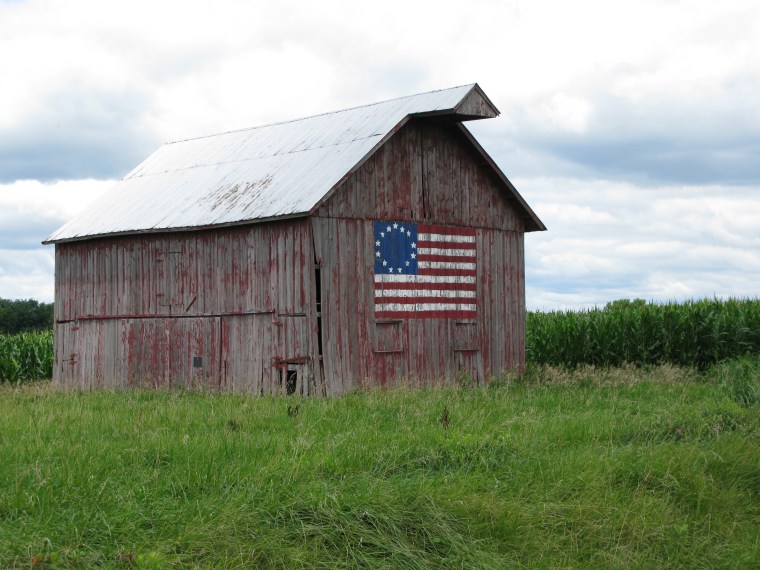
It’s a feeling of proportion you become aware of, driving along the Illinois fields, where the sky seems to take up a good two-thirds of the world. Here in New York I catch glimpses of sunsets or storm clouds between tall buildings, or over the rooftops. Beautiful, but without the sense that the sky dominates.

farmhouse Canva

I grew up with the drama of stormy skies over far-reaching fields, and the endless blue skies of summer with high, puffy white clouds, subtly changing, holding form just long enough for you to find an image before shape shifting again. To stand under such skies is humbling, and at the same time, makes you feel a part of something grand.

Image (477)

That sense of sky has found its way into some of my stories. In Christmastime 1943: A Love Story (Book Four of Six), a secondary plot takes place on a farm in Illinois. At different times throughout the story, Ed, the old farmhand, Kate, the owner of the farm, Ursula, her beautiful daughter, and Friedrich, the German POW, all look to the winter sky and find solace and beauty, or a reflection of their internal state.

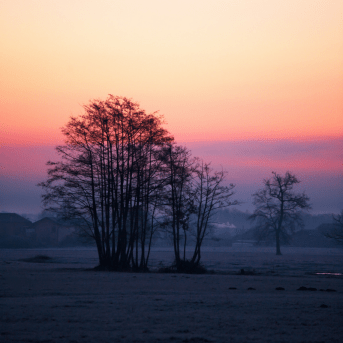
“[Ed] gazed out over the fields of corn stubble at the magnificent sunset. Bold streaks of orange and purple spanned the sky….Beautiful and strong – just like the women inside the farmhouse, he thought with a shake of his head.”sunset fields 1943.png

“[Ursula] stood at her window and gazed out over the late afternoon fields. The stubble of the corn fields shone a rosy gold in the setting sun. The sky filled with sweeping bands of deep blue and gray – at the horizon a shimmer of pink pulled at her heart. The sad beauty of the day filled her with longing.”

So I find that though I’ve moved away from Midwestern skies, they are still with me here, in New York City.

1943


Irises of May

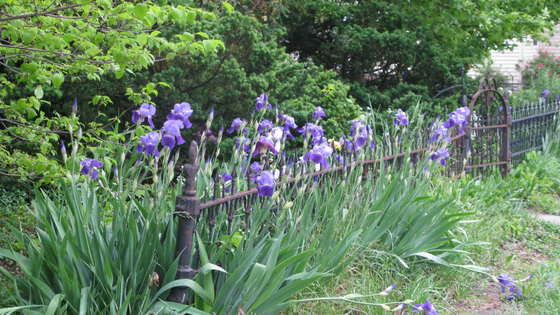
irises railing Canva

I love the irises I come across growing along old fences, or inside a garden, in different stages of unfurling: some still in tightly bound spears with tips of saturated color, others gracefully opened in full display. Like peonies and other spring flowers, their relatively brief  appearance creates a sort of urgency to appreciate them before they disappear with the season.

pix (554)

Irises always remind me of a visit to my hometown many years ago. On a walk through the side streets, I came upon a small house with a startling burst of color alongside a fence. From a thick row of slender green blades bloomed bunches and bunches of irises — tall and elegant, in colors of ethereal blue, dusky mauve, yellow, and combinations of royal purple and apricot, white and watercolor rose, lavender and deep gold. I had to step closer to marvel at the rich array, so casually crowded along the fence.

The owner of the house, an elderly woman with a warm smile, caught me admiring her flowers and offered to show me her garden in the back of the house. It was even more breath-taking — tucked away from view, full of winding brick paths and interesting details set among gorgeous flowers. It must have taken her years to create such a work of art. When I told her how much my mother would love the garden, she graciously welcomed us to stroll through it whenever we wanted, even if she wasn’t at home. I had the feeling that the woman’s generosity and kindness came from the same internal place as her desire to create the beautiful garden — a place that takes pleasure in life and wants to add to the world’s beauty. I brought my mom back later that day, and the delight she took in the garden remains etched in my mind long years since.

I’ve often thought of that May garden, and wondered how many other secret gardens there are in my town, and in the cities I have lived in, and the places I have visited. How many people create works of beauty for the sheer joy and pleasure they bring? How many so freely and graciously offer their efforts to passers-by in patches of flowers, or window boxes trailing with color, or in potted blooms in front of a house? Like the best parts of ourselves, flowers require tending to be coaxed into being, to be nourished with love and sunlight and weeding and watering. The result is a sort of two-way gift that is offered back to the world in a communication beyond words.

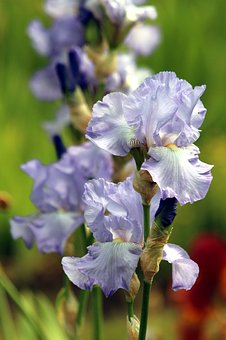
pale blue iris

Over the weekend, I took out my terracotta pots and planted them with rose and purple stock, pink geraniums, and scarlet carnations, and set them on my steps just outside the door.

The End of April

2 blossoming trees

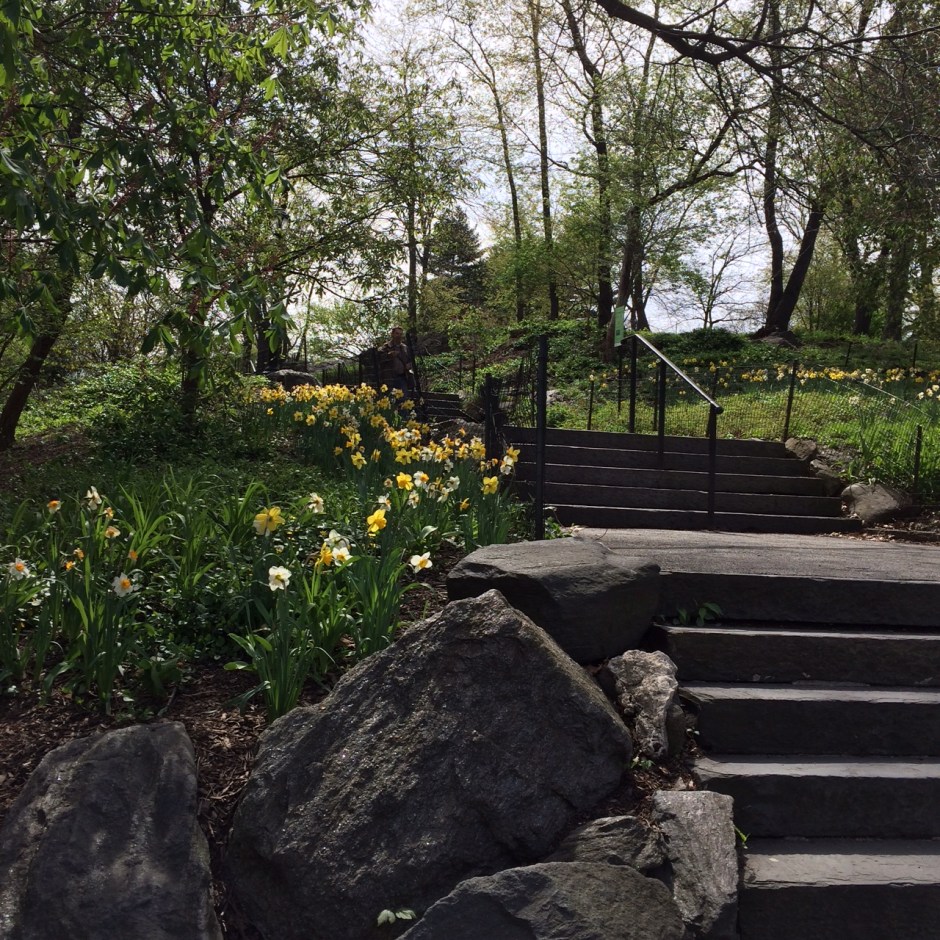
Do schoolchildren still sing the song “April Showers”? I think every year since I was a girl, some line, if not the whole song, runs through my mind in April. In an involuntary response, part of the melody just pops into my head when someone laments the rain, or when I come across a patch daffodils or violets.

daffodils for blog

A quick online search shows that the song was written in 1921 (in a period of post-war, pre-Depression optimism), and was introduced by Al Jolson in a Broadway musical. As can only be expected, the song’s  relentless optimism inspired parodies: “When April showers, she never closes the curtain…,” and a skit where a bucket of water is thrown on the far too cheerful performer. [https://en.wikipedia.org/wiki/April_Showers] (Some versions of the song, as with Judy Garland’s, begin with “When” rather than “Though.”)

April showers lyrics

Such sentimentality lingered on in the optimism of the 1960’s schoolroom, at least in small-town Illinois. On an old upright piano, our music teacher played from a repertoire that ranged from war songs to the flowers of spring, and the over-sized class of baby-boomers belted out tunes about violets, caissons rolling along, and flowers that bloom when the fairies sing.

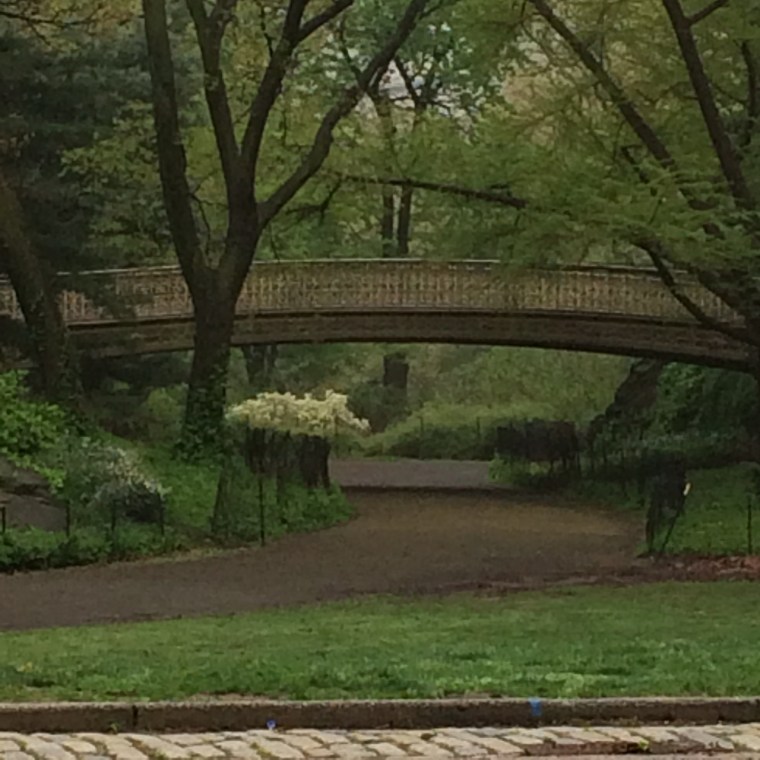
I love the rain of April and the color it brings. On such days the air itself seems tinged with green, so lush are the leaves and grass.

2 bridge

Green, rainy places have always held the most allure for me. On a trip years ago, I fell in love with Ireland and the Lake District in England — and very much want to go back. And a trip to Bangladesh had me gasping at such luxuriant green everywhere.

I actually moved to Seattle when I was young because I had heard that it was beautiful and hilly and green — and rainy. A soft rain was common enough, but dramatic storms with thunder and lightning, like Midwestern storms, were rare. Still, the soft rains kept Seattle blooming in flowers nearly all year long, and it lived up to its reputation as a beautiful, hilly, green city. (They call it the Emerald City and the last time I was there, they even had a yellow brick road to prove it.)

New York, like the Midwest, has seasons of intense green — April through June, for the most part. So when April showers come my way, I take my umbrella and indulge in the wealth of green.

2 post iris


2 tulips Columbus Circle

The Comfort of Books

Evangeline book

The Comfort of Books

We all know people who insist that there is nothing like holding a good, old-fashioned book in their hands. They swear that nothing compares to the heft, the feel, the companionability, the smell of a real book. I tend to agree with them.

Milton


But I also see the advantages of digital books. My e-books have come to the rescue on numerous occasions: stalled subway trains, long delays at the dentist or doctor’s office, travelling by plane.

And yet – there is something special about a physical book, as there is about crowded bookshelves, and browsing through a bookstore. Books offer a kind of comfort in their sheer presence.

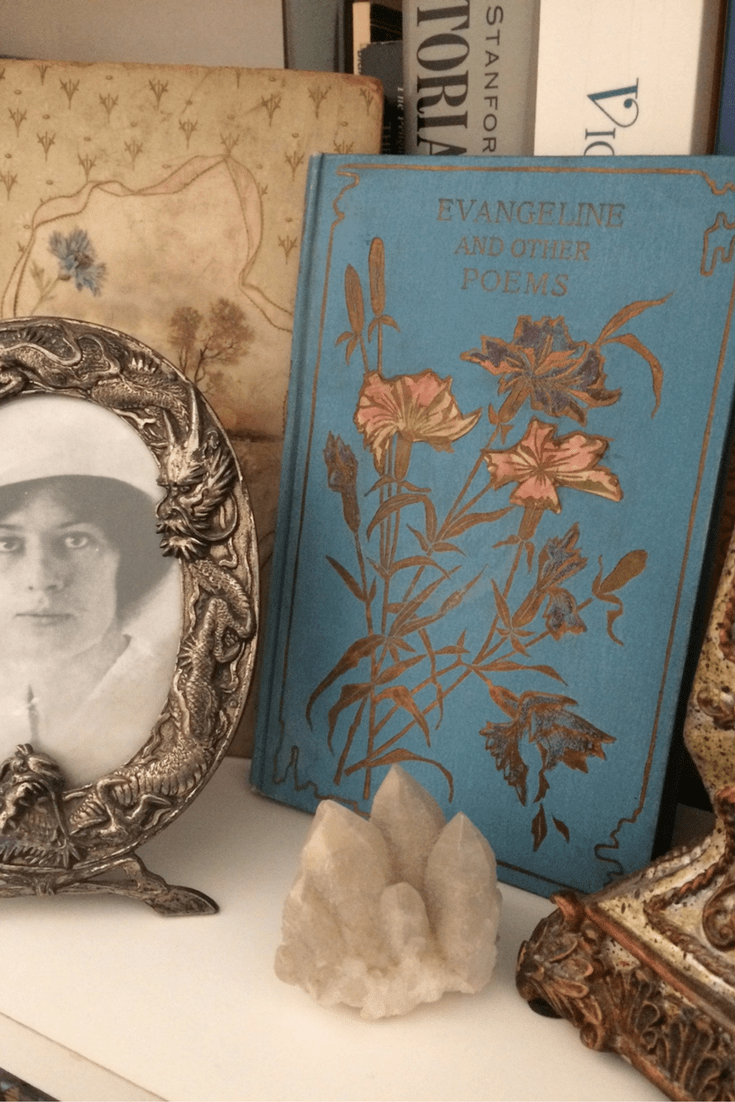
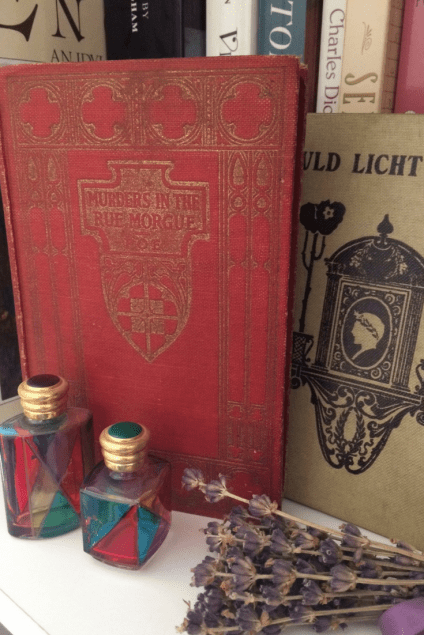
Like many people, I have a particular love of old books. I have a very small collection that my mother, over forty years ago, had the foresight to buy from an old drug store in town that was closing. She also bought several glass pharmaceutical bottles – Lycopodium, Acacia, Digitalis – and other treasures from a bygone era that used to fill the tall wooden cupboards and glass cabinets there. But the books – those were the real gems. The covers alone gave them value as objects of beauty, as with Longfellow’s Evangeline, Poe’s Murder in the Rue Morgue, and Sir Walter Scott’s Lady of the Lake.

Poe book


lady of the Lake - crop

I’ve googled some of those books and found that they’re not worth much, and several of them are literally falling apart. And yet they continue to give pleasure.

Rip Van Winkle

And whether I’m at the Strand bookstore in Manhattan, or at a garage sale in my home town, I’m always on the lookout for one of these books from another time.

Strand Plaza

And as I take out my wallet to make a purchase, I catch sight of my iphone and find comfort in the digital library that’s always at hand.

April Rain – Thursday morning

entrance 3

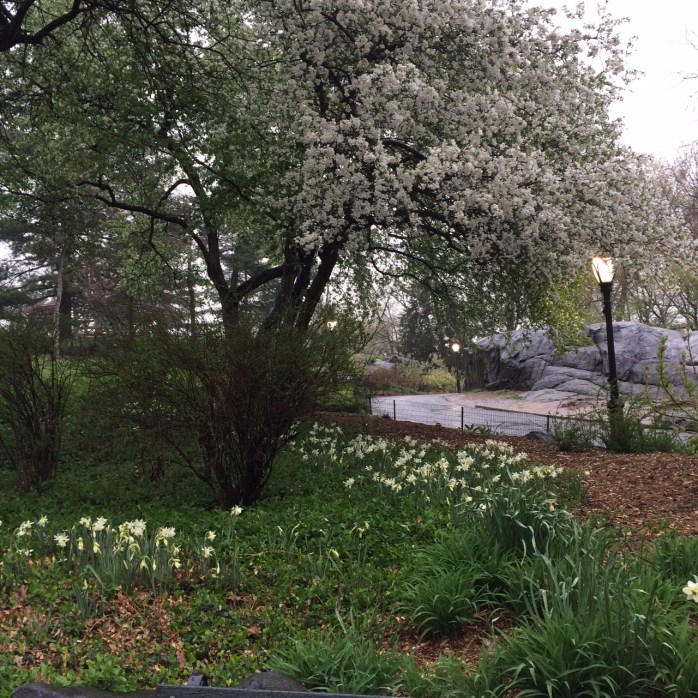
An early morning rain intensifies the colors in Central Park. The green becomes a vivid emerald. The azalea, a dazzling pink.

azalea

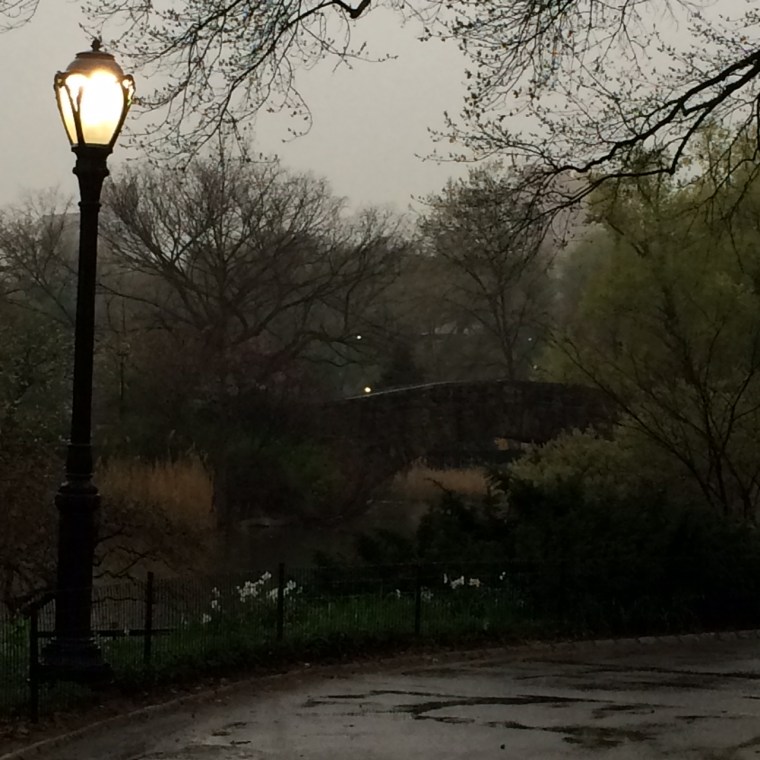
The stones and tree trunks turn rich gray and black, and the lamplight lingers, dotting the park with touches of gold.

Bride lamp rain

The soft patter muffles the din of the city, and the rain on the lake makes the most tranquil of sounds.

lake white tree rain

White blossoms lay scattered on the rain-dark pathways, and fall softly on the textured water of the lake. A quiet beauty suffuses the morning; the air is cool and fragrant.

Only a few feet away the city swirls in traffic, pedestrians rushing to work, horns blaring, stop lights and tail lights reflecting on the wet surfaces.

An old stone wall separates 59th Street from Central Park. On one side, the hustle and bustle of New York City. On the other, the serenity of the park, the beauty of nature.

bush tree rain

And spring is just beginning.


April Rituals

Bridge April

How are personal rituals formed, and what purpose do they serve? I have morning and evening rituals, ways of opening and closing the day. I have seasonal rituals, ways of marking time, of making it specific and memorable – as if putting a frame around a moment, a season, a month, so that it can be more closely looked at.

I think, for the most part, my rituals have been haphazardly formed. Some combination of actions clicked together agreeably at one time, and so I tried to recreate it again and again.

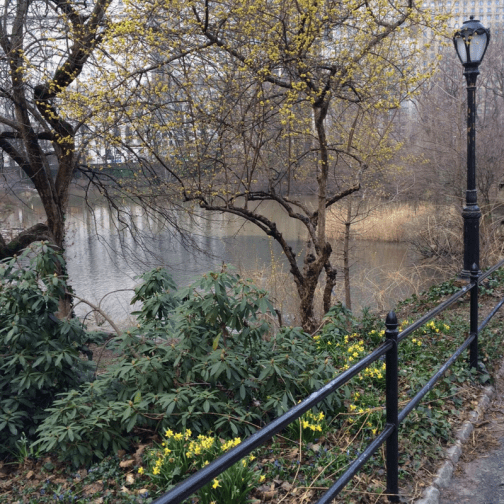
My spring rituals are largely determined by flowers. I search out the first blooms in Central Park – crocuses, daffodils, Forsythia. I plant my window boxes and choose the colorful annuals for the garden. Though I try to start the season in March, the cold of New York usually forces me to wait until April.

Though April is changeable, it can be counted on for a show of color – purple, yellow, pink, white. There’s a quince bush a few houses down that is among the first to flower in the neighborhood. I keep an eye on it, noting the first bits of green, then the dots of color as the buds begin to open. Then after a few sunny, mild days, the melon-colored flowers start to open, and there’s no suppressing the surge of pleasure they bring.


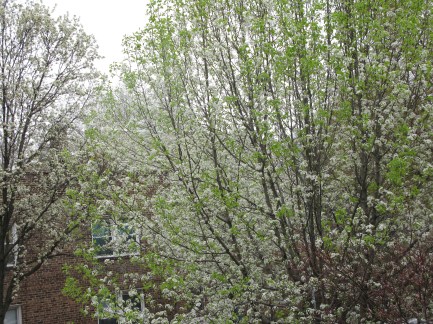
At about the same time, the pear trees along the street begin to bloom. My view at this time of year, as I write at the kitchen table, is that of white blossoms against the changing sky. In full bloom the trees are truly magnificent.

pix (530)

I can’t remember exactly how a particular April ritual got started, but several years ago I sought out the music of Thomas Morley’s “April is in My Mistress’ Face.” The time of year must have reminded me of the lyrics, and of the college music class where I first became enamored with the music of Palestrina, Bach, and Morley.green lute

An online search brought up several renditions of Morley’s Renaissance madrigal, many of them with a montage of spring flowers in the background. But the one I liked best showed a young woman looking very demure, and yet sensual and lovely. Instead of the usual four-part polyphonic voices, the melody was carried by a simple lute. http://bit.ly/2oTC1Eq

April is in my Mistress’ face,
And in her eye July hath place;
Within her bosom is September,
But in her heart a cold December.

I tend to ignore the last line. I like to think of his mistress as sweet and lovely in face and heart.

One of my April rituals then, is to fix a cup of tea, gaze out at the blossoming pear trees, and write – or perhaps it’s more honest to say I stare out the window and remember and dream, casting back into the past and forward into the future – trying to link the beauty outside the window and in the music with a sweetness that once was, or that, perhaps, could still be.

Is April, and spring itself, a larger metaphor for life, for youth, for a beautiful past (real or imagined)? Very likely. And so I do my best to hold it, to love it, to be a part of it – even as the white blossoms are being blown from the trees.

Canva blossom 1

The Wake

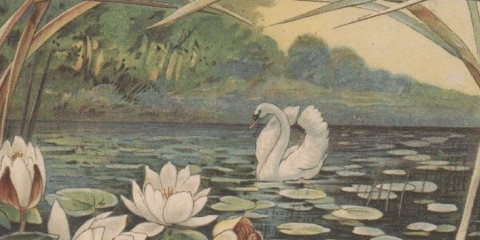
swan heading crop

The Wake

A little death entered us when you went ahead.

So great was the love that tethered us to you,

we would have gladly followed;

Like little cygnets straining to keep up,

their eyes fixed on the beautiful white swan ahead.

The rippling wake, the path to you.

*

But you, nurturing mother,

Said no – the wake is the path you created for us;

The wondrous wake is life itself.

Your wish – for us to embrace it, as you did,

 with love and laughter and joy.

*

You, beautiful swan,

turned your head to us, as if gently saying,

this was not our time, but yours;

For us, now, to delight in the beauty around us,

to splash in the waters of life!

Time enough for the later journey.

*

Your gift to us, your legacy:

To live first fully in the wake.


swan sunset 2

Poppies

old books

Research can be a thread that starts in one place and leads in a labyrinthine wondering, often ending in a completely unintended destination. I was immersed in research for the next book in my Christmastime series (1944), and briefly stepped out of the WWII frame of mind to search out one tiny detail about WWI.

Many hours, many books, and many Google searches later, I was still reading about WWI. In particular, I was looking at which battles a soldier from the US might have fought in. And that lead me to asking what the boundaries were before and after WWI, and how far X is from Y, and what exactly is meant by Flanders vs Belgium – a trail that ultimately lead me to the poem “In Flanders Fields,” written in 1915 by a Canadian military doctor.

In Flanders fields poem - edited FINAL

And that got me thinking about poppies.

And why poppies became associated with WWI (and Armistice Day/Veteran’s Day) and Flanders. I came across an interesting article in the Smithsonian Vintage-Flanders-Poppy-Posterstating that poppy seeds “can lay dormant for 80 years or even longer” until the soil is disturbed, which happened during WWI when “the soil was torn up by miles of trenches and pocked by bombs and artillery fire,” causing the buried seeds to germinate. All around the crosses of the fallen, amid the horror and destruction of war, bloomed the beautiful red poppies. A sort of miracle, a balm of nature to help assuage the pain of war. http://www.smithsonianmag.com/smart-news/how-poppy-came-symbolize-world-war-i-180960836/
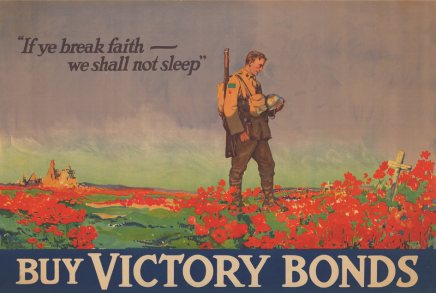
And that lead directly to another interesting article about an American impressionist, Robert Vonnoh, who painted a field of poppies in 1890 entitled “In Flanders Fields” which, though recognized as a masterpiece, failed to sell. But then, in 1919, after McCrea’s poem of the same name became widely popular, the painting was purchased by Joseph G. Butler, the founder of The Butler Institute of American Art. A beautiful painting it itself, its significance was deepened by the tragedy of war, and it came to represent a more gentle past whose ways were forever gone.

Robert_Vonnoh_-_Coquelicots

More searches on poppies. After getting further sidetracked by the language of flowers, and representation of poppies in art, then in Western art, then in Victorian art, I stopped – and simply tried to determine why I have always loved this flower, and where that love came from. I thought of popular cultural references – from opium and the drug trade, to the scene in The Wizard of Oz, where the Wicked Witch rubs her green hands over her smoke-filled crystal ball, cackling, “Poppies! Poppies will put them to sleep!”

Then I took a look at some of my vintage postcards, recalling that several of them had images of poppies. The pink and red flowers were on cards for everything, from Christmas and St. Patrick’s Day, to birthday wishes and cards of remembrance.


My strongest association of poppies comes from my Victorian studies, where I often came across depictions of the flower: in the ornate wallpapers of William and Morris; in portraits by the Pre-Raphaelites, signifying sleep, remembrance, and imagination; in the outdoor qualities of light and air in the works by Van Gogh and Monet; in Mucha’s lush compositions, representing the exotic and luxurious allure of the Belle Époque.

Perhaps my love for these older periods explains why I used an old drawing of poppies for my business cards and why the poppy has made its way onto the cover of one of my books, Seven Tales of Love, its design based on an Art Nouveau-styled illustration. Maybe I’m drawn to the poppy because it seems like an old-fashioned flower, like violets and lily-of-the-valley, and evokes a whole different set of sensibilities.

SevenTalesOfLove_Kindle_hi_v2

Or perhaps, as they say, all roads lead to home, and the association is deep rooted in a particular patch of red poppies in my hometown. There was a garden at the back of an old house on a corner, and in the spring long-stemmed poppies grew in profusion, spilling out of the garden and into the ditch alongside the road. I think it was there that I was first struck with their impossible beauty – so vibrant, and wild, and magical – paper-thin red petals with black centers, set against intense green leaves.

I have an etched-in memory of a little old lady who used to live there long years ago. She was always out in her garden, wearing a wide-brimmed straw hat as she bent over to tend her flowers. The garden was particularly beautiful at the end of day, when the tangle of flowers became tinged with gold. Somehow, that image has stayed in my mind, and, in the odd ways the mind makes associations, that garden in the setting sun has come to represent a deep longing that I could never quite put into words, and that remains elusive.

My mom and I once took seeds from one of the poppies and planted them in her garden, hoping for the same burst of beauty the following spring. But they never took. Perhaps they belonged in the overgrown garden with the setting sun at close of day – flowers locked in a mystical forever.

poppies home 1

But enough of digressions that never really end. And back to writing my book.

Now, where was I? Oh yes, WWII. 1944. Winter.

Can Spring be Far Behind?

Lately, we’ve had a few unusually mild days here in New York, heightening the expectation of spring. I checked the garden to see if the crocuses were coming up, and sure enough I found a few slender green shoots.

But today there’s a bite in the wind, and a few small patches of snow still linger here and there. March, even April, can bring cold weather and snow, and it could be several weeks before we have any real blooms.

Though I actually love this changeable time of year, winter one day, spring the next, those few days of spring-like weather set up a craving for flowers. So today, I headed to the florist for an infusion of color and scent.

And there I found an array of bright pink roses, purple orchids, bursts of yellow and orange, and the heavenly scent of freesias. But giving the most delight, to me, were the small mixed bouquets in glass jars, arranged on a silver tray.

There are many ways to usher in spring. In my book, The Garden House, a young woman surrounds herself with drawings of flowers so that even in the heart of winter she is surrounded by blooms. Today, I was grateful for the NYC florists who keep spring alive all year long.

All it takes is a few mild days this time of year to germinate our longing for spring. So though today the wind is cold, I know that blossom time is not far away.

“O Wind, If Winter comes, can Spring be far behind?” – Percy Bysshe Shelley