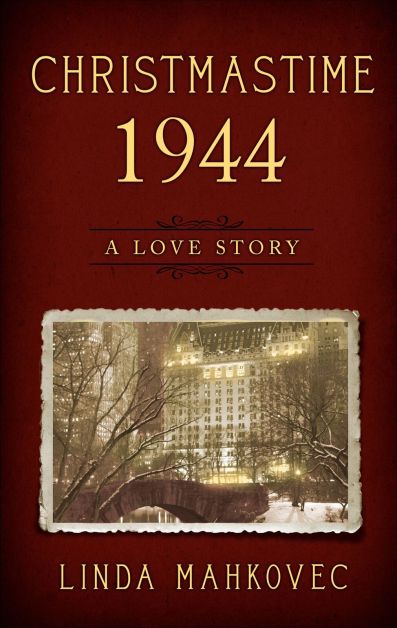
The Plaza Hotel – book cover

All the book covers in the Christmastime series feature an old-looking photograph set in winter. They to help establish a sense of place and give the impression of peering back in time. The images also portray places that are still in existence in Manhattan, so that the reader can feel it’s possible to step into the world of Christmastime by strolling through New York City, whether literally or imaginatively. Hence, the snowy photographs of a brownstone and several scenes from Central Park.

The covers must also reflect the content and tone of the books. I chose increasingly lonesome images and darker colors as the war years wore on, especially for Christmastime 1942 and Christmastime 1943.

Though 1944 was another terrible year, the Allies were clearly gaining the upper hand, and many people believed that the war in Europe would be over by Christmas. (The mid-December surprise count-offensive by the Germans, resulting in the Battle of the Bulge, quashed that hope, and the war raged on.)

But when December arrived, hope was in the air. For the cover of Christmastime 1944, I wanted an image that was lighter, brighter, and more hopeful. When I came across the image of the Plaza Hotel lit up at night, I thought it would be perfect for the story – especially since the hotel figures into one of the plots.

cover Christmastime 1944

If you’re ever in Manhattan, stop by the Plaza Hotel for lunch or tea. Stroll through the lobby to look at the beautiful bouquets of seasonal flowers, the mosaic floors, and the stained-glass ceiling in the Palm Court.


And if you’re in the Christmastime frame of mind, you just might catch a glimpse of a lovely woman in a 1940’s satin and chiffon green dress.

Plaza PP mosaic

October

autumn lake

There’s an old green-covered book I open this time of year. The spine is split in some parts, the lettering on the cover is faded. It’s a book of poems by Robert Frost that my mother gave to me in high school. It was already worn back then. I don’t know if she bought it used somewhere around town or if someone made a gift of it to her years before. It wasn’t a formal presentation or given to mark a special occasion. It was like the other things she gave to us – a sort of “here’s something you might enjoy,” or “take a look at this.” Items that would simply appear on our dressers without any note at all – Classic Comics for my brothers, a porcelain bluebird for my sister’s collection, a red maple leaf, an exotic stamp off a letter from her brother who traveled widely. Things that would delight, pique our curiosity, entertain, or answer to inner longings.

The book of poems resonated deeply with me, especially the ones in the beginning of the book from the section “A Boy’s Will.” The autumn poems in particular became the ones that most spoke to me. “October” might have been the first poem I ever memorized, outside of school assignments. I memorized it because I wanted the words inside me, I wanted to walk through an autumn day and have the words at the ready: “O hushed October morning mild, Thy leaves have ripened to the fall, Tomorrow’s wind, if it be wild, Should waste them all.”

CP autumn bridge

These many years later, the words are still there. As I walk through the neighborhood or cut through Central Park, a solitary leaf might float down from a tree on a mild autumn day, and I hear the words: “Release one leaf at break of day, At noon release another leaf.” The birds in the autumn sky might caw and without any prompting my heart recites: “The crows above the forest call; Tomorrow they may form and go.”

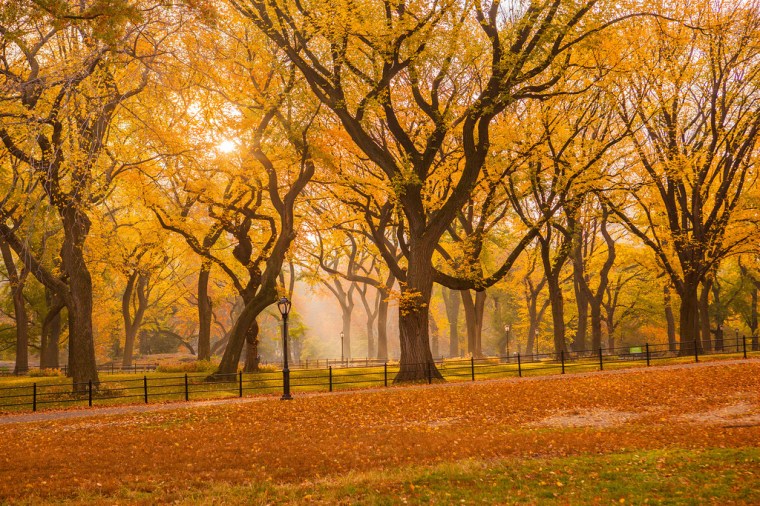
CP yellow elms

The simple book of poems remains the touchstone of autumn for me – it embodies the solitary, the nostalgia and memories of other Octobers, and the deep connection of inner yearning with outer seasonal beauty.

book with leaves

(Thank goodness Robert Frost didn’t stop at October. His poem “My November Guest” soon became my favorite.)

yellow leaf on bench

Summer — in The Christmastime Series

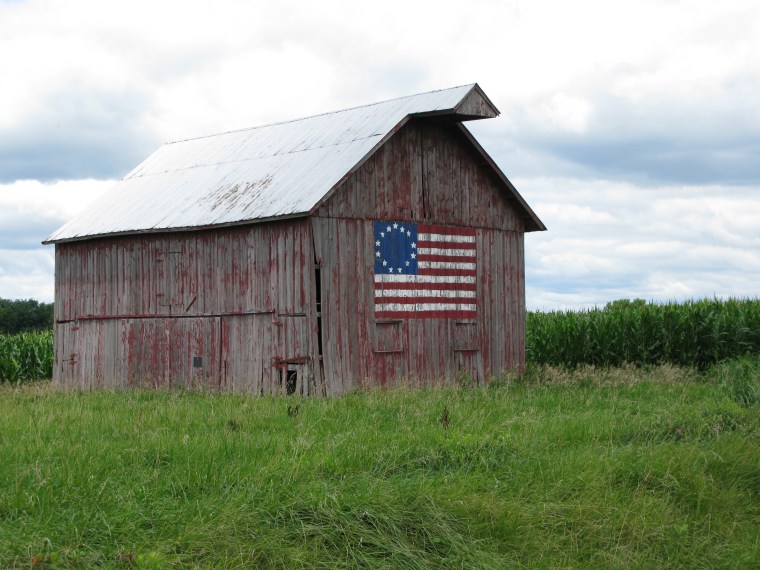
5 Kate's farm summer trees fence.jpg!d - Copy

Summer. A languid time of year that seems to move more slowly than the other seasons. Perhaps because the days are longer, or perhaps because many people are on vacation and the children are out of school, or perhaps because more time is spent outside, it is a rich time of year that creates indelible memories.


Memories of summer occasionally surface for some of the characters in my WWII Christmastime series, where most of the action is set in the cold and snow of December.


Though the stories take place on the home front, mostly in New York City, the events of the war shape the characters’ lives, making them fearful, anxious, and dreading the unknown. Adding to the tension are the attacks that take place in December — Pearl Harbor in 1941, and the surprise German counter-offensive in December 1944 that began the Battle of the Bulge.

For these characters, summer memories of a gentler and safer time soften the harsh realities of  war-time living. They remember bike rides along country roads, gathering garden flowers to place on the kitchen table and in bedrooms, afternoon picnics, a moonlit swim.


One memory in particular evokes the beauty and longing of late summer. In Christmastime 1941, Charles takes Lillian and her two sons to visit his sister Kate, who lives on a farm in Illinois. Lillian and Kate sit on the farmhouse porch in the late afternoon.

Lillian helped Kate finish the laundry, and then sat with her on the front porch, shucking corn for dinner.


A beautiful August day surrounded them in all its fullness and simple charm. A gentle breeze rustled the leaves high in the pin oaks, and fluttered the laundry on the clothes line, causing the white billowing sheets to snap softly now and then. The wide porch surrounded them with views of the corn and soybean fields stretching to the horizon. To the east stood a cluster of tall trees, their leaves a dark, dusty, late-summer green, with some leaves already edged in brown. And before them, Kate’s flowers along the lane – a tall tangle of orange, yellow, white, and blues – tiger lilies and daisies, cornflowers and asters.


Lillian lifted her face to catch the afternoon breeze, and caught the scent of honeysuckle that covered the fence along the lane. 


The wind alternately muffled and then sharpened the sounds of Tommy and Gabriel playing horseshoes with Kate’s sons: dull thuds as the horseshoes fell on the earth, clinks of metal as they hit their mark or landed on each other, mixed with clapping, laughing, good-natured disputing. Lillian had felt suffused with a sense of well-being, surrounded by an earthy loveliness.

2 clover in sunlight

Afternoon picnics, gardens in bloom, ripe fruits and vegetables, lush trees and fields — summer is the time of year when some of our strongest memories are born.

The Dreams of Youth

Longfellow sunset

The line above from Longfellow’s poem, My Lost Youth, in large part, inspired the writing of The Dreams of Youth. It’s a collection of six very short pieces that together tell the story of Maggie. Spanning over eighty-five years, the stories follow her from her youth in Depression-era Illinois to the time when she ventures forth to 1940’s Hollywood and coastal California, and her return to the rural Midwest

I used lines from the poem to head the sections, amazed each time that the words so closely conveyed the main idea of the piece.

The first section is called “A Girl’s Will.” Though Longfellow’s poem is about a boy, the line worked beautifully to capture Maggie’s spirit.

“A [girl’s] will is the wind’s will.” – Longfellow

(excerpts)

When her brothers and sisters staged a circus in the back yard for the entertainment of the neighborhood, it was eight-year-old Maggie who flew through the air on the handmade trapeze, her sense of adventure overriding any fear she might have had.

“One penny to see the Flying Wonder – Maggie!” they cried, drawing a sizable crowd.

Maggie loved the feeling of flying through the air and landing on the old mattress – the freedom, the thrill! It was the same feeling she had when she jumped from the hayloft onto the hay below, the same feeling she had when she rode her brother’s bike and coasted with her arms outstretched.

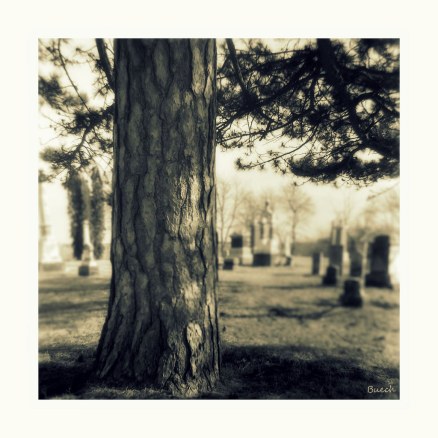
Maggie was four when her mother Eileen died after giving birth to twins, the last of ten children.rural cemetary
Summers at home were magical. The rest of the year was spent in the orphanage, along with the twins and her sisters. Maggie came to love the nuns. They taught her how to sew and read, and told wondrous stories about the lives of the saints.

All the same, she was happy when she finally reached high school and moved back home.

Madonna Alton orphanage

(Madonna of the orphanage)

Maggie has always loved the idea of airplanes and flying, and she decides to become an airline stewardess in order to finally see the ocean and far away places.

She took her savings and journeyed by bus to Kansas City for an interview with TWA. Her dreams were finally going to come true; she could feel them tingling at her fingertips.

From the bus window, she imagined the miles and miles of corn as the wideness of the ocean, curving into the horizon. The golden wheat became the golden sand where she would soon stand and let the waves lap over her bare feet. When she closed her eyes, she could almost feel the salt spray on her face!

As she waited in a long line with other hopefuls, eager for the interview, she heard the whispers.

“They don’t hire girls with glasses. You must have perfect vision.”  Maggie took off her glasses and slipped them into her pocket.

Back home, Maggie found a job working in the veteran’s hospital.

*

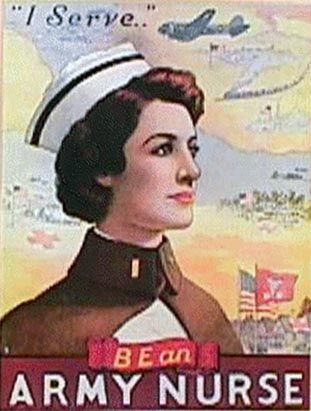
Maggie had not given up on her dreams of seeing the world. While she was working at the VA hospital, she learned that her vision was good enough to enlist in the Air Force Nurse Corps. She would become a military flight nurse.
nurse poster

When Maggie’s best friend from nursing school offered her the chance to go to California, the land of dreams, Maggie knew that the door to her future had opened at last.

ocean sunset

dreamsofyouth_kindle_hihttp://amzn.to/2rDiqfB

Memorial Day — Thank You

My WWII Christmastime series takes place on the home front, mostly in New York City, with a secondary plot occurring on a farm in Illinois, and a bit of action on an orchard in upstate New York. Though the focus is on family and love and Lillian’s journey as an artist, the impact of the war is felt on every page. The veterans who make an appearance are either recovering in hospital, or are home on leave. Some are getting ready to ship out for the first time.

My father was a WWII vet. He enlisted when he was barely eighteen, joining the Army Air Force as a tail gunner. My siblings and I grew up with war stories that took place decades earlier. Mostly humorous stories about the other young men (boys, really) in his crew. He flew twenty-five missions in 1945 and said he was given the last rites before every mission, and a shot of whiskey on his return. He said when he came home at war’s end, his mother broke into tears — of happiness to be sure, but also because of the wear and tear on his face. He said that ice always clung to his face at the high altitudes, and pulled on the skin below his eyes, giving him the look of a much older man.

But he came back, whole, happy to be alive, eager to begin his life.

Yank

I continue to do research for the last two books in the series, Christmastime 1944 and Christmastime 1945. And though I have my dad’s Yank magazines, a few letters, and his medals, I wish he were still here. There are so many questions I haven’t found answers to in my research, so many questions I still want to ask him. I wish I could get out a pen and paper to take notes as I listen to his stories — and to tell him: Thank you.

Nimitz quote


Our veterans are our gold, full of courage, sacrifice, and experience. To all who have given so much — thank you.

vets stars blue


A Sense of Sky

I’ve lived in New York City for almost thirty years and love it as much now as I did when I first moved here. But one of the things I miss, something from my girlhood, is the sense of sky — the wide-open vistas of the Midwest.

Image (483)

It’s a feeling of proportion you become aware of, driving along the Illinois fields, where the sky seems to take up a good two-thirds of the world. Here in New York I catch glimpses of sunsets or storm clouds between tall buildings, or over the rooftops. Beautiful, but without the sense that the sky dominates.

farmhouse Canva

I grew up with the drama of stormy skies over far-reaching fields, and the endless blue skies of summer with high, puffy white clouds, subtly changing, holding form just long enough for you to find an image before shape shifting again. To stand under such skies is humbling, and at the same time, makes you feel a part of something grand.

Image (477)

That sense of sky has found its way into some of my stories. In Christmastime 1943: A Love Story (Book Four of Six), a secondary plot takes place on a farm in Illinois. At different times throughout the story, Ed, the old farmhand, Kate, the owner of the farm, Ursula, her beautiful daughter, and Friedrich, the German POW, all look to the winter sky and find solace and beauty, or a reflection of their internal state.

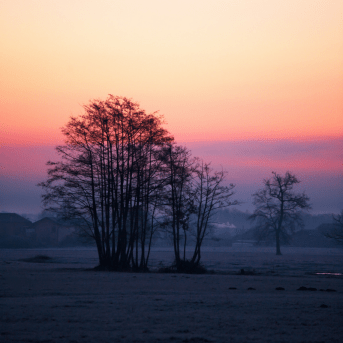
“[Ed] gazed out over the fields of corn stubble at the magnificent sunset. Bold streaks of orange and purple spanned the sky….Beautiful and strong – just like the women inside the farmhouse, he thought with a shake of his head.”sunset fields 1943.png

“[Ursula] stood at her window and gazed out over the late afternoon fields. The stubble of the corn fields shone a rosy gold in the setting sun. The sky filled with sweeping bands of deep blue and gray – at the horizon a shimmer of pink pulled at her heart. The sad beauty of the day filled her with longing.”

So I find that though I’ve moved away from Midwestern skies, they are still with me here, in New York City.

1943


The Wake

swan heading crop

The Wake

A little death entered us when you went ahead.

So great was the love that tethered us to you,

we would have gladly followed;

Like little cygnets straining to keep up,

their eyes fixed on the beautiful white swan ahead.

The rippling wake, the path to you.

*

But you, nurturing mother,

Said no – the wake is the path you created for us;

The wondrous wake is life itself.

Your wish – for us to embrace it, as you did,

 with love and laughter and joy.

*

You, beautiful swan,

turned your head to us, as if gently saying,

this was not our time, but yours;

For us, now, to delight in the beauty around us,

to splash in the waters of life!

Time enough for the later journey.

*

Your gift to us, your legacy:

To live first fully in the wake.


swan sunset 2

Saint Patrick’s Day


tea set

My mom being Irish (third generation), I grew up with limericks, rhymes, and poetry. She always read a poem or two before going to bed from a slender collection that rested on her nightstand, and books of poetry lay scattered about on bookshelves and counters to be picked up and browsed through at leisure.

Nothing laborious or unduly difficult—rather a light touch here and there that added a dash of beauty or insight to the day, the same way other people set candles and frames around the house.

On the telephone desk stood an old earthenware mug filled with pens and pencils, and printed on it in black lettering was an Irish Blessing. From seeing it so often, I think we all had the poem memorized at an early age.

Blessing 1

And on the telephone notepad or perhaps at the bottom of a grocery list, we often came across a dashed off rhyme or limerick by Mom, some effervescent burst of wit that couldn’t be suppressed.

On the living room wall hung one of her favorite poems. She asked an Irish friend, known for his beautiful calligraphy, if he would copy it out for her. Then she bought an antique wooden frame and placed the poem where everyone could read the stirring lines.

the music makers 2

Poetry was woven into the day, offering a moment to ponder some idea, a dip into profundity, a gasp at a beautiful thought or image, a smile at some witty phrase.

On this cold, snowy Saint Patrick’s Day, I’m going to celebrate by making a cup of tea and opening one of the books of poetry that lay scattered about my house.

shamrock