The Garden House — in winter (images from Pinterest)

gardenhouse_kindle_hiThough the story of The Garden House opens in late spring and closes in the fall, I made a Pinterest board called “The Garden House – winter.” The main character, Miranda, lives in Seattle and has a beautiful garden that’s an integral part of her life. I imagine her loving her garden in all seasons, including the rain and occasional snow of winter.

In The Garden House, Miranda’s garden becomes a  metaphor for life, with themes of family, change, memories, home, and the search for meaning. When all else goes wrong, Miranda retreats to her garden, with a cup of tea in hand, and finds solace.

Surrounded by the beauty of her garden, she allows herself to be captivated and inspired by the mysteries of life.

I imagine Miranda enjoying her garden in January, curled up in her window seat and watching the falling snow cover the birdhouses, birdbaths, and terra cotta pots.

I see her strolling through her garden, delighting in the vestiges of summer and fall — frost-covered roses, hydrangeas, and Queen Anne’s Lace.

In every season, Miranda fills her home with cuttings from her garden. I imagine her gathering branches of winter berries and greenery to make bouquets for her dining table and to set among the plants of the greenhouse window in her kitchen.

Perhaps she even brushes off the snow from a deck chair, and sipping a cup of hot chocolate, enjoys the tranquility and quiet of her winter garden.

table deck snow


London

St. Jpark 2

London is a labyrinth of parks and avenues, winding streets and narrow alleys that lead you from one beautiful neighborhood to another. A quick trip over Thanksgiving impressed me anew with the loveliness of London.

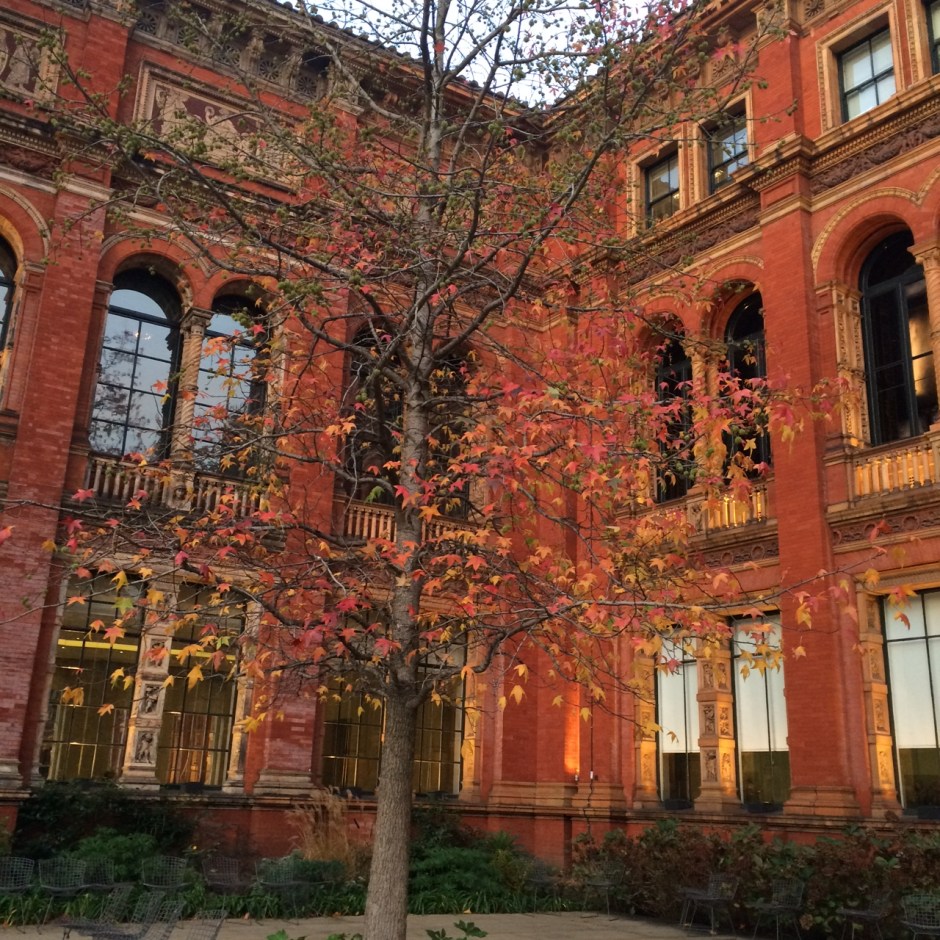
St. Ermin’s Hotel in Westminster was the perfect place to stay. It’s a beautiful Victorian building close to St. James Park and Buckingham Palace and just a block away from the Tube. They were just beginning to decorate for Christmas while we were there.

Hotle night

It had been many years since I last visited London, and for the most part, it was like seeing it through fresh eyes. The skyline had changed greatly — the London Eye alone transformed the feel of the skyline, as did the Shard.

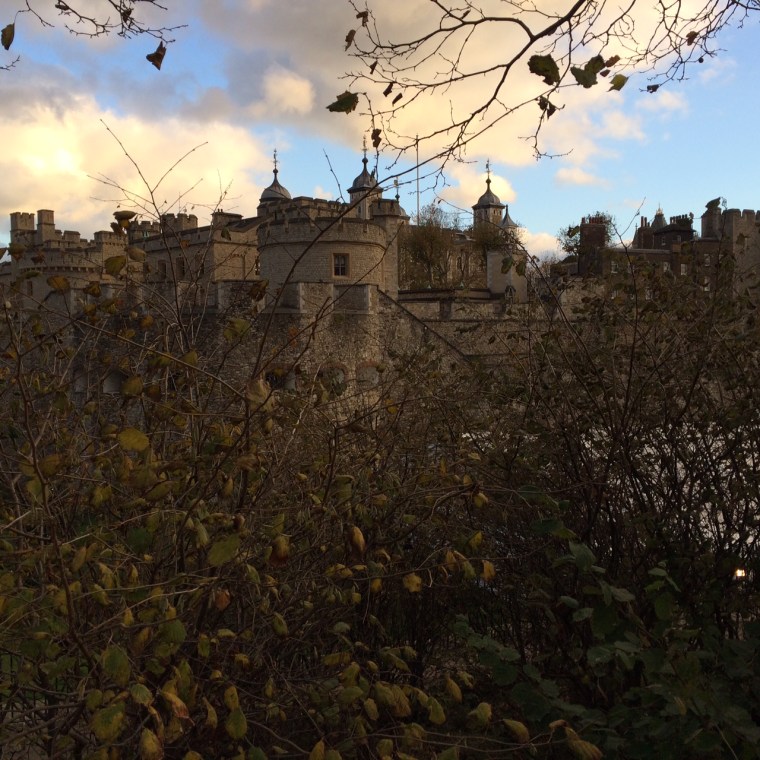
While we were visiting the Tower of London,

Tower 3

I was struck by the architectural layering of history: a row of Tudor-styled buildings stood behind the thousand-year-old crumbling walls of the fortress, and behind them both rose the Shard. All over London, the historical and the modern are intertwined.

Tower and Shard

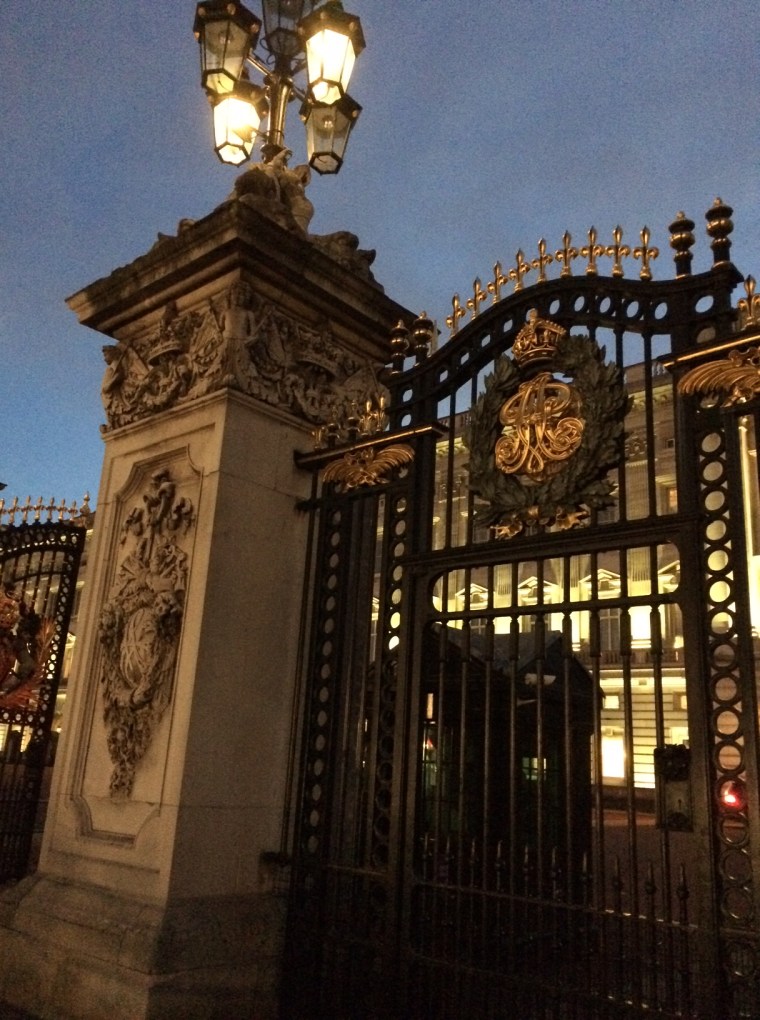
For the most part, my husband and I played tourists, going from one historical site to another: The Tower of London, the Victoria and Albert Museum, Trafalgar Square, the Westminster area (we were disappointed to find Big Ben covered in scaffolding). But Buckingham Palace was beautiful, especially at the end of day when the lights came on.

Buckingham closeup night

This was the first time I visited Notting Hill, and I was immediately taken with its charm. I would love to see it in the spring when the wisteria is in bloom.

NH window

Another afternoon we spent in the ever-changing Brick Lane neighborhood, full of wonderful Bangladeshi restaurants.

Brick Lane

Also new on this trip was a visit to the Leighton House, home of the artist Frederic, Lord Leighton. I fell in love with the exotic tiles and lamps, and the colors he surrounded himself with — rich peacock blue, muted gold, and dark woodwork.

Leighton House tiles

I’m glad we visited London in the late fall. Dusk came early, and by 4:30 the corner pubs and restaurants dotted the evening with golden light and a feeling of coziness and cheer spilled outside onto the sidewalks.

W pub night

Buildings that were beautiful by day took on a deeper beauty by night.

Ian night 3

The shopping areas of Oxford and Bond Streets, and Picadilly Circus glittered with tiny lights and holiday decorations, and were bustling with red double-decker buses and crowds of happy shoppers. A stroll through Selfridges offered a glimpse of the glamour depicted in the Masterpiece period drama Mr. Selfridge.

Stores like Harrods and Selfridges brought to mind the wonderful scene from Howard’s End where Mrs. Wilcox and Margaret Schlegel do their Christmas shopping.

howards-end-christmas-scene

Scenes from movies and books are everywhere. We took a train to the Baker Street Station and above ground saw the Sherlock Holmes Museum (with a long line outside).

Baker Street crop

At King’s Cross station there is Platform 9 and 3/4 from Harry Potter (with an even longer line of children waiting to get their photo taken). Though my list of things to see included the Charles Dickens Museum, the Samuel Johnson House, a stroll through Bloomsbury, and several other sites and parks, five days didn’t allow it.

So I’m already working on another list for my next visit.

Ian night white flowers


September

2 -By all these lovely tokensSeptember days are here.--- Helen Hunt Jackson

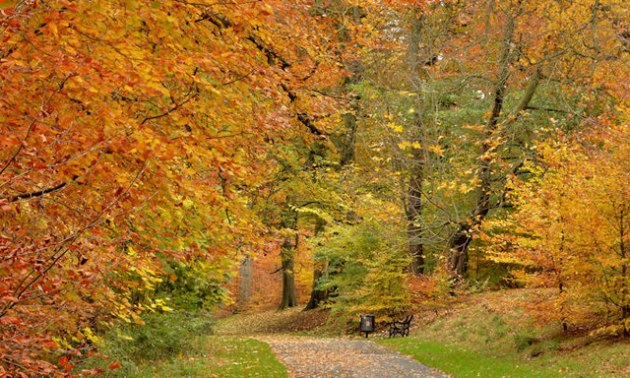
Back to school. Yellow leaves. Sunny days and chill nights.

back to school

Apples and cider. Sweaters and boots. Chrysanthemums, dahlias, and asters.

Frosty mornings. Acorns and buckeyes. Leisurely walks. The last of the garden tomatoes.

autumn walk

Curling up with a good book. Hot chocolate. Tartans and flannel. Shawls.

autumn cocoa and book

 Curling up with a good book.

book autumn leaf


The Shakespeare Garden in Central Park

SG fence and flowers

Central Park is full of many beautiful places, but for tranquility and loveliness, the Shakespeare Garden is the place to go. It’s located near the Delacorte Theatre where the Shakespeare in the Park series is held every summer. Much of the interest in the sloping four-acre garden comes from the winding stone paths and rustic wooden benches and fences than run through the garden. At the foot of the hill is the Swedish Marionette Theatre, and at the top, the Belvedere Castle. Nestled between is the intimate Shakespeare Garden.

Shakesphere_Gardens_-_Central_Park_NYC_-_panoramio

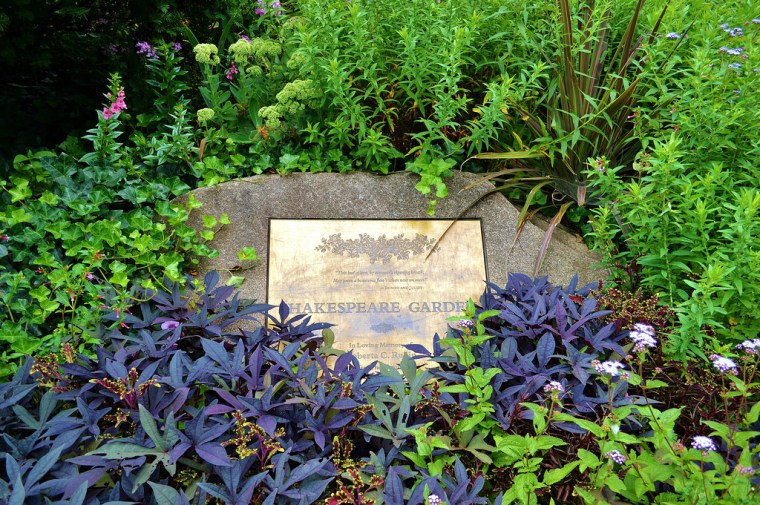
“What had formerly been known as the Garden of the Heart was, in 1916, renamed the Shakespeare Garden to mark the 300th anniversary of the William Shakespeare’s death.” (centralpark.org)

Plaque SG

The garden is beautiful at all times of year. In the spring, brightly colored bulb flowers line the fences, and surround the Swedish Marionette Theatre.

The fall and winter have their own seasonal beauty. I used the Shakespeare Garden for a scene in Christmastime 1942, where Edith and her Shakespearean actor, Desmond Burke, stroll through the snowy garden.

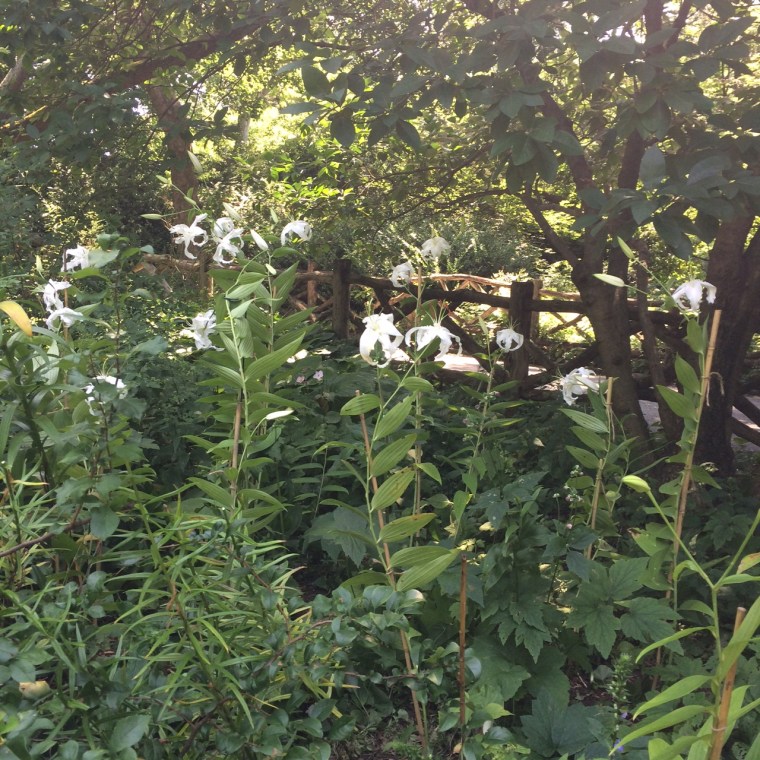
But the garden is at its most glorious in summer, when it matures into full bloom. In mid-August the lush green of the garden is crowded with purple and white phlox, pink roses, yellow daisies, white lilies, and purple cone flowers.

Thistles, ivy, vines, and herbs also bloom, and there are several trees that cast their shade over the benches and paths. The heat releases the garden’s scents, both sweet and pungent, and the air is alive with bees and butterflies in search of summer sweetness.

Away from the sounds of traffic, and with its sundial and bronze plaques with quotes from Shakespeare, it’s easy to imagine stepping out of time, and into a much older garden. The perfect place to read a book, or have a quiet conversation with a friend, or just to enjoy the beauty of a summer day.

lilies

Spoken by Oberon, A Midsummer Night’s Dream, Act 2, Scene 1

“I know a bank where the wild thyme blows,
Where oxlips and the nodding violet grows,
Quite over-canopied with luscious woodbine,
With sweet musk-roses and with eglantine:
There sleeps Titania sometime of the night,
Lull’d in these flowers with dances and delight.”

Summer Reading

picnic basket and book

Part of the allure of summer comes from the assumption that we will make more time for reading. Whether at the beach, on a park bench, at an outdoor cafe, or in the shade of a leafy tree, a good book can further enrich the long days of summer.

Below are a few quotes that encourage us to get lost in a good rummer read:

“An hour spent reading is one stolen from paradise.” – Thomas Wharton

books and clock on grass

“A book is a dream that you hold in your hand.” — Neil Gaiman

“There is no frigate like a book, to take us lands away.” — Emily Dickinson

beach book

“A book is like a garden, carried in the pocket.” — Chinese Proverb

May the rest of your summer be full of dreams and frigates and gardens.

books and grass

Irises of May

irises railing Canva

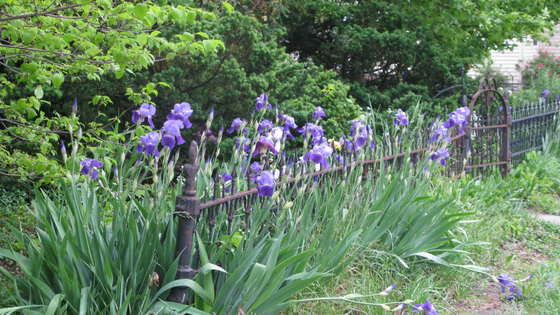
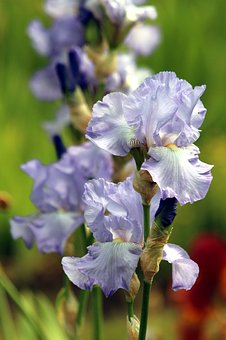
I love the irises I come across growing along old fences, or inside a garden, in different stages of unfurling: some still in tightly bound spears with tips of saturated color, others gracefully opened in full display. Like peonies and other spring flowers, their relatively brief  appearance creates a sort of urgency to appreciate them before they disappear with the season.

pix (554)

Irises always remind me of a visit to my hometown many years ago. On a walk through the side streets, I came upon a small house with a startling burst of color alongside a fence. From a thick row of slender green blades bloomed bunches and bunches of irises — tall and elegant, in colors of ethereal blue, dusky mauve, yellow, and combinations of royal purple and apricot, white and watercolor rose, lavender and deep gold. I had to step closer to marvel at the rich array, so casually crowded along the fence.

The owner of the house, an elderly woman with a warm smile, caught me admiring her flowers and offered to show me her garden in the back of the house. It was even more breath-taking — tucked away from view, full of winding brick paths and interesting details set among gorgeous flowers. It must have taken her years to create such a work of art. When I told her how much my mother would love the garden, she graciously welcomed us to stroll through it whenever we wanted, even if she wasn’t at home. I had the feeling that the woman’s generosity and kindness came from the same internal place as her desire to create the beautiful garden — a place that takes pleasure in life and wants to add to the world’s beauty. I brought my mom back later that day, and the delight she took in the garden remains etched in my mind long years since.

I’ve often thought of that May garden, and wondered how many other secret gardens there are in my town, and in the cities I have lived in, and the places I have visited. How many people create works of beauty for the sheer joy and pleasure they bring? How many so freely and graciously offer their efforts to passers-by in patches of flowers, or window boxes trailing with color, or in potted blooms in front of a house? Like the best parts of ourselves, flowers require tending to be coaxed into being, to be nourished with love and sunlight and weeding and watering. The result is a sort of two-way gift that is offered back to the world in a communication beyond words.

pale blue iris

Over the weekend, I took out my terracotta pots and planted them with rose and purple stock, pink geraniums, and scarlet carnations, and set them on my steps just outside the door.

Poppies

old books

Research can be a thread that starts in one place and leads in a labyrinthine wondering, often ending in a completely unintended destination. I was immersed in research for the next book in my Christmastime series (1944), and briefly stepped out of the WWII frame of mind to search out one tiny detail about WWI.

Many hours, many books, and many Google searches later, I was still reading about WWI. In particular, I was looking at which battles a soldier from the US might have fought in. And that lead me to asking what the boundaries were before and after WWI, and how far X is from Y, and what exactly is meant by Flanders vs Belgium – a trail that ultimately lead me to the poem “In Flanders Fields,” written in 1915 by a Canadian military doctor.

In Flanders fields poem - edited FINAL

And that got me thinking about poppies.

And why poppies became associated with WWI (and Armistice Day/Veteran’s Day) and Flanders. I came across an interesting article in the Smithsonian Vintage-Flanders-Poppy-Posterstating that poppy seeds “can lay dormant for 80 years or even longer” until the soil is disturbed, which happened during WWI when “the soil was torn up by miles of trenches and pocked by bombs and artillery fire,” causing the buried seeds to germinate. All around the crosses of the fallen, amid the horror and destruction of war, bloomed the beautiful red poppies. A sort of miracle, a balm of nature to help assuage the pain of war. http://www.smithsonianmag.com/smart-news/how-poppy-came-symbolize-world-war-i-180960836/

And that lead directly to another interesting article about an American impressionist, Robert Vonnoh, who painted a field of poppies in 1890 entitled “In Flanders Fields” which, though recognized as a masterpiece, failed to sell. But then, in 1919, after McCrea’s poem of the same name became widely popular, the painting was purchased by Joseph G. Butler, the founder of The Butler Institute of American Art. A beautiful painting it itself, its significance was deepened by the tragedy of war, and it came to represent a more gentle past whose ways were forever gone.

Robert_Vonnoh_-_Coquelicots

More searches on poppies. After getting further sidetracked by the language of flowers, and representation of poppies in art, then in Western art, then in Victorian art, I stopped – and simply tried to determine why I have always loved this flower, and where that love came from. I thought of popular cultural references – from opium and the drug trade, to the scene in The Wizard of Oz, where the Wicked Witch rubs her green hands over her smoke-filled crystal ball, cackling, “Poppies! Poppies will put them to sleep!”

Then I took a look at some of my vintage postcards, recalling that several of them had images of poppies. The pink and red flowers were on cards for everything, from Christmas and St. Patrick’s Day, to birthday wishes and cards of remembrance.


My strongest association of poppies comes from my Victorian studies, where I often came across depictions of the flower: in the ornate wallpapers of William and Morris; in portraits by the Pre-Raphaelites, signifying sleep, remembrance, and imagination; in the outdoor qualities of light and air in the works by Van Gogh and Monet; in Mucha’s lush compositions, representing the exotic and luxurious allure of the Belle Époque.

Perhaps my love for these older periods explains why I used an old drawing of poppies for my business cards and why the poppy has made its way onto the cover of one of my books, Seven Tales of Love, its design based on an Art Nouveau-styled illustration. Maybe I’m drawn to the poppy because it seems like an old-fashioned flower, like violets and lily-of-the-valley, and evokes a whole different set of sensibilities.

SevenTalesOfLove_Kindle_hi_v2

Or perhaps, as they say, all roads lead to home, and the association is deep rooted in a particular patch of red poppies in my hometown. There was a garden at the back of an old house on a corner, and in the spring long-stemmed poppies grew in profusion, spilling out of the garden and into the ditch alongside the road. I think it was there that I was first struck with their impossible beauty – so vibrant, and wild, and magical – paper-thin red petals with black centers, set against intense green leaves.

I have an etched-in memory of a little old lady who used to live there long years ago. She was always out in her garden, wearing a wide-brimmed straw hat as she bent over to tend her flowers. The garden was particularly beautiful at the end of day, when the tangle of flowers became tinged with gold. Somehow, that image has stayed in my mind, and, in the odd ways the mind makes associations, that garden in the setting sun has come to represent a deep longing that I could never quite put into words, and that remains elusive.

My mom and I once took seeds from one of the poppies and planted them in her garden, hoping for the same burst of beauty the following spring. But they never took. Perhaps they belonged in the overgrown garden with the setting sun at close of day – flowers locked in a mystical forever.

poppies home 1

But enough of digressions that never really end. And back to writing my book.

Now, where was I? Oh yes, WWII. 1944. Winter.