Summer Evenings in the Garden

GH eve 12

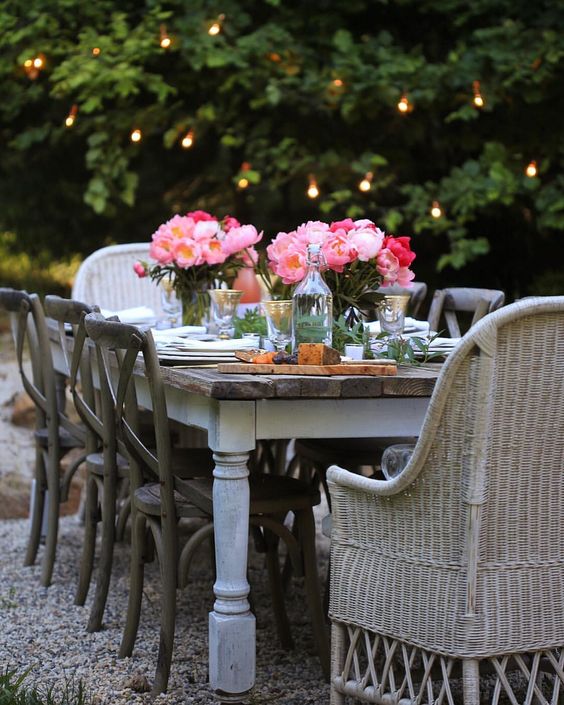
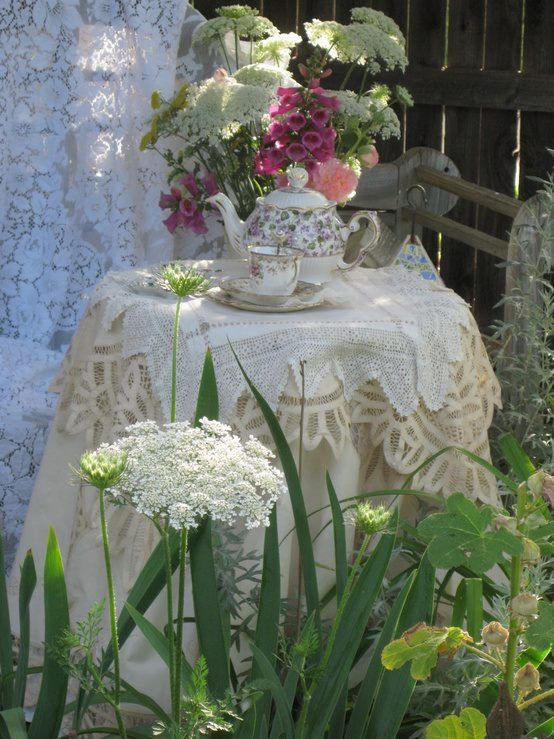
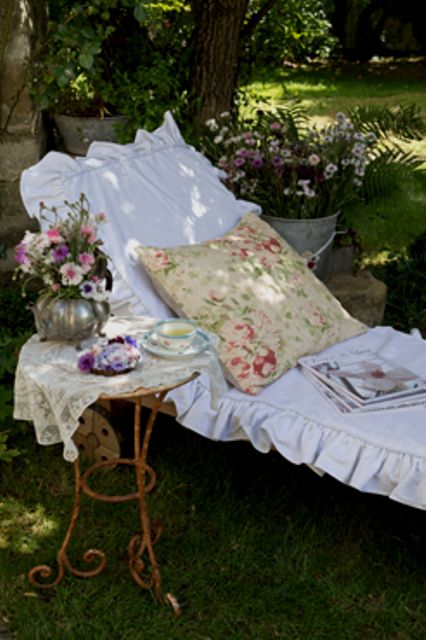
Long summer days mean that we can spend more time out of doors. And one of the best places to linger in the summer twilight is in a lovely garden. There’s something about candlelight and dinner in the garden that is absolutely magical.

GH table 1b

Though I can count such dinners I’ve experienced on one hand, they stand out in my mind. Some memories shine more than others, like tiny jewels in an inner treasure chest — clearer, sharper, more durable.

One such memory is of an impromptu dinner I once had with friends in Seattle. A guest was visiting from Switzerland and we decided to have our dinner outside, just beside the flower garden.

We pulled out the kitchen table, draped it in a lace tablecloth, and added details to make the dinner even more special — fresh flowers from the garden, antique water goblets and an Art Deco silverware set that belonged to my grandparents, and a tiny salt and pepper set — green and white enamel owls. One of my roommates, who was attending a culinary arts school, created a sumptuous meal full of summer freshness — I remember a cold blueberry soup with creme fraiche swirled on top and a salad with orange nasturtiums from the garden.

I never made the connection before, but surely that evening found its way into my novel The Garden House, which is set in Seattle. There’s a scene where the main character, Miranda, sets a beautiful table on the garden deck and enjoys a lovely summer evening with her husband and a few friends.

The Italian poet and author Cesare Pavese said, “We do not remember days, we remember moments.” I wouldn’t be at all surprised if those words came to him as he sat in a summer garden at evening.

GH eve book

Amazon Link: http://a.co/hsncwXs


Hydrangeas – summer’s palette

purple hdy bushes

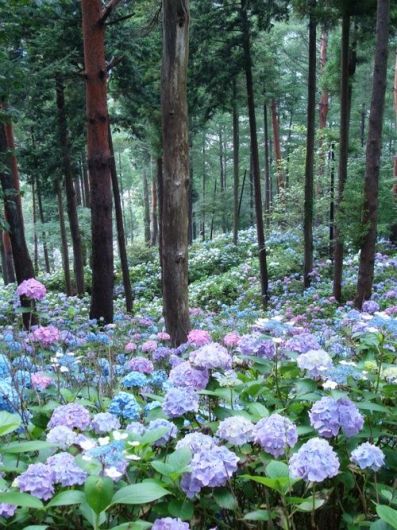
Hydrangeas, emblematic of summer, come in a wide variety of color, size, and shape, making them among the most versatile of shrubs. The flowers can be small or large, round or cone-shaped, in colors ranging from the familiar blue, pink, purple, and white to the more unusual red, pistachio, and strawberry.

Hydrangeas are widely used throughout the United States — in the Pacific Northwest,

Oregon hydrangeas

the Northeast,

hydangeas fence

and the Midwest and South.

hydrangeas porch

“The hydrangea was first cultivated in Japan [famous for its hydrangea forests],

hyd forest

but ancient hydrangea fossils dating back to 40-65 million years ago have been discovered in North America. Hydrangeas didn’t appear in Europe until 1736 when a colonist brought a North American varietal to England.” http://www.proflowers.com

Today, throughout Europe, hydrangeas can be found gracing doorways, fences, windows, and tables.

“Having been introduced to the Azores, hydrangeas are now very common, particularly on Faial,

Azores 1

which is known as the ‘blue island’ due to the vast number of hydrangeas present on the island.” http://www.en.wikipedia.org

Azores 5

Hydrangeas are often planted in clusters where they form walls or hedges, providing dramatic swaths of color.

There are also climbing versions that can be used to adorn the side of a house or garden trellis,

and potted hydrangeas can offer an interesting touch to gardens and doorways.

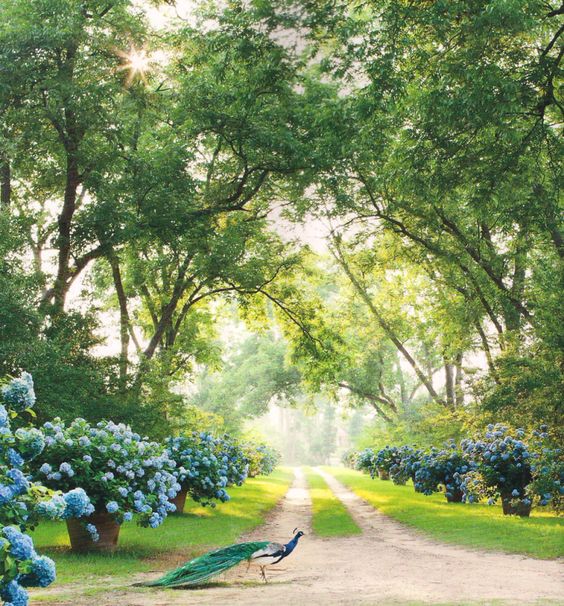
One of the most spectacular uses of potted hydrangeas is found on the grounds designed by Furlow Gatewood in Georgia. He lined the driveway there with shades of potted blue, creating a work of art that is utterly magical — elegant, wistful, and dream-like.

 hyd peacock

An added benefit of hydrangeas is that they are easy to dry and can be used in wreaths and arrangements to bring a touch of summer to the winter months.

Voluptuous, homey, elegant, humble — the colorful hydrangeas of summer offer the gardener an artist’s palette of possibilities.

hyd door handle


Books and Flowers

flowers and books

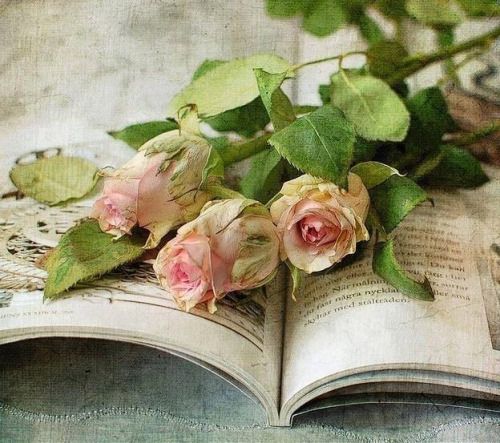
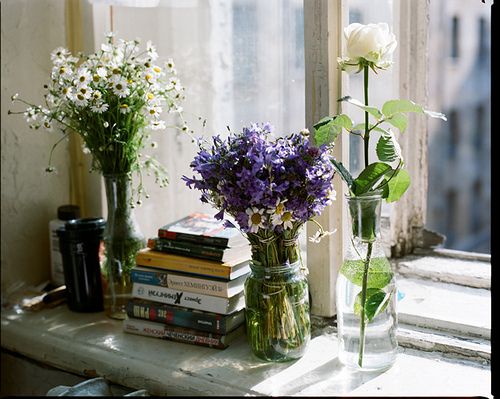
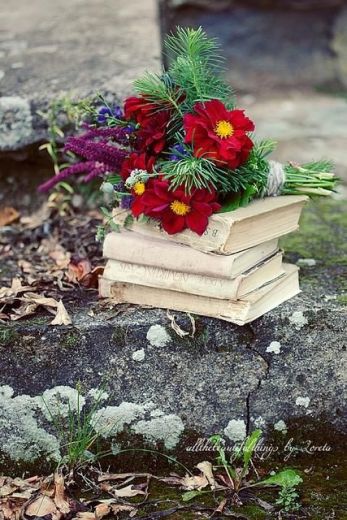
The grouping of books with flowers is a poetic one — whether it’s a studied composition, an impromptu arrangement, or simply a flower used as a bookmark. Both books and flowers serve as portals to worlds of beauty, meaning, and pleasure. The pairing is made more poignant by the contrast of one being ephemeral, the other ever-lasting.

“With freedom, books, flowers, and the moon, who could not be happy?” – Oscar Wilde

books and flowers 11

“With a few flowers in my garden, half a dozen pictures and some books, I live without envy.” – Lope de Vega

GH 1e

“Flowers lead to books, which leads to thinking and not thinking, which leads to more flowers and music, music. Then many more flowers and more books.” – Maira Kalman

books and flowers 5

“Here’s to fresh coffee, sunshine, morning walks, blooming flowers, good books and all the other simple but glorious pleasures of life.” – (I’m not sure who said this, but I couldn’t agree more.)

Tea in the garden

In my novel The Garden House, the main character, Miranda, often takes a cup of tea out into her beloved garden and curls up on a bench as she takes in the beauty of her flowers. Her garden offers both solace and pleasure.  It’s the perfect place to read a good book, to visit with a friend, or to sit quietly and enjoy the simple tranquility of nature.

GH tea 6“Strange how a teapot can represent at the same time the comforts of solitude and the pleasures of company” ~Author Unknown

GH tea 1

GH tea 10“Find yourself a cup; the teapot is behind you. Now tell me about hundreds of things.” ~Saki

“Tea is quiet and our thirst for tea is never far from our craving for beauty.” ~James Norwood Pratt

Gh tea 7

“You can’t get a cup of tea large enough or a book long enough to suit me.” ~C.S. Lewis,

GH tea 4

“Where there’s tea there’s hope.” ~Arthur Wing Pinero

GH tea 2


Giverny — Life as a work of art

For quite some time, I’ve been dreaming about my next trip to France. Paris, of course, but I also want to see Normandy. Among other sites, Mont Saint-Michel has been beckoning for years. And high on my list is a trip to Giverny — Claude Monet’s home and gardens. I would love to see it in all seasons, but for my first visit, I want to experience it in the springtime. Giverny is what happens when you give yourself completely, and passionately, to something you love.

Giverny 6

Quotes from Monet’s letters:

“My garden is a slow work, pursued with love and I do not deny that I am proud of it. Forty years ago, when I established myself here, there was nothing but a farmhouse and a poor orchard…I bought the house and little by little I enlarged and organized it…I dug, planted, weeded myself; in the evenings the children watered.” – Claude Monet


“I perhaps owe having become a painter to flowers.” – Claude Monet


“My garden is my most beautiful masterpiece.” – Claude Monet


“People discuss my art and pretend to understand as if it were necessary to understand, when it’s simply necessary to love.” – Claude Monet

Giverny 5

“I work at my garden all the time and with love. What I need most are flowers, always, and always.” – Claude Monet

Giverny 8

“I want to paint the way a bird sings.” – Claude Monet

Giverny 3

“My heart is forever in Giverny.” – Claude Monet


The Garden House – a novel

A story of love, family, and home set among the lush summer evenings of Seattle. When Miranda rents out her garden house to a mysterious new tenant, she begins to have disturbing dreams that someone is in danger. Is it mid-life crisis? Empty-nest syndrome? Or is something sinister lurking right outside in her beloved garden? There’s only one way to find out.

“Enchanting, beautiful and heartwarming.” – Amazon review

“I was completely swept away by this tale.” – NetGalley review

“A thoughtful narrative with a mystery at its heart.” – Goodreads review

“Inspiring, romantic and suspenseful.” – Amazon review

GH 8

Passages from The Garden House

Clara had loved the profusion of forget-me-nots that surrounded the garden house, and decided to christen the cottage the Forget-Me-Not House.

GH forget-me-nots

[Miranda] loved every section of her garden, but this shadier and damper part always stirred in her a feeling of tenderness. It grew thick with hosta and ferns, and perennials that didn’t need much care – patches of bleeding hearts and shy lily-of-the-valley.

Paula stood and held up a potted flower. “Just look at this clematis – it’s as big as a saucer.”  Miranda reached out to touch the pale purple flower. “It’s beautiful.”

A sigh released from deep inside. Home. She was home and everything would be all right.

Filling her arms and basket, Miranda carried the flowers and greenery into the house, and spread them out on the kitchen table. Then she began arranging the flowers in vases and jars, and floating them in glasses and bowls.

Miranda led the way to the lower garden, where the tree-like rhododendrons and lower azaleas formed a sort of double wall.

GH Miranda 1

Amazon Link: http://a.co/6NUjTZI

GH with link

(All images are from my Pinterest boards)


Flowering doorways


door 11

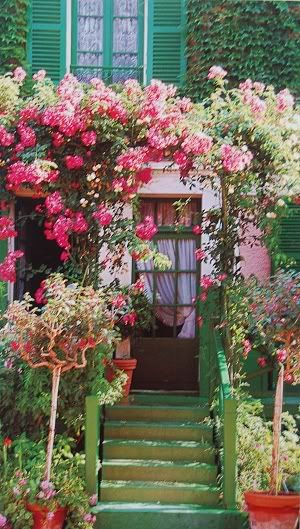
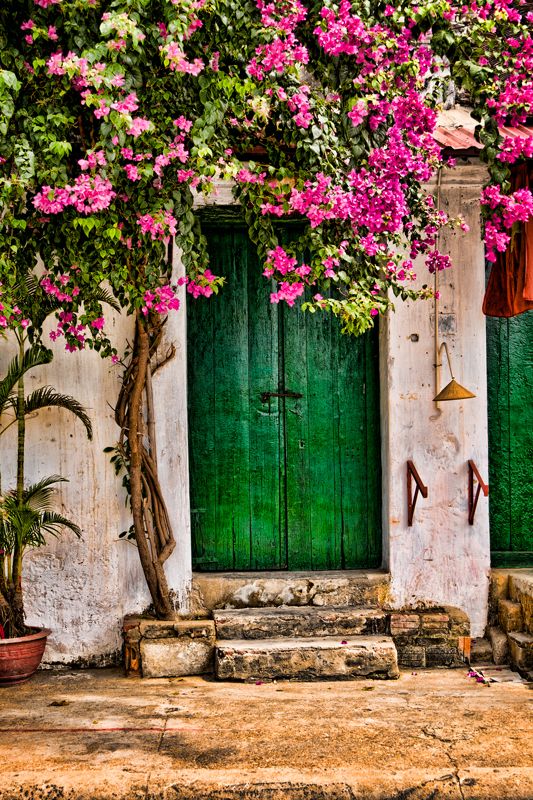
There’s something about a flowering doorway that moves the heart, that speaks of beauty and happiness.

It greets those who enter by framing them with fragrance, color, and loveliness,

and when leaving the abode, it provides a way of welcoming the day, a portal to pass through sure to initiate optimism and joy.

And if you are simply passing by, it offers a wish for happiness —


a silent act of generosity that bestows the gift of beauty and enriches the viewers, who, if their hearts are open, will carry the sweetness with them.

door 10

(all images from Pinterest)

The Garden House — in winter (images from Pinterest)

gardenhouse_kindle_hiThough the story of The Garden House opens in late spring and closes in the fall, I made a Pinterest board called “The Garden House – winter.” The main character, Miranda, lives in Seattle and has a beautiful garden that’s an integral part of her life. I imagine her loving her garden in all seasons, including the rain and occasional snow of winter.

In The Garden House, Miranda’s garden becomes a  metaphor for life, with themes of family, change, memories, home, and the search for meaning. When all else goes wrong, Miranda retreats to her garden, with a cup of tea in hand, and finds solace.

Surrounded by the beauty of her garden, she allows herself to be captivated and inspired by the mysteries of life.

I imagine Miranda enjoying her garden in January, curled up in her window seat and watching the falling snow cover the birdhouses, birdbaths, and terra cotta pots.

I see her strolling through her garden, delighting in the vestiges of summer and fall — frost-covered roses, hydrangeas, and Queen Anne’s Lace.

In every season, Miranda fills her home with cuttings from her garden. I imagine her gathering branches of winter berries and greenery to make bouquets for her dining table and to set among the plants of the greenhouse window in her kitchen.

Perhaps she even brushes off the snow from a deck chair, and sipping a cup of hot chocolate, enjoys the tranquility and quiet of her winter garden.

table deck snow


Irises of May

irises railing Canva

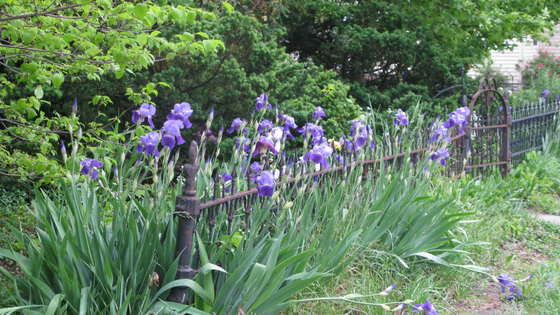
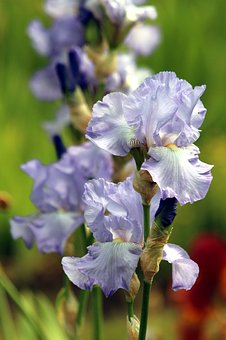
I love the irises I come across growing along old fences, or inside a garden, in different stages of unfurling: some still in tightly bound spears with tips of saturated color, others gracefully opened in full display. Like peonies and other spring flowers, their relatively brief  appearance creates a sort of urgency to appreciate them before they disappear with the season.

pix (554)

Irises always remind me of a visit to my hometown many years ago. On a walk through the side streets, I came upon a small house with a startling burst of color alongside a fence. From a thick row of slender green blades bloomed bunches and bunches of irises — tall and elegant, in colors of ethereal blue, dusky mauve, yellow, and combinations of royal purple and apricot, white and watercolor rose, lavender and deep gold. I had to step closer to marvel at the rich array, so casually crowded along the fence.

The owner of the house, an elderly woman with a warm smile, caught me admiring her flowers and offered to show me her garden in the back of the house. It was even more breath-taking — tucked away from view, full of winding brick paths and interesting details set among gorgeous flowers. It must have taken her years to create such a work of art. When I told her how much my mother would love the garden, she graciously welcomed us to stroll through it whenever we wanted, even if she wasn’t at home. I had the feeling that the woman’s generosity and kindness came from the same internal place as her desire to create the beautiful garden — a place that takes pleasure in life and wants to add to the world’s beauty. I brought my mom back later that day, and the delight she took in the garden remains etched in my mind long years since.

I’ve often thought of that May garden, and wondered how many other secret gardens there are in my town, and in the cities I have lived in, and the places I have visited. How many people create works of beauty for the sheer joy and pleasure they bring? How many so freely and graciously offer their efforts to passers-by in patches of flowers, or window boxes trailing with color, or in potted blooms in front of a house? Like the best parts of ourselves, flowers require tending to be coaxed into being, to be nourished with love and sunlight and weeding and watering. The result is a sort of two-way gift that is offered back to the world in a communication beyond words.

pale blue iris

Over the weekend, I took out my terracotta pots and planted them with rose and purple stock, pink geraniums, and scarlet carnations, and set them on my steps just outside the door.

The End of April

2 blossoming trees

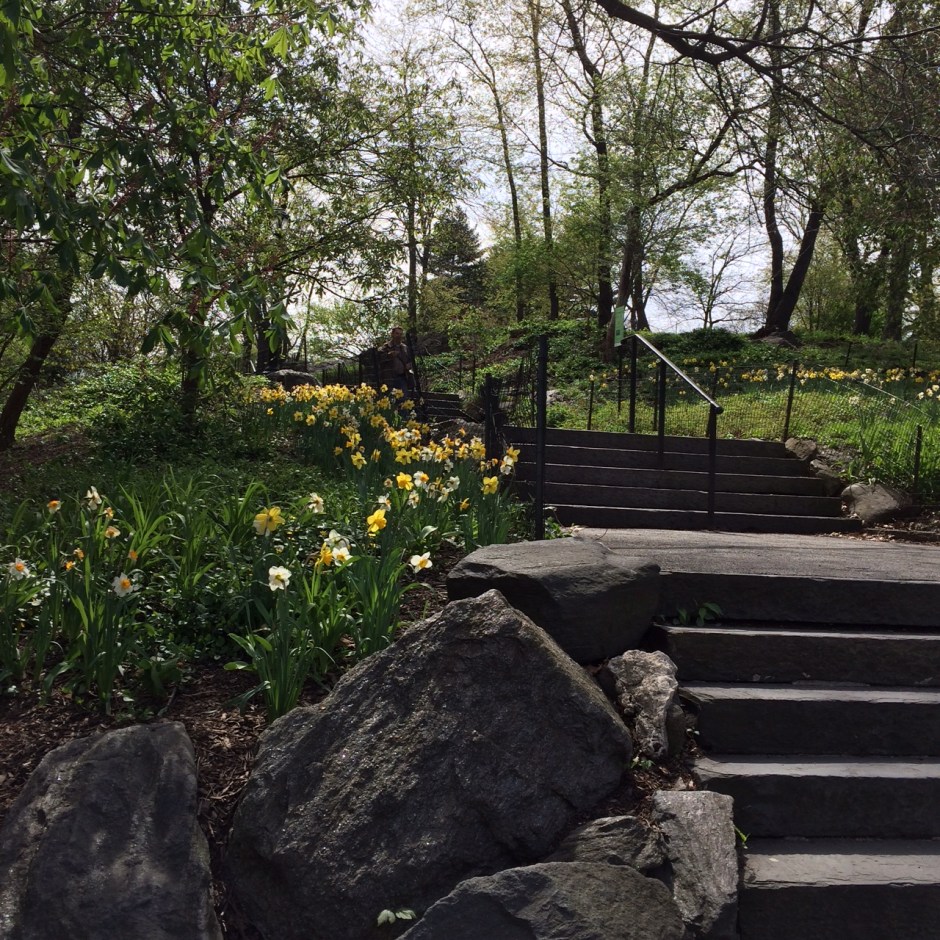
Do schoolchildren still sing the song “April Showers”? I think every year since I was a girl, some line, if not the whole song, runs through my mind in April. In an involuntary response, part of the melody just pops into my head when someone laments the rain, or when I come across a patch daffodils or violets.

daffodils for blog

A quick online search shows that the song was written in 1921 (in a period of post-war, pre-Depression optimism), and was introduced by Al Jolson in a Broadway musical. As can only be expected, the song’s  relentless optimism inspired parodies: “When April showers, she never closes the curtain…,” and a skit where a bucket of water is thrown on the far too cheerful performer. [https://en.wikipedia.org/wiki/April_Showers] (Some versions of the song, as with Judy Garland’s, begin with “When” rather than “Though.”)

April showers lyrics

Such sentimentality lingered on in the optimism of the 1960’s schoolroom, at least in small-town Illinois. On an old upright piano, our music teacher played from a repertoire that ranged from war songs to the flowers of spring, and the over-sized class of baby-boomers belted out tunes about violets, caissons rolling along, and flowers that bloom when the fairies sing.

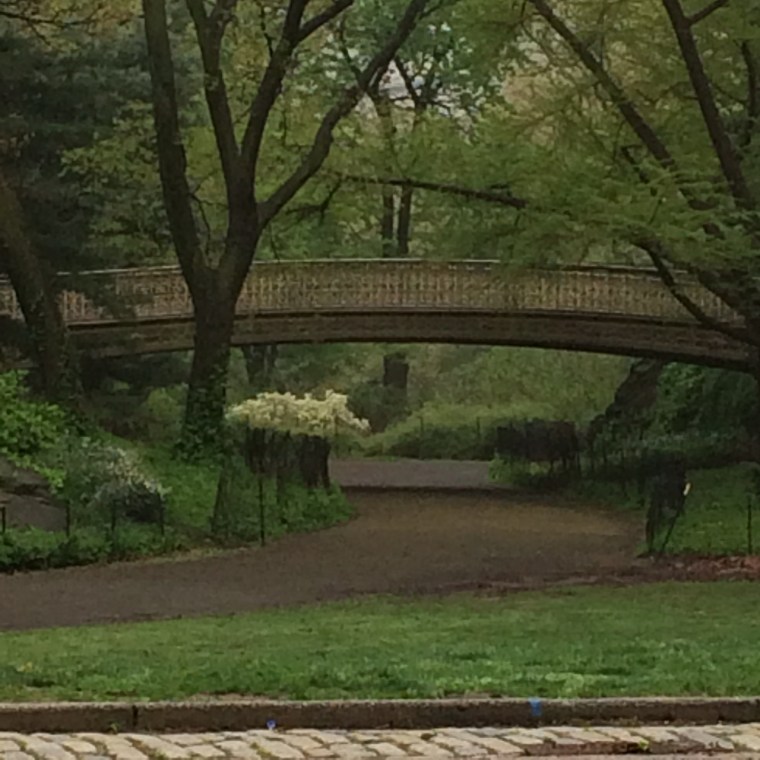
I love the rain of April and the color it brings. On such days the air itself seems tinged with green, so lush are the leaves and grass.

2 bridge

Green, rainy places have always held the most allure for me. On a trip years ago, I fell in love with Ireland and the Lake District in England — and very much want to go back. And a trip to Bangladesh had me gasping at such luxuriant green everywhere.

I actually moved to Seattle when I was young because I had heard that it was beautiful and hilly and green — and rainy. A soft rain was common enough, but dramatic storms with thunder and lightning, like Midwestern storms, were rare. Still, the soft rains kept Seattle blooming in flowers nearly all year long, and it lived up to its reputation as a beautiful, hilly, green city. (They call it the Emerald City and the last time I was there, they even had a yellow brick road to prove it.)

New York, like the Midwest, has seasons of intense green — April through June, for the most part. So when April showers come my way, I take my umbrella and indulge in the wealth of green.

2 post iris


2 tulips Columbus Circle