Books and Flowers

flowers and books

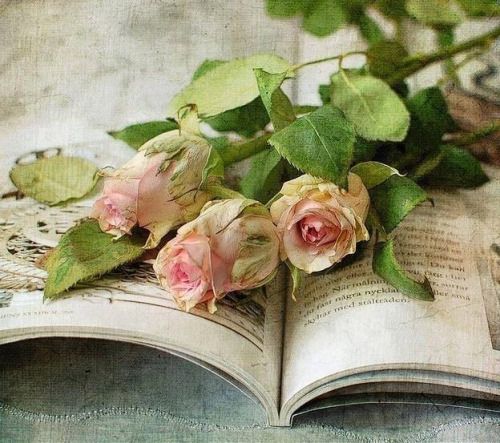
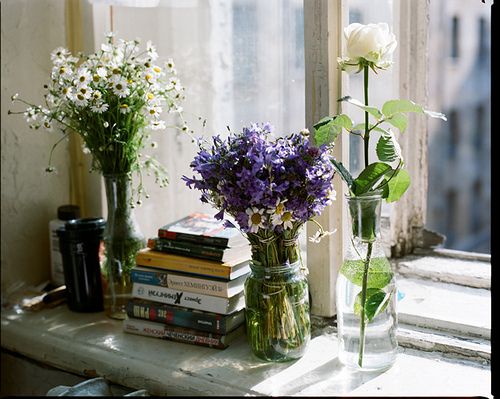
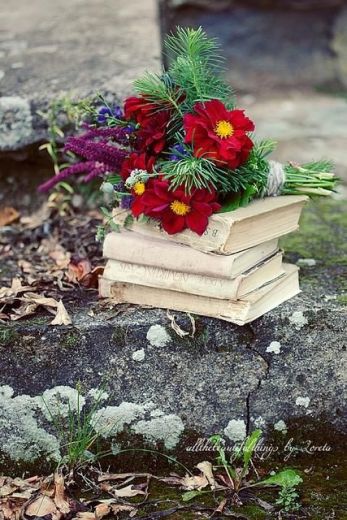
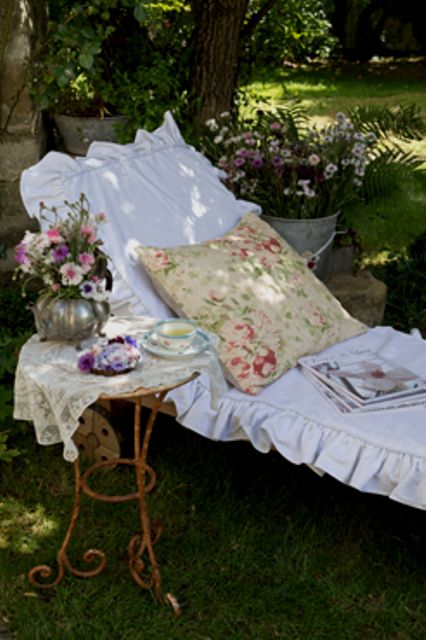
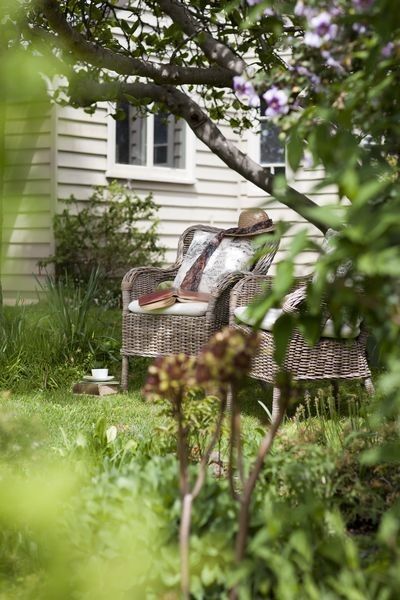
The grouping of books with flowers is a poetic one — whether it’s a studied composition, an impromptu arrangement, or simply a flower used as a bookmark. Both books and flowers serve as portals to worlds of beauty, meaning, and pleasure. The pairing is made more poignant by the contrast of one being ephemeral, the other ever-lasting.

“With freedom, books, flowers, and the moon, who could not be happy?” – Oscar Wilde

books and flowers 11

“With a few flowers in my garden, half a dozen pictures and some books, I live without envy.” – Lope de Vega

GH 1e

“Flowers lead to books, which leads to thinking and not thinking, which leads to more flowers and music, music. Then many more flowers and more books.” – Maira Kalman

books and flowers 5

“Here’s to fresh coffee, sunshine, morning walks, blooming flowers, good books and all the other simple but glorious pleasures of life.” – (I’m not sure who said this, but I couldn’t agree more.)

Beautiful blue

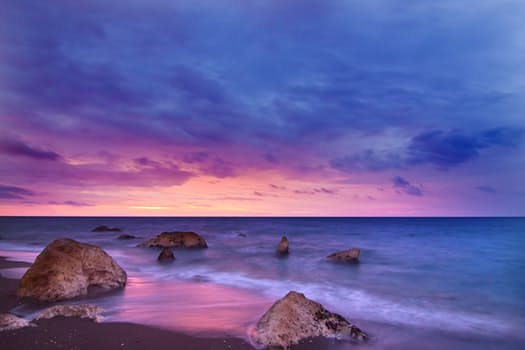
blue ocean

“Blue, darkly, deeply, beautifully blue.” – Robert Southey

blue mosque

“Blue color is everlastingly appointed by the deity to be a source of delight.” – John Ruskin

blue cathedral rectangle

“A certain blue enters your soul.” – Henri Matisse

Ultramarine – “The most perfect of all colors,” Cennino Cennini

“Sometimes called ‘true blue,’ ultramarine is made from the semiprecious gemstone lapis lazuli, which for centuries could only be found in a single mountain range in Afghanistan.

Lapis first appeared as a pigment in the 6th century. Around 700 years later, the pigment traveled to Venice and soon became the most sought-after color in medieval Europe. For centuries, the cost of lapis rivaled the price of gold.
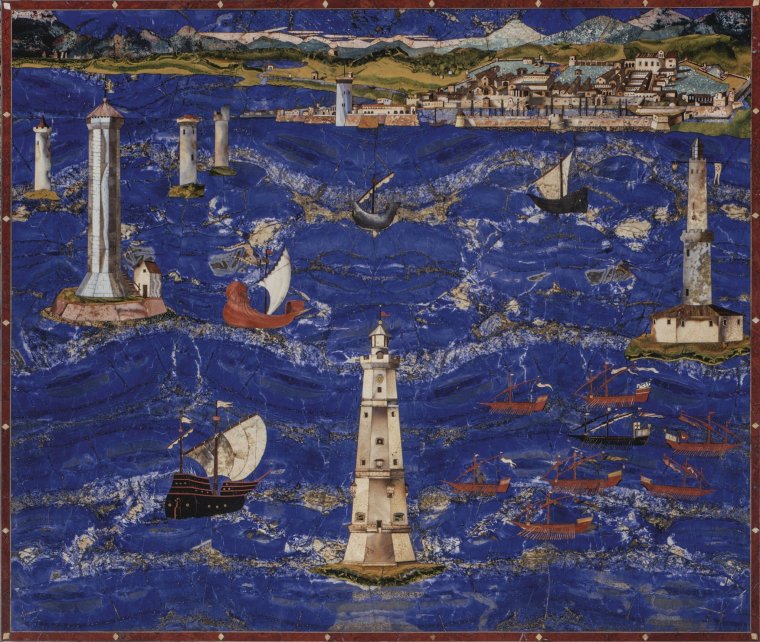
lapis painting 1600

Legend has it that Michelangelo left his painting The Entombment (1500–01) unfinished because he could not generate the funds to buy ultramarine blue. Raphael used the pigment scarcely, applying it above base layers of azurite when depicting the Virgin Mary’s blue robe. The Baroque master Vermeer, on the other hand, bought the color in spades, so much so that his indulgence pushed his family into debt.” http://www.artsy.net

Indigo is a natural dye rather than a pigment for painting. It was used to color fabrics, clothing, yarns, and luxurious tapestries. Unlike lapis lazuli, whose rarity drove its high prices, the indigo crop could be grown in excess and produced across the world, from India to South Carolina.
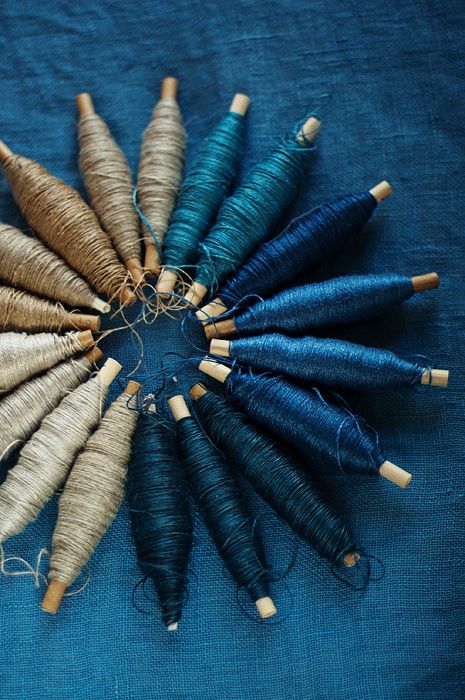
blue thread

Commonly considered a shade of blue, indigo is not a separate color in its own right, so why does it get its own band in the rainbow?

Indigo dyeing was especially popular in England, home to physicist Sir Isaac Newton. Newton believed that the rainbow should consist of seven distinct colors to match the seven days of the week, the seven notes in the musical scale, and the seven known planets. Confronting the fact that the rainbow only displayed five unique colors, Newton pushed indigo, along with orange, much to the dismay of some contemporary scientists.” www.artsy.net

“Jean fabric was first produced in Genoa, Italy, in the 17th century; the French city of Nimes copied the technique shortly after (“de Nimes” aka “denim”). The cotton twill fabric, dyed with indigo, was sturdy and washable, making it perfect for workers.” www.artsandculture.google.com 

“Blue has more complex and contradictory meanings than any other color.

blue glasses

Dark blue: trust, dignity, intelligence, authority

Bright blue: cleanliness, strength, dependability, coolness
(The origin of these meanings arise from the qualities of the ocean and inland waters, most of which are more tangible.)

Light (sky) blue: peace, serenity, ethereal, spiritual, infinity
(The origin of these meanings is the intangible aspects of the sky.)

Most blues convey a sense of trust, loyalty, cleanliness, and understanding. On the other hand, blue evolved as symbol of depression in American culture. “Singing the blues” and feeling blue” are good examples of the complexity of color symbolism and how it has been evolved in different cultures.” http://www.colormatters.com

“Pink for girls and blue for boys is a surprisingly recent tendency. Even as late as 1927 some fashion stores recommended pink for boys.” http://www.express.co.uk
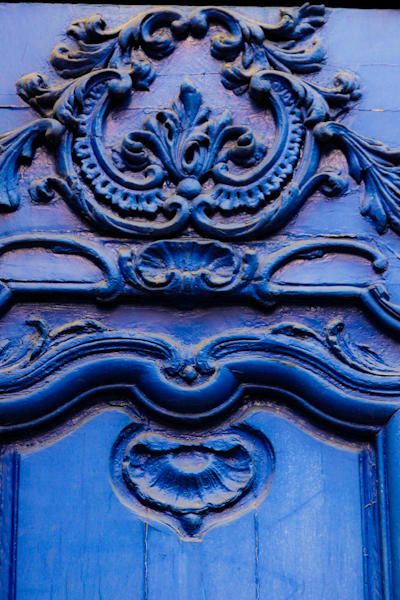
blue stucco ornament

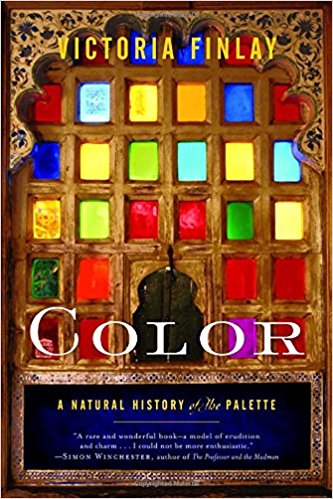
For a fascinating book on color, read Victoria Finlay’s books.

Finlay book
Color: A Natural History of the Palette by Victoria Finlay  Link: http://a.co/bfRUBxs


Images from my Pinterest board on color

Tea in the garden

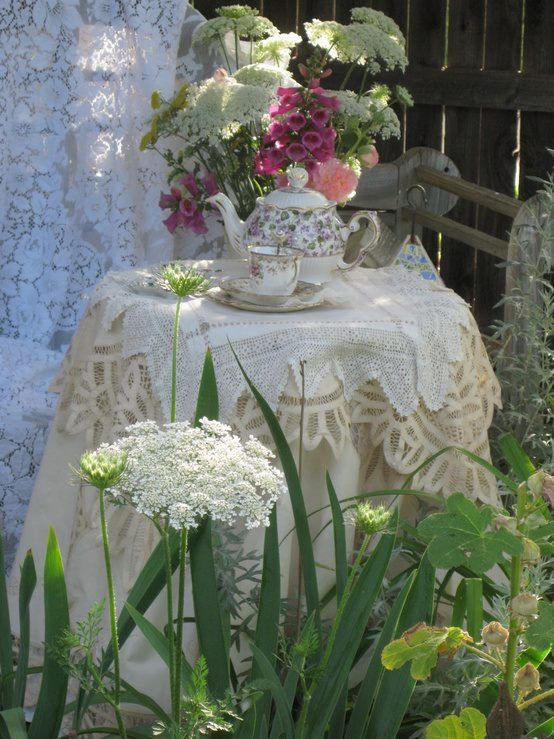
In my novel The Garden House, the main character, Miranda, often takes a cup of tea out into her beloved garden and curls up on a bench as she takes in the beauty of her flowers. Her garden offers both solace and pleasure.  It’s the perfect place to read a good book, to visit with a friend, or to sit quietly and enjoy the simple tranquility of nature.

GH tea 6“Strange how a teapot can represent at the same time the comforts of solitude and the pleasures of company” ~Author Unknown

GH tea 1

GH tea 10“Find yourself a cup; the teapot is behind you. Now tell me about hundreds of things.” ~Saki

“Tea is quiet and our thirst for tea is never far from our craving for beauty.” ~James Norwood Pratt

Gh tea 7

“You can’t get a cup of tea large enough or a book long enough to suit me.” ~C.S. Lewis,

GH tea 4

“Where there’s tea there’s hope.” ~Arthur Wing Pinero

GH tea 2


Giverny — Life as a work of art

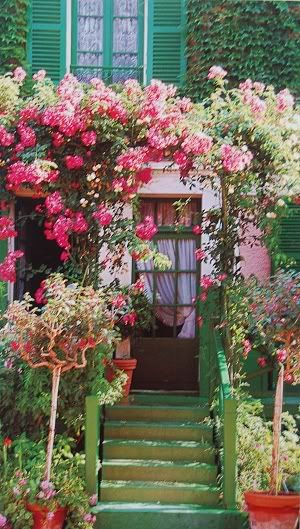
For quite some time, I’ve been dreaming about my next trip to France. Paris, of course, but I also want to see Normandy. Among other sites, Mont Saint-Michel has been beckoning for years. And high on my list is a trip to Giverny — Claude Monet’s home and gardens. I would love to see it in all seasons, but for my first visit, I want to experience it in the springtime. Giverny is what happens when you give yourself completely, and passionately, to something you love.

Giverny 6

Quotes from Monet’s letters:

“My garden is a slow work, pursued with love and I do not deny that I am proud of it. Forty years ago, when I established myself here, there was nothing but a farmhouse and a poor orchard…I bought the house and little by little I enlarged and organized it…I dug, planted, weeded myself; in the evenings the children watered.” – Claude Monet


“I perhaps owe having become a painter to flowers.” – Claude Monet


“My garden is my most beautiful masterpiece.” – Claude Monet


“People discuss my art and pretend to understand as if it were necessary to understand, when it’s simply necessary to love.” – Claude Monet

Giverny 5

“I work at my garden all the time and with love. What I need most are flowers, always, and always.” – Claude Monet

Giverny 8

“I want to paint the way a bird sings.” – Claude Monet

Giverny 3

“My heart is forever in Giverny.” – Claude Monet


In Like a Lion, Out Like a Lion


snow 2

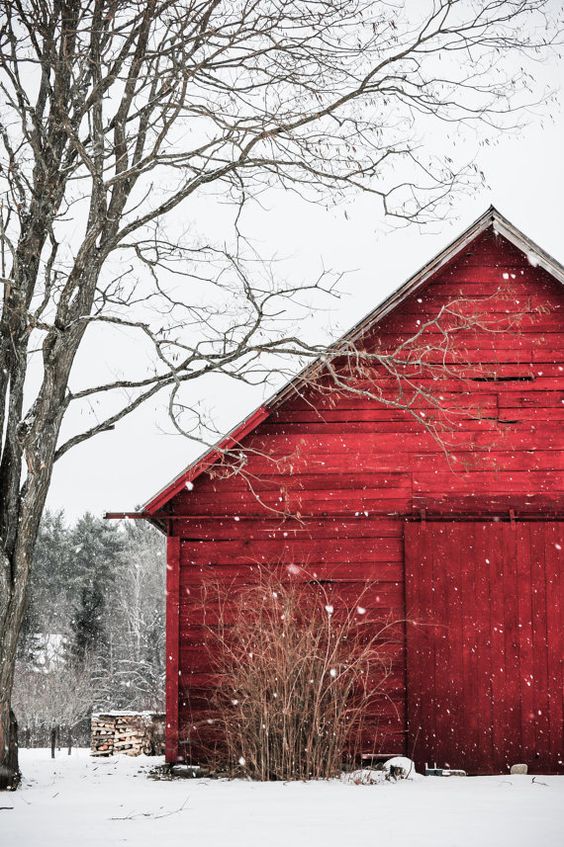
March came in like a lion, roaring and pouncing upon us with several snowstorms. After yesterday’s March Nor’easter #4, the world this morning appeared soft and white, with the fences and tree branches outlined in snow.

snow 5


Some of the trees looked like cotton bushes — fluffy white, and light as air. As if you could pluck a bunch of snow, stretch it thin, and spin it into cloth.


And yet — once spring has officially arrived, and April is close at hand, no one wants to hear about how beautiful the snow is. They’re ready for color and a bit of warmth, for signs of growth in the garden, and the first touch of green on the trees.

snow crocuses

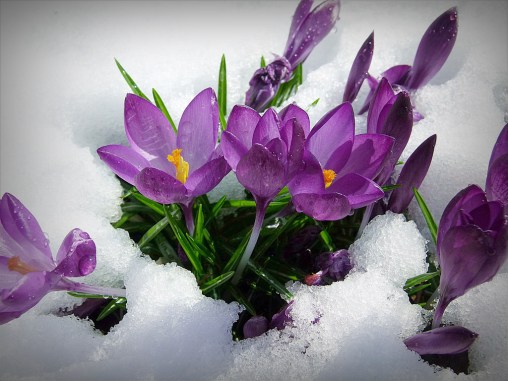
I’ve found a hint of spring in my garden in the small cluster of crocuses and a few green spears of hyacinth leaves — a welcome sight. All it takes is a bit of color to assure us of the promise of spring.

snow blossoms 2


The Night Sky

NYC aerial night

Flying over Manhattan at night is beautiful to behold. Below lays a glittering, golden metropolis — silent, twinkling, sprawling. An utter transformation from its gray and gritty daytime self. At night, the city enters the realm of the magical, the fairytale, the mystical.

In a way, it’s an odd reversal of star-gazing, as if we have created a facsimile of the stars here on earth, to be viewed from above.

stars 3

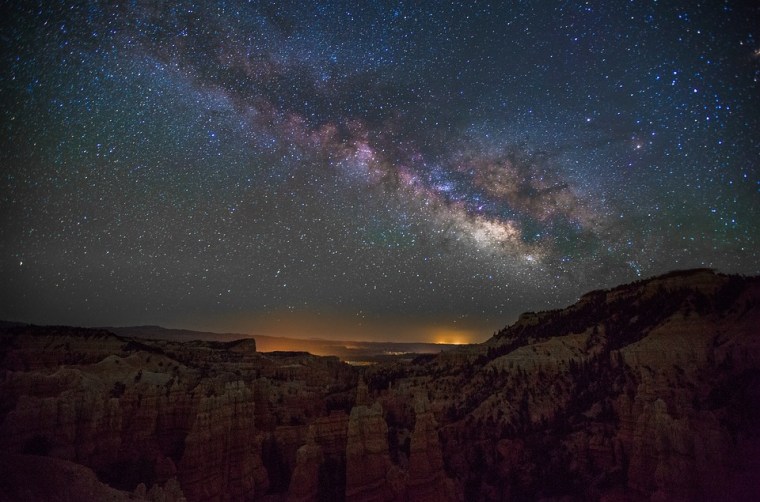
I have read that there are tours for stargazing that take you to far away places where the night sky still reigns.  It must feel like taking a step back in time, where we can see the sky as we saw it for hundreds of thousands of years — an upper land that played before our eyes, the shapes and patterns of stars and planets shifting and traveling with the seasons. The firmament must have been held as a mix of prayer, ritual, entertainment, wonder, and peace. An infusion of beauty that the human night soul absorbed in quiet, simple, cosmic connection.

stars 2

I had a taste of that connection growing up in small-town Illinois. The night sky was a source of beauty, anytime you wanted to step outside and look up. Which we often did, inspired by the curiosity of our mom. From the prosaic location of the driveway or the sidewalk out back, she would stand beneath the glittering stars and marvel in wonder. We would crane our necks this way and that trying to locate the Big Dipper or Orion’s Belt, and question if some of the brightest stars were actually planets — Venus or Mars.

And years later, visiting my sister’s house out in the country in Oregon, we have stretched out in the deck chairs and gazed at the firmament — growing excited at the shooting stars, feeling that instant connection to a distant past, and to something far far beyond earth worries. It seems almost too wondrous to believe that all you have to do is gaze upwards at night to dip into another world full of mystery and beauty,  inconceivably distant and enormous — yet ever-present, just there for the taking.

blue stars night


The Christmastime stories — rural and small-town Midwest

The Christmastime books, stories of love and family on the home front during the World War II years, portray an America with one foot firmly in the past and the other poised on the threshold of change. The setting for these stories, for the most part, is New York City. However, a few storylines are set in the rural Midwest.

I was born and raised in small-town Illinois and the beauty of the landscape there — old farm houses set among fields and pastures, trains running to and from the small towns, the  woods and orchards that change with the time of year — has always had a strong pull on me. The seasons are rich and distinctive, and the snowy winter setting perfect for the Christmastime stories.

In the first book of the series, Christmastime 1940, we find that Charles Drooms’ past is deeply rooted in rural Illinois, and there are a few flashbacks to his boyhood and life on the farm that explain many of his decisions later in life.

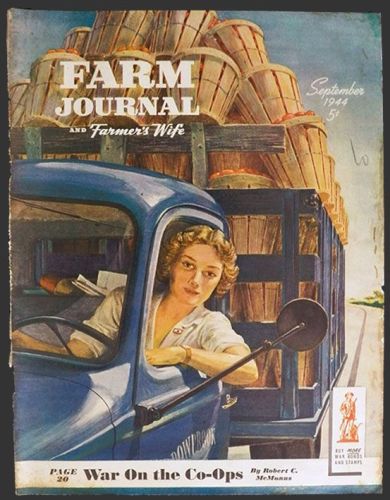
In a later book, there’s a scene where Lillian works on a series of illustrations depicting the role of women on the farm. With so many men enlisted, women had to step into the workforce and fill jobs that had recently been held by men. Lillian draws on her memories of visiting Kate’s farm in the summer of 1941.

postere farm woman

Beginning in Christmastime 1943, a key storyline takes place on Kate’s farm involving her daughters, Ursula and Jessica, and the German POWs who work on the farm while Kate’s sons are away at war. The scenes depict the connection of living close to the land with the rhythms of the seasons, and the rigor and back-breaking work required by farm life.

The farm scenes help to portray a period when time moved more slowly, and a place where most foods were locally grown and cooking was done from scratch.

A time when the home arts played an important role in day-to-day living,

and small-town life offered simple charm and the opportunity for visiting and shopping.

The tension between the beauty and bleakness of the Midwestern winter landscape also serves to reflect the complexities in Ursula, a young woman often driven by opposing impulses.

And on a larger scale, the small town and farm scenes offer a counterpoint to the New York City scenes. The tranquility and wholesomeness of the countryside serve as a reminder of how much was at stake in the war.

The rural setting also represents the tens of thousands of young men, such as Kate’s four sons, who left their small towns and farms to fight in Europe and the Pacific. For many of them, it was the first time ever leaving home. For them, the very idea of “home,” and everything it symbolized, became a deeply cherished and protected ideal.

pie and chair

(For more images evocative of the world of Christmastime, please visit my Pinterest boards at http://www.pinterest.com/lindamahkovec/)

October

autumn lake

There’s an old green-covered book I open this time of year. The spine is split in some parts, the lettering on the cover is faded. It’s a book of poems by Robert Frost that my mother gave to me in high school. It was already worn back then. I don’t know if she bought it used somewhere around town or if someone made a gift of it to her years before. It wasn’t a formal presentation or given to mark a special occasion. It was like the other things she gave to us – a sort of “here’s something you might enjoy,” or “take a look at this.” Items that would simply appear on our dressers without any note at all – Classic Comics for my brothers, a porcelain bluebird for my sister’s collection, a red maple leaf, an exotic stamp off a letter from her brother who traveled widely. Things that would delight, pique our curiosity, entertain, or answer to inner longings.

The book of poems resonated deeply with me, especially the ones in the beginning of the book from the section “A Boy’s Will.” The autumn poems in particular became the ones that most spoke to me. “October” might have been the first poem I ever memorized, outside of school assignments. I memorized it because I wanted the words inside me, I wanted to walk through an autumn day and have the words at the ready: “O hushed October morning mild, Thy leaves have ripened to the fall, Tomorrow’s wind, if it be wild, Should waste them all.”

CP autumn bridge

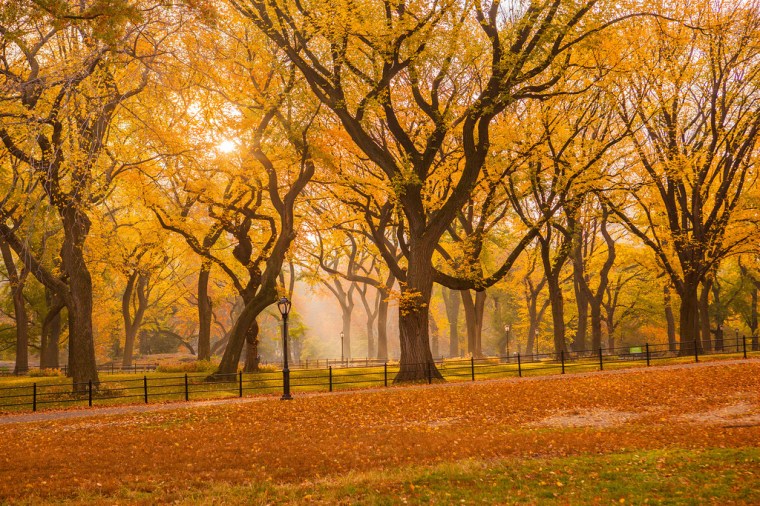
These many years later, the words are still there. As I walk through the neighborhood or cut through Central Park, a solitary leaf might float down from a tree on a mild autumn day, and I hear the words: “Release one leaf at break of day, At noon release another leaf.” The birds in the autumn sky might caw and without any prompting my heart recites: “The crows above the forest call; Tomorrow they may form and go.”

CP yellow elms

The simple book of poems remains the touchstone of autumn for me – it embodies the solitary, the nostalgia and memories of other Octobers, and the deep connection of inner yearning with outer seasonal beauty.

book with leaves

(Thank goodness Robert Frost didn’t stop at October. His poem “My November Guest” soon became my favorite.)

yellow leaf on bench

Late September — Central Park

1 trees yellow

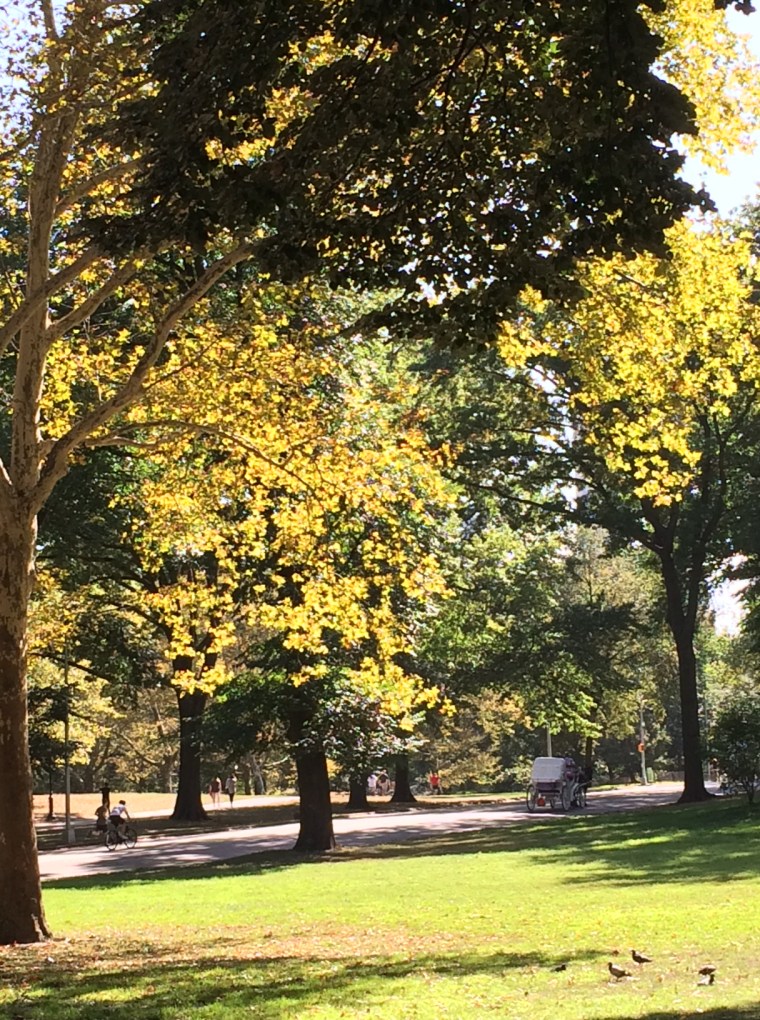
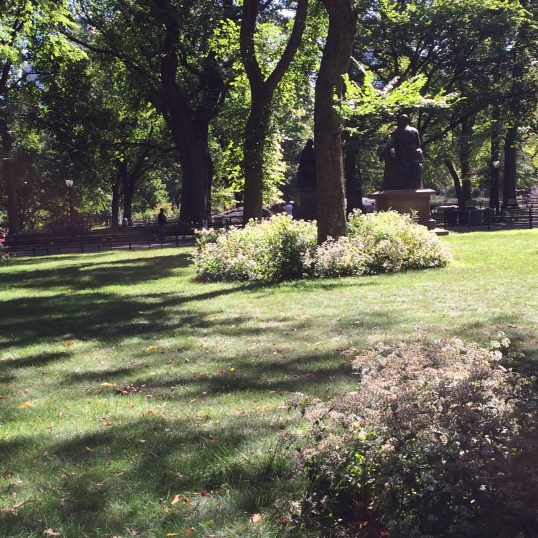
Yellow. The color of late September. Faded gold, gilded green, amber. In Central Park today, even the air appeared yellow as sunlight filtered through the thinning leaves. Throughout the park, yellow leaves lay scattered beneath the trees, on the roads, sidewalks, and grass. The day was unusually warm and the bright sun brought out the golden hues.

blog header September CP

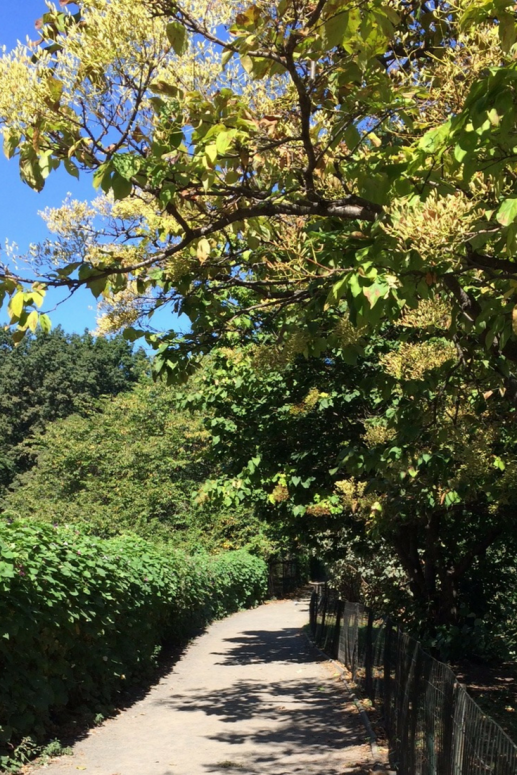
I strolled through one of my favorite walkways, a short path alongside a fence covered in a tangle of morning glories. The vines still showed pink and purple, with yellowed leaves mixed among the green.

yellow lane

Something caught my attention in the distance, and I had to stop and stare, puzzling out what I was seeing. A patch of air glittered among the yellow trees. I realized it was a shaft of sunlight shining on a spray of water from a sprinkler. Shadows boxed it in so that it looked like a square patch of sparkles hovering in the air.

Straggly clusters of flowers still showed a bit of color, as in the clouds of white that surrounded the elms.

flowers elms

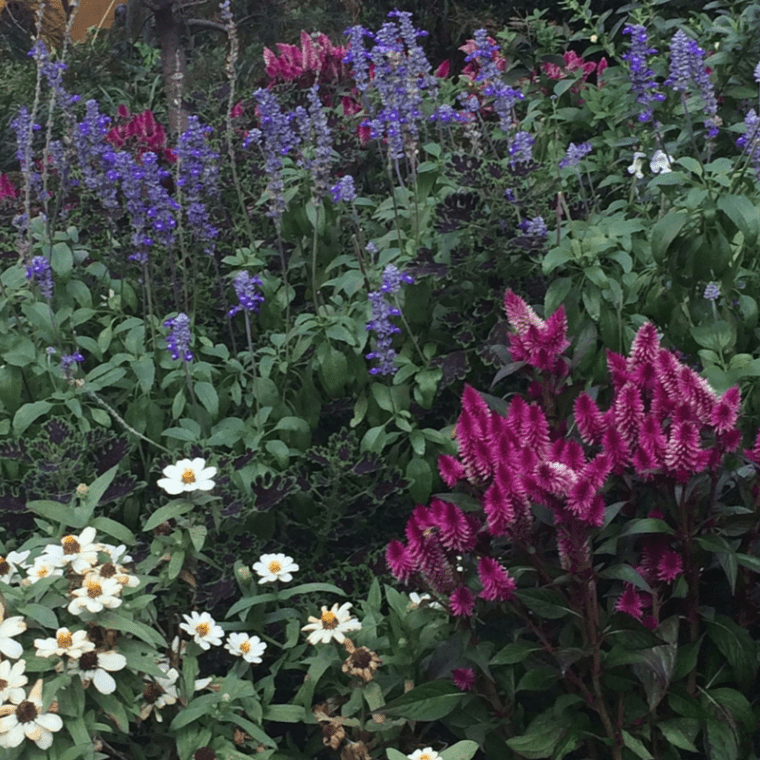
And though most flowers now have woody stems and drooping leaves, there are still vibrant patches of color to be found, soaking up the warmth of late September.

colored flowers

The weather will change soon and cooler temperatures will bring about the more dramatic colors of autumn. Who knows? By next week touches of orange and red might tinge the trees. And September’s soft yellow will shift to the sharper, more vibrant yellow of October.

leaf


Beautiful Evening / Beau Soir


stream blog header

Sometimes the words of a phrase or sentence jars your center and subtly slips into your core, lodging there. It may be years later, or even decades, that you realize they have become a part of you. Many years ago, I came across a poem that had such an effect on me — “Beau Soir” by Paul Bourget, that Claude Debussy set to music.
Beau Soir

Lorsque au soleil couchant les rivières sont roses,
Et qu’un tiède frisson court sur les champs de blé,
Un conseil d’être heureux semble sortir des choses
Et monter vers le coeur troublé.
Un conseil de goûter le charme d’être au monde
Cependant qu’on est jeune et que le soir est beau
Car nous nous en allons,
Comme s’en va cette onde:
Elle à la mer,
Nous au tombeau.

wheat field sunset

Beautiful Evening

When streams turn pink in the setting sun,

And a slight shudder rushes through the fields of wheat,

A plea for happiness seems to rise from all things

And it climbs up towards the troubled heart.

A plea to relish the charm of life

While there is youth and the evening is fair,

For we pass away as the wave passes: 

The wave to the sea, and we to the grave.

The tender intimacy of the poem, simple yet profound, stirred something deep inside and I sought out such end-of-day streams and fields, and later, ocean sunsets. The poem gave birth to a never-ending desire to seek out and become part of such moments of tranquil beauty.

pink purple ocean

It created a sort of urgency to embrace the loveliness of life — “while there is youth and the evening is fair.”