In Like a Lion, Out Like a Lion


snow 2

March came in like a lion, roaring and pouncing upon us with several snowstorms. After yesterday’s March Nor’easter #4, the world this morning appeared soft and white, with the fences and tree branches outlined in snow.

snow 5


Some of the trees looked like cotton bushes — fluffy white, and light as air. As if you could pluck a bunch of snow, stretch it thin, and spin it into cloth.


And yet — once spring has officially arrived, and April is close at hand, no one wants to hear about how beautiful the snow is. They’re ready for color and a bit of warmth, for signs of growth in the garden, and the first touch of green on the trees.

snow crocuses

I’ve found a hint of spring in my garden in the small cluster of crocuses and a few green spears of hyacinth leaves — a welcome sight. All it takes is a bit of color to assure us of the promise of spring.

snow blossoms 2


The Night Sky

NYC aerial night

Flying over Manhattan at night is beautiful to behold. Below lays a glittering, golden metropolis — silent, twinkling, sprawling. An utter transformation from its gray and gritty daytime self. At night, the city enters the realm of the magical, the fairytale, the mystical.

In a way, it’s an odd reversal of star-gazing, as if we have created a facsimile of the stars here on earth, to be viewed from above.

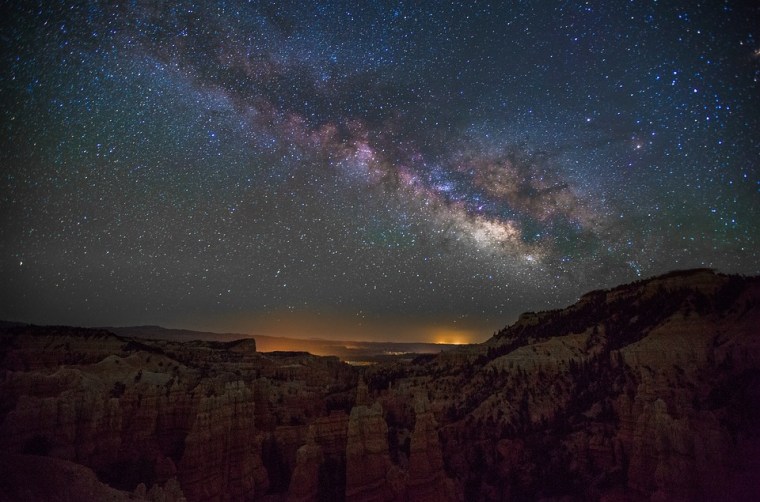
stars 3

I have read that there are tours for stargazing that take you to far away places where the night sky still reigns.  It must feel like taking a step back in time, where we can see the sky as we saw it for hundreds of thousands of years — an upper land that played before our eyes, the shapes and patterns of stars and planets shifting and traveling with the seasons. The firmament must have been held as a mix of prayer, ritual, entertainment, wonder, and peace. An infusion of beauty that the human night soul absorbed in quiet, simple, cosmic connection.

stars 2

I had a taste of that connection growing up in small-town Illinois. The night sky was a source of beauty, anytime you wanted to step outside and look up. Which we often did, inspired by the curiosity of our mom. From the prosaic location of the driveway or the sidewalk out back, she would stand beneath the glittering stars and marvel in wonder. We would crane our necks this way and that trying to locate the Big Dipper or Orion’s Belt, and question if some of the brightest stars were actually planets — Venus or Mars.

And years later, visiting my sister’s house out in the country in Oregon, we have stretched out in the deck chairs and gazed at the firmament — growing excited at the shooting stars, feeling that instant connection to a distant past, and to something far far beyond earth worries. It seems almost too wondrous to believe that all you have to do is gaze upwards at night to dip into another world full of mystery and beauty,  inconceivably distant and enormous — yet ever-present, just there for the taking.

blue stars night


The Garden House — in winter (images from Pinterest)

gardenhouse_kindle_hiThough the story of The Garden House opens in late spring and closes in the fall, I made a Pinterest board called “The Garden House – winter.” The main character, Miranda, lives in Seattle and has a beautiful garden that’s an integral part of her life. I imagine her loving her garden in all seasons, including the rain and occasional snow of winter.

In The Garden House, Miranda’s garden becomes a  metaphor for life, with themes of family, change, memories, home, and the search for meaning. When all else goes wrong, Miranda retreats to her garden, with a cup of tea in hand, and finds solace.

Surrounded by the beauty of her garden, she allows herself to be captivated and inspired by the mysteries of life.

I imagine Miranda enjoying her garden in January, curled up in her window seat and watching the falling snow cover the birdhouses, birdbaths, and terra cotta pots.

I see her strolling through her garden, delighting in the vestiges of summer and fall — frost-covered roses, hydrangeas, and Queen Anne’s Lace.

In every season, Miranda fills her home with cuttings from her garden. I imagine her gathering branches of winter berries and greenery to make bouquets for her dining table and to set among the plants of the greenhouse window in her kitchen.

Perhaps she even brushes off the snow from a deck chair, and sipping a cup of hot chocolate, enjoys the tranquility and quiet of her winter garden.

table deck snow


Downton Abbey — in Manhattan

bells

Recently, my sister-in-law was planning a visit to New York City and when I asked her if there was anything in particular that she wanted to do, she said she would love to see Downton Abbey: The Exhibition. I hadn’t even heard about it, but it sounded like a good idea so I booked our tickets. Though I had only caught a few episodes of the series, I found that I was really looking forward to seeing the exhibit. And in the late afternoon of a cold winter’s day, we stepped into the world of Downton Abbey.

Edith

I was surprised to find that the exhibit was in the recently closed Lee’s Art store on 57th Street, a place I had frequented over the years. The windows that once displayed painting supplies, glittering frames, and whimsical toys, now held an equally enchanting display: images, items, and gifts relating to Downton Abbey — including an exquisite 1920’s dress in peacock blue and gold.

The New York City street was reflected in the window — scaffolding and yellow cabs, parkas and mounds of snow — and seemed a sort of symbolic contrast to the elegance of another era.

window contrast

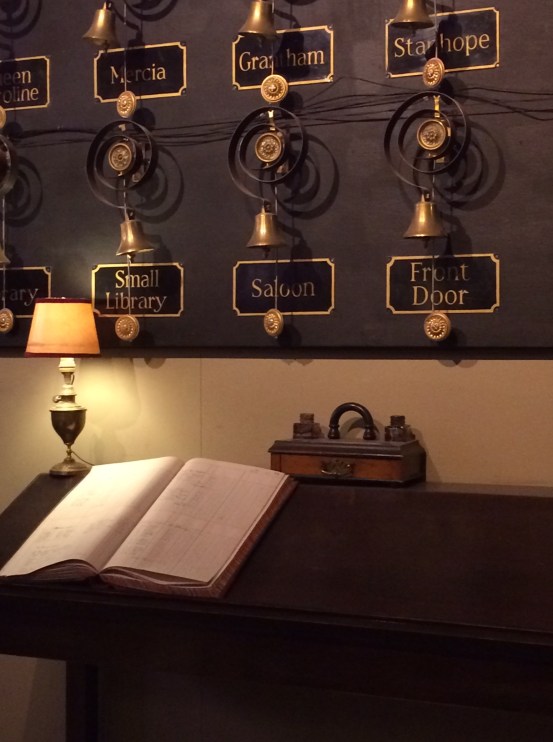
We strolled through the exhibit, laughing as we were greeted by holographic videos (?) of Mr. Carson and Mrs. Hughes welcoming us to Downton Abbey, before they had to hurry away. We entered the “downstairs” area and worked our way up.  There was the kitchen with something simmering on the stove, the carton of eggs, the sounds of chopping and pots and pans being moved about. There was Carson’s pantry with the decanter, and there were those famous room bells.

And there was the dining room with the beautifully set table.

dining table

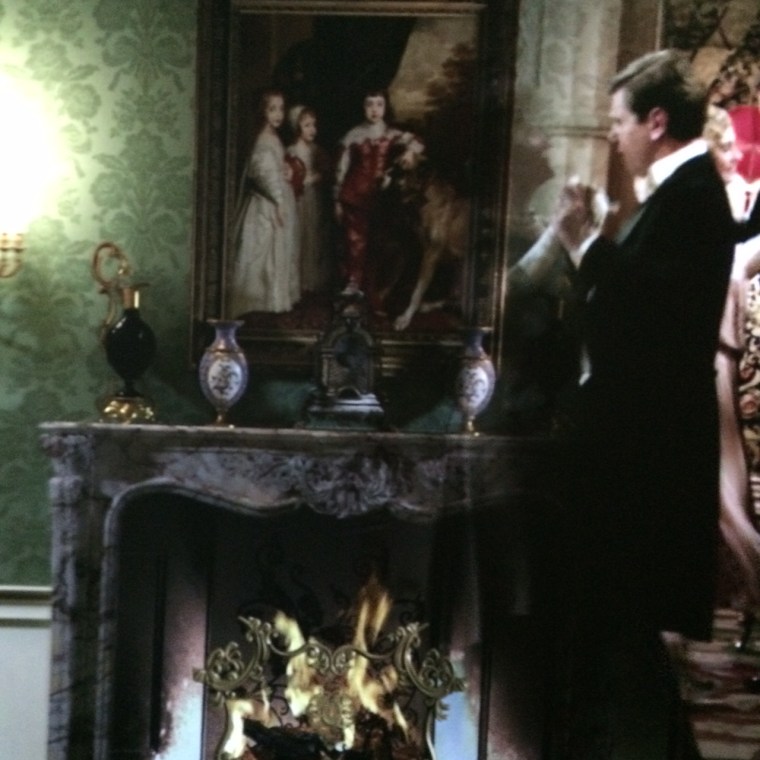
One room had video snippets of different scenes from the series: the explosions and trenches of WWI shifted to tranquil interior scenes of a fire burning brightly in the library.

fireplace video

Another area was dedicated to short film excerpts featuring the acerbic wit of Violet Crawley. And throughout the exhibit were reminders of the period’s codes of conduct and rules of civility.

The clothes were beautiful, and I found myself lingering over the details of trim and beading and lace: the Edwardian opulence of Violet’s clothing, the shimmering elegance of the 1920’s dresses,

and those beautiful necklaces and earrings that complemented the clothing.

On every floor, in every room was the sense of a time gone by and the societal upheavals of yesteryear. One quote posed the idea that perhaps that earlier period was not so unlike our own times, with technology rushing us ahead, creating some disturbing trends, while offering other compensations.

Since I had only caught an occasional episode, I never got to know the characters and plots in the way that many people did.

So, on these snowy January evenings, I’ve started to watch the series from the beginning — paying extra close attention to the buttons and jewelry, the silverware and bells.


Happy New Year!

Happy New Year to all my followers and supporters!

May 2018 bring you closer to your dreams. 

NY8

“There are two mistakes one can make along the road to truth — not going all the way, and not starting.” – Buddha

“A journey of a thousand miles begins with a single step.” – Lao Tzu

NY16

 “The greatest masterpieces were once only pigments on a palette.” – Henry Hoskins

”The beginnings of all things are small.” – Cicero

“To begin, begin.” ― William Wordsworth


London

St. Jpark 2

London is a labyrinth of parks and avenues, winding streets and narrow alleys that lead you from one beautiful neighborhood to another. A quick trip over Thanksgiving impressed me anew with the loveliness of London.

St. Ermin’s Hotel in Westminster was the perfect place to stay. It’s a beautiful Victorian building close to St. James Park and Buckingham Palace and just a block away from the Tube. They were just beginning to decorate for Christmas while we were there.

Hotle night

It had been many years since I last visited London, and for the most part, it was like seeing it through fresh eyes. The skyline had changed greatly — the London Eye alone transformed the feel of the skyline, as did the Shard.

While we were visiting the Tower of London,
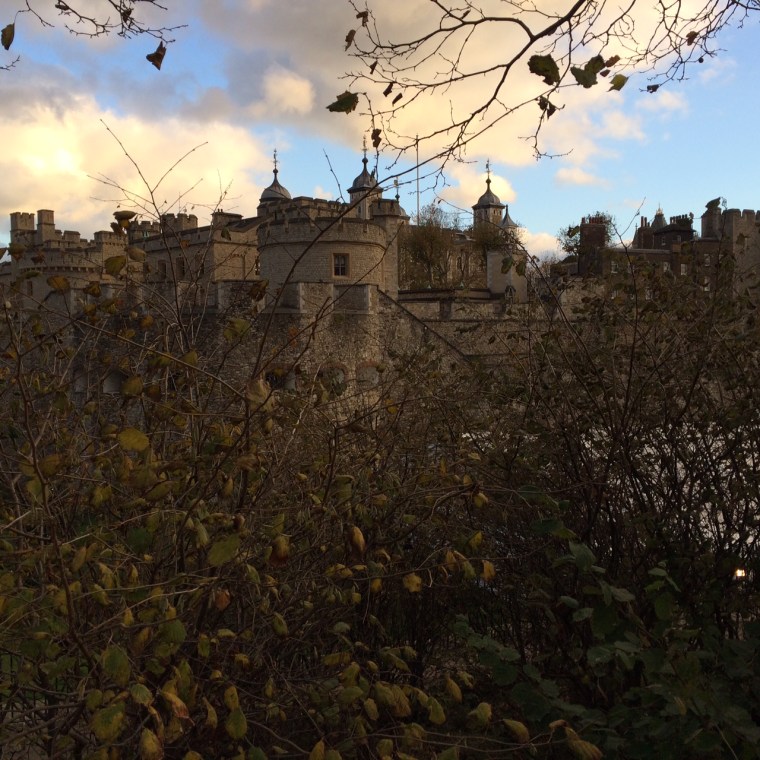
Tower 3

I was struck by the architectural layering of history: a row of Tudor-styled buildings stood behind the thousand-year-old crumbling walls of the fortress, and behind them both rose the Shard. All over London, the historical and the modern are intertwined.

Tower and Shard

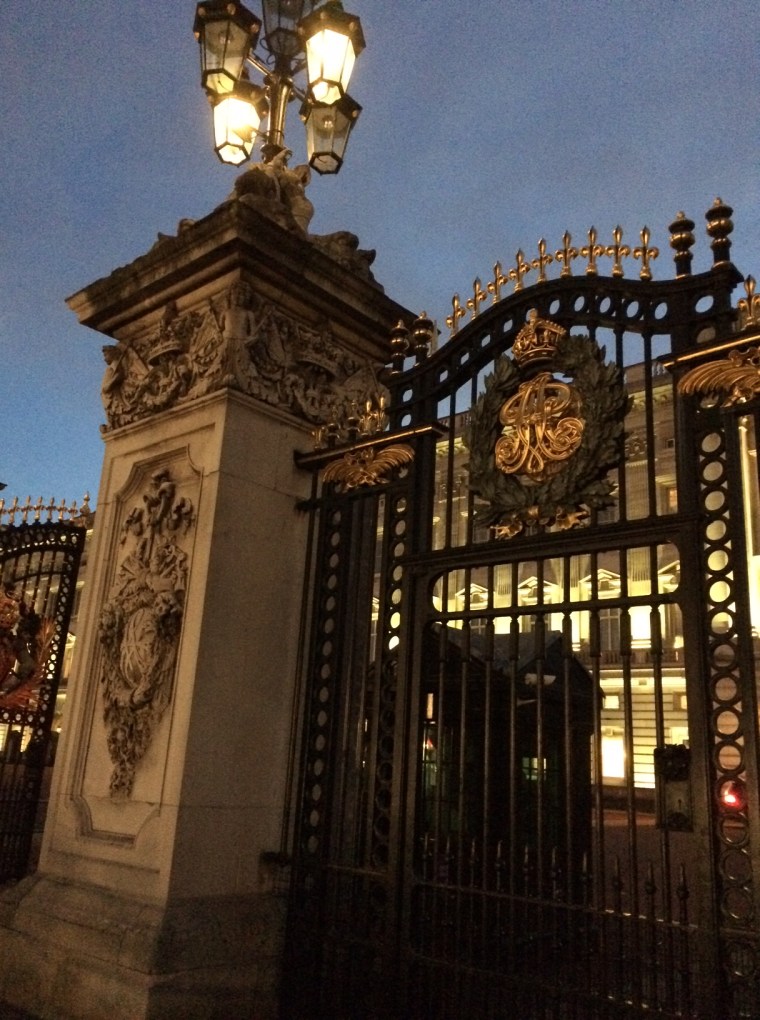
For the most part, my husband and I played tourists, going from one historical site to another: The Tower of London, the Victoria and Albert Museum, Trafalgar Square, the Westminster area (we were disappointed to find Big Ben covered in scaffolding). But Buckingham Palace was beautiful, especially at the end of day when the lights came on.
Buckingham closeup night

This was the first time I visited Notting Hill, and I was immediately taken with its charm. I would love to see it in the spring when the wisteria is in bloom.

NH window

Another afternoon we spent in the ever-changing Brick Lane neighborhood, full of wonderful Bangladeshi restaurants.

Brick Lane

Also new on this trip was a visit to the Leighton House, home of the artist Frederic, Lord Leighton. I fell in love with the exotic tiles and lamps, and the colors he surrounded himself with — rich peacock blue, muted gold, and dark woodwork.

Leighton House tiles

I’m glad we visited London in the late fall. Dusk came early, and by 4:30 the corner pubs and restaurants dotted the evening with golden light and a feeling of coziness and cheer spilled outside onto the sidewalks.

W pub night

Buildings that were beautiful by day took on a deeper beauty by night.

Ian night 3

The shopping areas of Oxford and Bond Streets, and Picadilly Circus glittered with tiny lights and holiday decorations, and were bustling with red double-decker buses and crowds of happy shoppers. A stroll through Selfridges offered a glimpse of the glamour depicted in the Masterpiece period drama Mr. Selfridge.

Stores like Harrods and Selfridges brought to mind the wonderful scene from Howard’s End where Mrs. Wilcox and Margaret Schlegel do their Christmas shopping.

howards-end-christmas-scene

Scenes from movies and books are everywhere. We took a train to the Baker Street Station and above ground saw the Sherlock Holmes Museum (with a long line outside).

Baker Street crop

At King’s Cross station there is Platform 9 and 3/4 from Harry Potter (with an even longer line of children waiting to get their photo taken). Though my list of things to see included the Charles Dickens Museum, the Samuel Johnson House, a stroll through Bloomsbury, and several other sites and parks, five days didn’t allow it.

So I’m already working on another list for my next visit.

Ian night white flowers


The Plaza Hotel – book cover

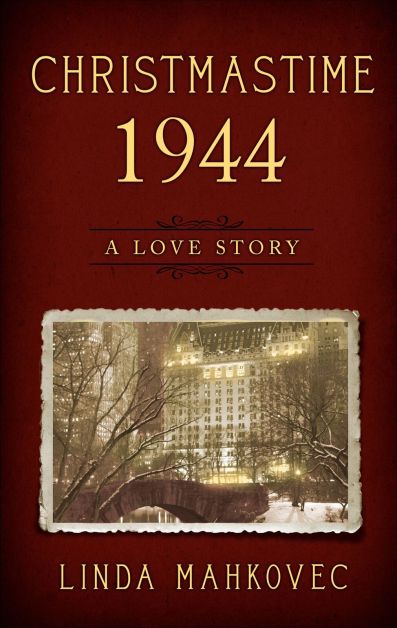
All the book covers in the Christmastime series feature an old-looking photograph set in winter. They to help establish a sense of place and give the impression of peering back in time. The images also portray places that are still in existence in Manhattan, so that the reader can feel it’s possible to step into the world of Christmastime by strolling through New York City, whether literally or imaginatively. Hence, the snowy photographs of a brownstone and several scenes from Central Park.
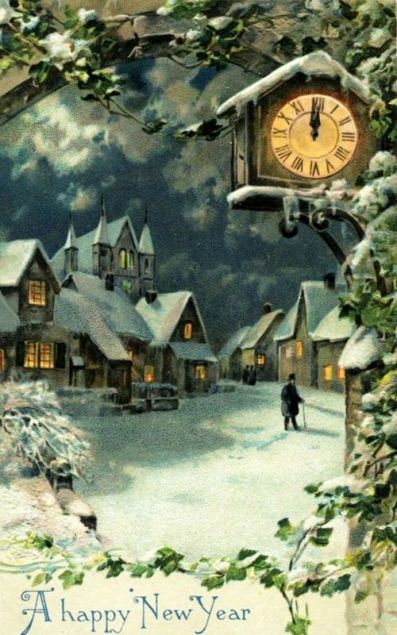
The covers must also reflect the content and tone of the books. I chose increasingly lonesome images and darker colors as the war years wore on, especially for Christmastime 1942 and Christmastime 1943.

Though 1944 was another terrible year, the Allies were clearly gaining the upper hand, and many people believed that the war in Europe would be over by Christmas. (The mid-December surprise count-offensive by the Germans, resulting in the Battle of the Bulge, quashed that hope, and the war raged on.)

But when December arrived, hope was in the air. For the cover of Christmastime 1944, I wanted an image that was lighter, brighter, and more hopeful. When I came across the image of the Plaza Hotel lit up at night, I thought it would be perfect for the story – especially since the hotel figures into one of the plots.

cover Christmastime 1944

If you’re ever in Manhattan, stop by the Plaza Hotel for lunch or tea. Stroll through the lobby to look at the beautiful bouquets of seasonal flowers, the mosaic floors, and the stained-glass ceiling in the Palm Court.


And if you’re in the Christmastime frame of mind, you just might catch a glimpse of a lovely woman in a 1940’s satin and chiffon green dress.

Plaza PP mosaic

The autumn leaves are falling like rain…

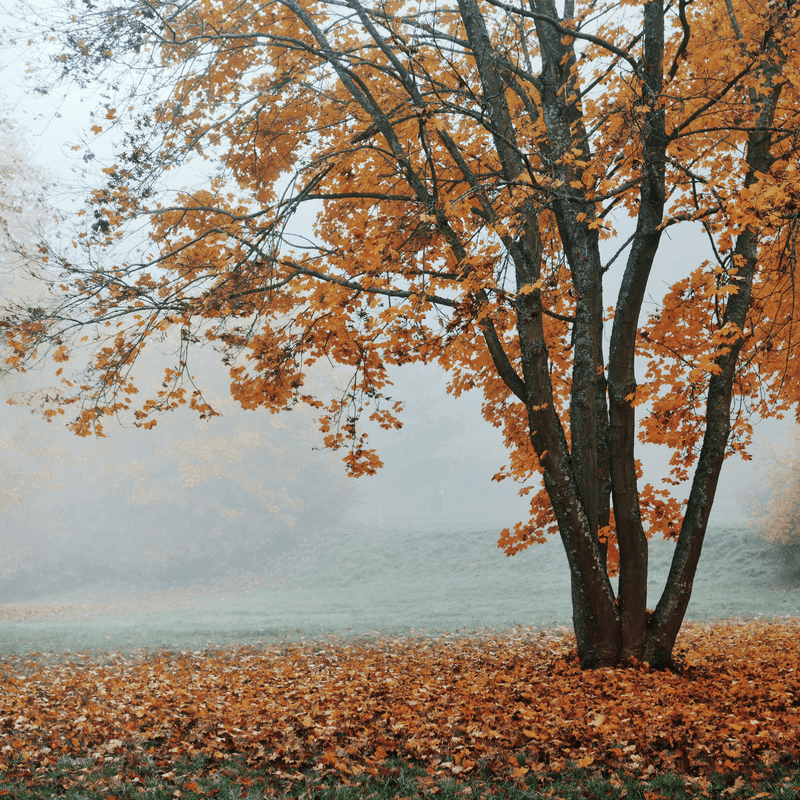
autumn mist and leaves

There’s a poem I’ve come across over the years that is simple, beautiful, and lyrical. It seems to find expression in different times, in slightly different wording. All the versions are evocative, stirring up rich images and emotions.

The autumn leaves are falling like rain,
Although my neighbors are all barbarians,
And you, you are a thousand miles away,
There are always two cups at my table.   – Tang Dynasty poem

In this version, most likely translated from the original, I imagine a rugged landscape,

rugged autumn


perhaps the Great Wall of China,

GW China autumn

and a cup of tea.

Chinese teacup

A quick search reveals a few remarkable facts about the period the poem was written in: “China’s Tang Dynasty, 618-907, is often considered the Golden Age of Chinese poetry. During this period, poetry was an important part of social life at all levels of society. Scholars were required to master poetry for the civil service exams, but the art was theoretically available to everyone. Tang poetry has had an ongoing influence on world literature.” (Wikipedia)

However, there are other, similar versions of the poem. Perhaps the poem has been been translated in various ways throughout the years, or perhaps different poets were moved by the universality of the poem and reworked it for their time and place.

For example, this later version about an earlier period, is said to describe the far reaches of Britannia under Roman rule:

Here at the frontier 
There are fallen gods 
And my neighbours 
Are all barbarians 
Although you 
Are thousands of miles away 
There will always be on my table 
Your cup.

Different imagery comes to mind: the wall morphs to Hadrian’s Wall, the landscape shifts to bleak highlands. I imagine damp cloaks, stomping horses, tents pitched next to a sputtering campfire.

And more recently, these lines, close to the original, appear in John Fowles’ The Magus:

“Here at the frontier there are falling leaves; although my neighbors are all barbarians, and you, You are a thousand miles away. There are always two cups at my table.”

rainy leaves window

All the versions suggest forced separation – perhaps by war, conquest, travel of some sort – contrasted with the memory of friendship, the comforts of home, civility.  They speak of longing, memory, and the hope for future togetherness. And most of all, they express that it’s the simple things in life that have the greatest pull on us.


October

autumn lake

There’s an old green-covered book I open this time of year. The spine is split in some parts, the lettering on the cover is faded. It’s a book of poems by Robert Frost that my mother gave to me in high school. It was already worn back then. I don’t know if she bought it used somewhere around town or if someone made a gift of it to her years before. It wasn’t a formal presentation or given to mark a special occasion. It was like the other things she gave to us – a sort of “here’s something you might enjoy,” or “take a look at this.” Items that would simply appear on our dressers without any note at all – Classic Comics for my brothers, a porcelain bluebird for my sister’s collection, a red maple leaf, an exotic stamp off a letter from her brother who traveled widely. Things that would delight, pique our curiosity, entertain, or answer to inner longings.

The book of poems resonated deeply with me, especially the ones in the beginning of the book from the section “A Boy’s Will.” The autumn poems in particular became the ones that most spoke to me. “October” might have been the first poem I ever memorized, outside of school assignments. I memorized it because I wanted the words inside me, I wanted to walk through an autumn day and have the words at the ready: “O hushed October morning mild, Thy leaves have ripened to the fall, Tomorrow’s wind, if it be wild, Should waste them all.”

CP autumn bridge

These many years later, the words are still there. As I walk through the neighborhood or cut through Central Park, a solitary leaf might float down from a tree on a mild autumn day, and I hear the words: “Release one leaf at break of day, At noon release another leaf.” The birds in the autumn sky might caw and without any prompting my heart recites: “The crows above the forest call; Tomorrow they may form and go.”

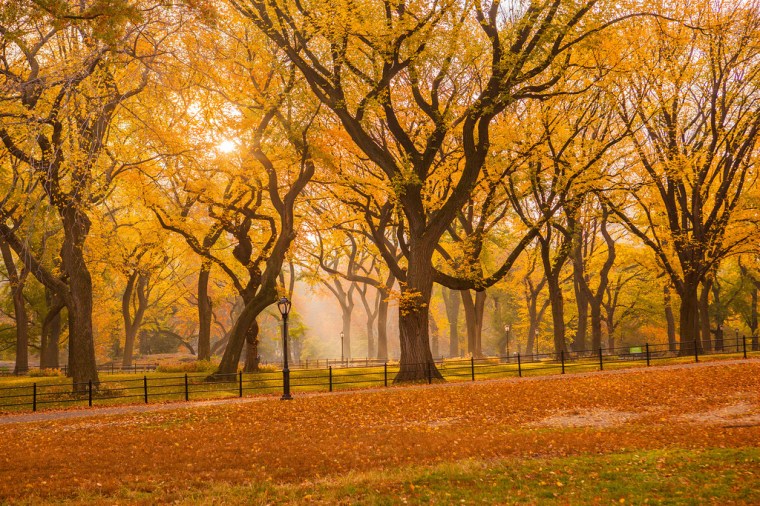
CP yellow elms

The simple book of poems remains the touchstone of autumn for me – it embodies the solitary, the nostalgia and memories of other Octobers, and the deep connection of inner yearning with outer seasonal beauty.

book with leaves

(Thank goodness Robert Frost didn’t stop at October. His poem “My November Guest” soon became my favorite.)

yellow leaf on bench

Autumn Orchards

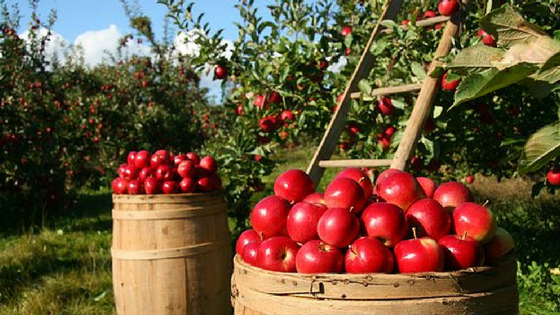
red apples

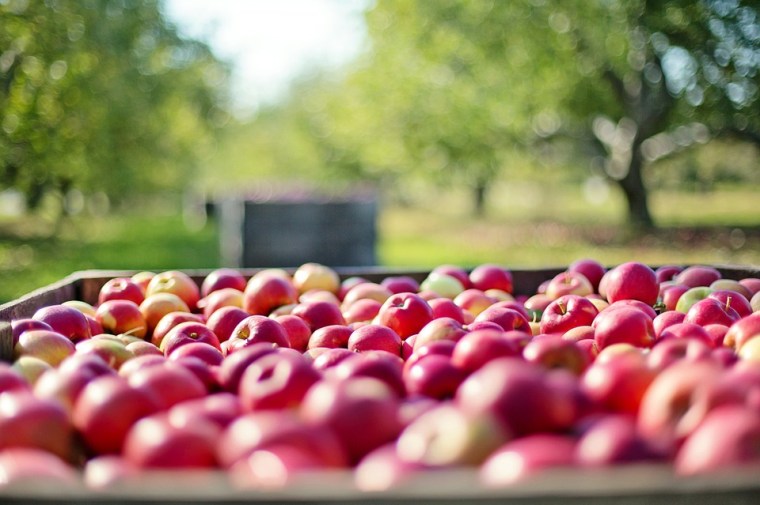
A trip to the orchard always feels like stepping back in time, especially at this time of year. There is something quaint and old-fashioned about the crates of red, green, and yellow apples, the rows of trees and pumpkin fields under an open sky, the warm colors of autumn’s harvest all around.
Even the things you can buy at an orchard are wholesome and picturesque. Besides bags of apples, there are rows of jams and honey, pumpkins and gourds, and ears of Indian corn in those gorgeous colors that always surprise.

And who can pass up the apple cider, the caramel apples, and the apple cider donuts?

There were several orchards around the small town in Illinois where I grew up. But there was one we went to every fall, making almost weekly trips to buy apples. We’d also buy jars of apple butter, homemade peanut brittle, and containers of popping corn. Once I was visiting home during the Fall Festival and was lucky enough to find beautiful bunches of bittersweet for sale. They were tied in thick clusters, vibrant in color. I bought several bunches and they decorated my NYC apartment for many years.

The old-fashioned, romantic allure of the orchard  found its way into my WWII era Christmastime series. The main character, Lillian, was raised in upstate New York where the seasonal beauty of the orchards and fields influenced her as an artist. She moves to the city, but her sister, Annette, runs an orchard with her husband. Lillian is grateful to have that haven to return to, where she can reconnect with her girlhood and enjoy the pleasures of country living. And her two boys, Tommy and Gabriel, love the freedom of running through the orchard and playing in the cider house. And sometimes, they celebrate Christmas there.

orchard apples on ground

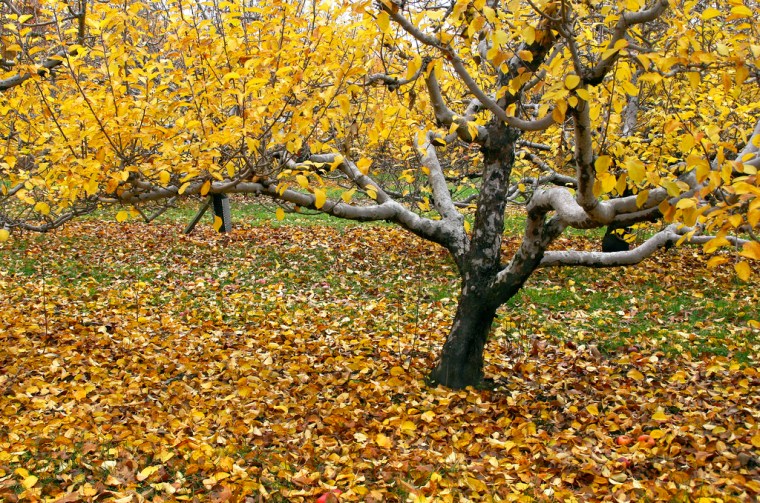
This time of year is all too brief — the harvest season, apples and pumpkins, the colors of fall, sweater weather. Soon the trees will soon lose their leaves, the temperatures will drop, and the orchards will close their doors.

orchard yellow leaved tree

Before that happens, make a trip to an orchard — crunch into a juicy apple, take some cider home with you, treat yourself to a caramel apple. Or just stroll around the earthy charm of the orchard, and savor this beautiful time of year.

orchard path fall