Tea in the garden

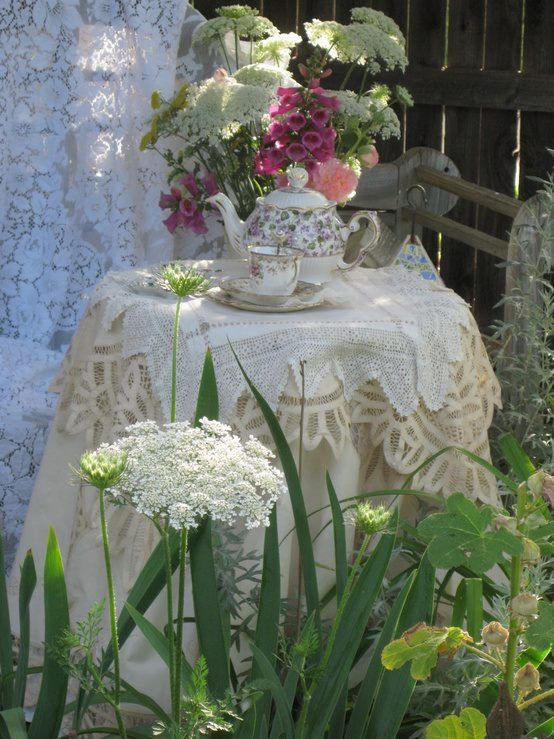
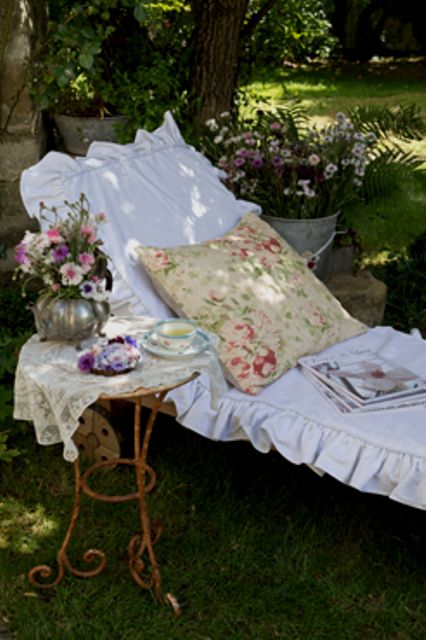
In my novel The Garden House, the main character, Miranda, often takes a cup of tea out into her beloved garden and curls up on a bench as she takes in the beauty of her flowers. Her garden offers both solace and pleasure.  It’s the perfect place to read a good book, to visit with a friend, or to sit quietly and enjoy the simple tranquility of nature.

GH tea 6“Strange how a teapot can represent at the same time the comforts of solitude and the pleasures of company” ~Author Unknown

GH tea 1

GH tea 10“Find yourself a cup; the teapot is behind you. Now tell me about hundreds of things.” ~Saki

“Tea is quiet and our thirst for tea is never far from our craving for beauty.” ~James Norwood Pratt

Gh tea 7

“You can’t get a cup of tea large enough or a book long enough to suit me.” ~C.S. Lewis,

GH tea 4

“Where there’s tea there’s hope.” ~Arthur Wing Pinero

GH tea 2


Valentine’s Day

Valentine blowup

“I love you not only for what you are, but for what I am when I am with you.” – Elizabeth Barrett Browning

“Each time you happen to me all over again.” – Edith Wharton

V piano roses

“In case you ever foolishly forget, I am never not thinking of you.” – Virginia Woolf

“All, everything that I understand, I understand only because I love.”  – Leo Tolstoy

“To love or have loved, that is enough. Ask nothing further. There is no other pearl to be found in the dark folds of life.” – Victor Hugo

V Amour petals

 “I wish you to know that you have been the last dream of my soul.” – Charles Dickens

Happy New Year!

Happy New Year to all my followers and supporters!

May 2018 bring you closer to your dreams. 

NY8

“There are two mistakes one can make along the road to truth — not going all the way, and not starting.” – Buddha

“A journey of a thousand miles begins with a single step.” – Lao Tzu

NY16

 “The greatest masterpieces were once only pigments on a palette.” – Henry Hoskins

”The beginnings of all things are small.” – Cicero

“To begin, begin.” ― William Wordsworth


It’s A Wonderful Life — a Christmas classic (and an inspiration for indie writers)

crop It's A Wonderful Life (1)

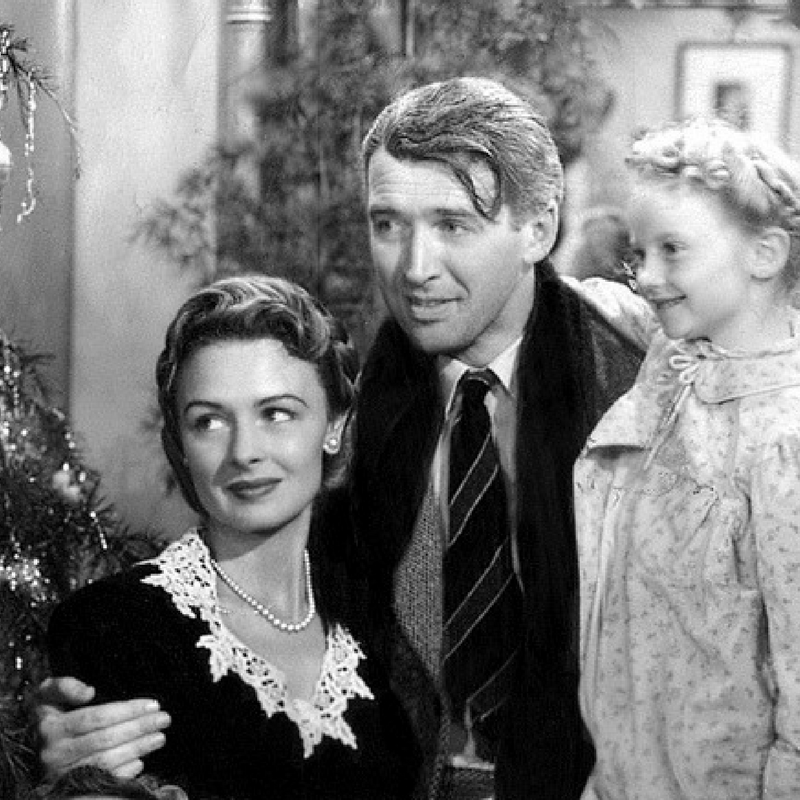
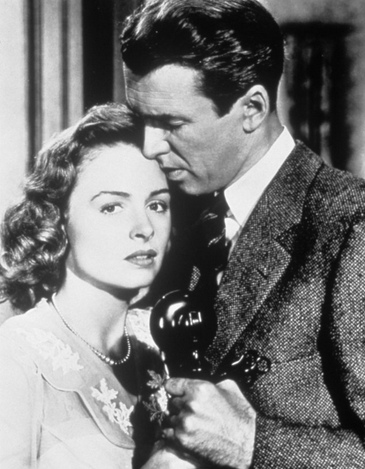
People often ask me what movies or books my Christmastime series is most similar to. For many reasons, the movie It’s A Wonderful Life comes to mind. It’s set during and just after WWII, it’s a story about love and family, the importance of friends and neighbors, and it’s about transformation.

Clarence

I happened to catch it on TV the other night, and though I know the movie by heart, I found that I loved it as much as ever.

on phone

The story behind the movie is also “wonderful,” and offers an inspirational example for today’s independent writers. The movie is based on a short story by Philip Van Doren Stern (1900 – 1984), an American author, editor, and Civil War historian.

The story goes that in “February 1938, Stern awoke with the story in mind. Inspired by a dream that was reminiscent of Charles Dickens’ 1843 A Christmas Carol, Stern wrote a 4,000 word short story called The Greatest Gift. He began work on it in 1939 but didn’t finish until 1943.

Dickens

Unable to find a publisher for his story, he printed two hundred copies of the story and distributed them as Christmas cards in 1943. One of the original palm-sized booklets came to the attention of a producer at RKO Pictures who purchased the rights, and then sold them to Frank Capra in 1945.” (Wikipedia)

Frank Capra title

“From this humble beginning, a classic was born. Stern’s story captivated Capra, who said he ‘had been looking for [it] all [his] life.’ Capra’s beloved adaptation, It’s a Wonderful Life, was released in 1946,” (Zoetrope – www.all-story.com) and has become part of the American Christmas tradition.

bell on tree


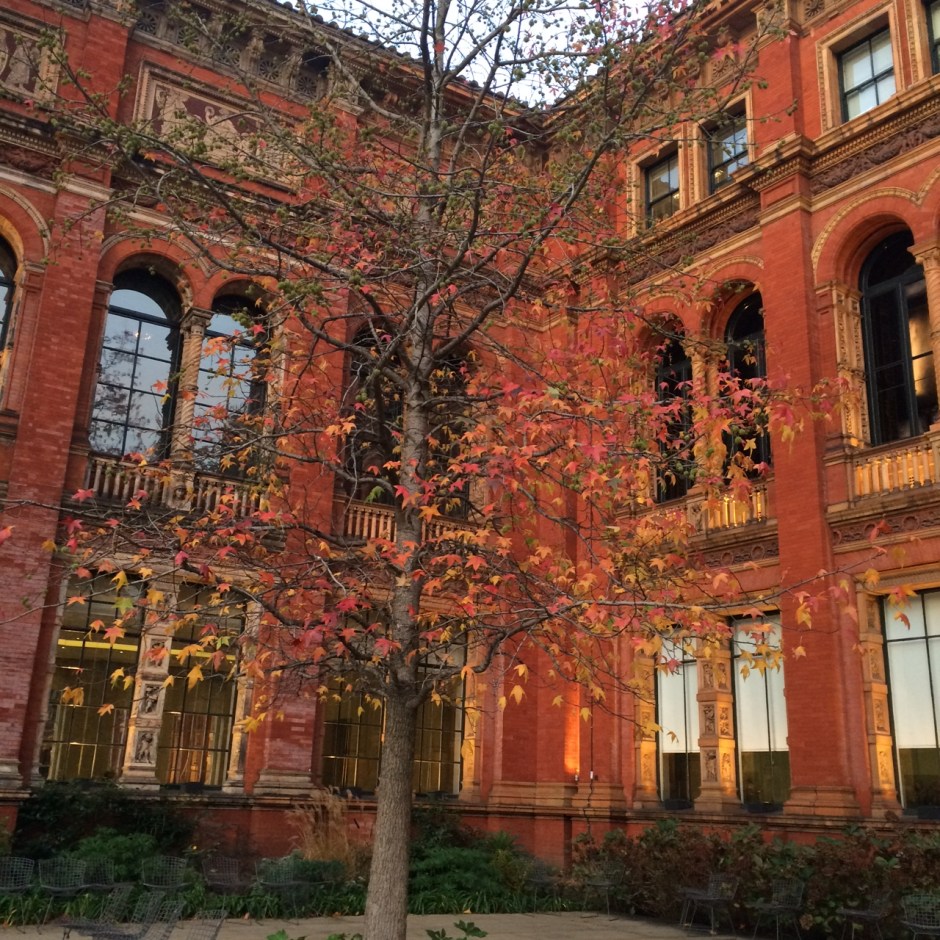
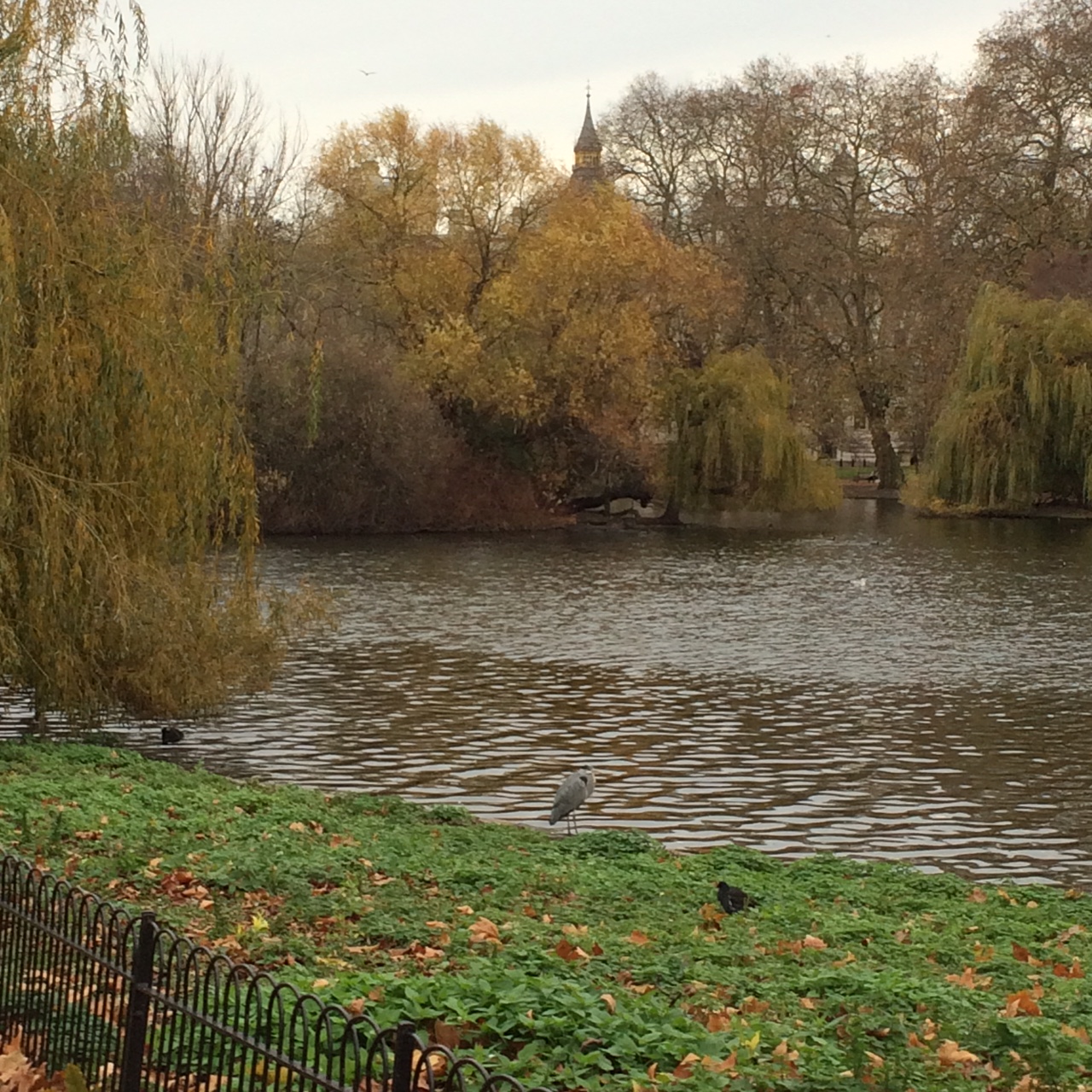
London

St. Jpark 2

London is a labyrinth of parks and avenues, winding streets and narrow alleys that lead you from one beautiful neighborhood to another. A quick trip over Thanksgiving impressed me anew with the loveliness of London.

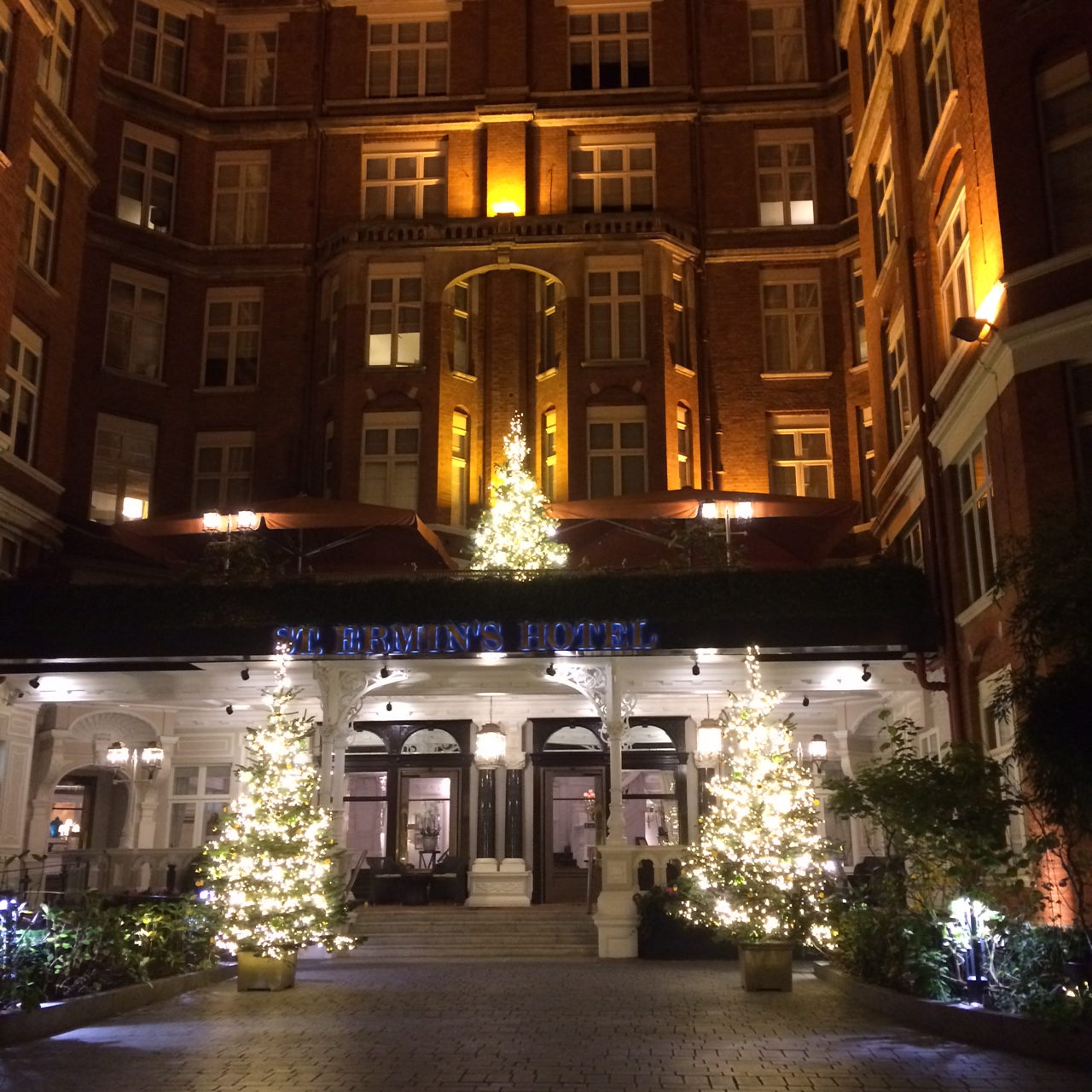
St. Ermin’s Hotel in Westminster was the perfect place to stay. It’s a beautiful Victorian building close to St. James Park and Buckingham Palace and just a block away from the Tube. They were just beginning to decorate for Christmas while we were there.

Hotle night

It had been many years since I last visited London, and for the most part, it was like seeing it through fresh eyes. The skyline had changed greatly — the London Eye alone transformed the feel of the skyline, as did the Shard.

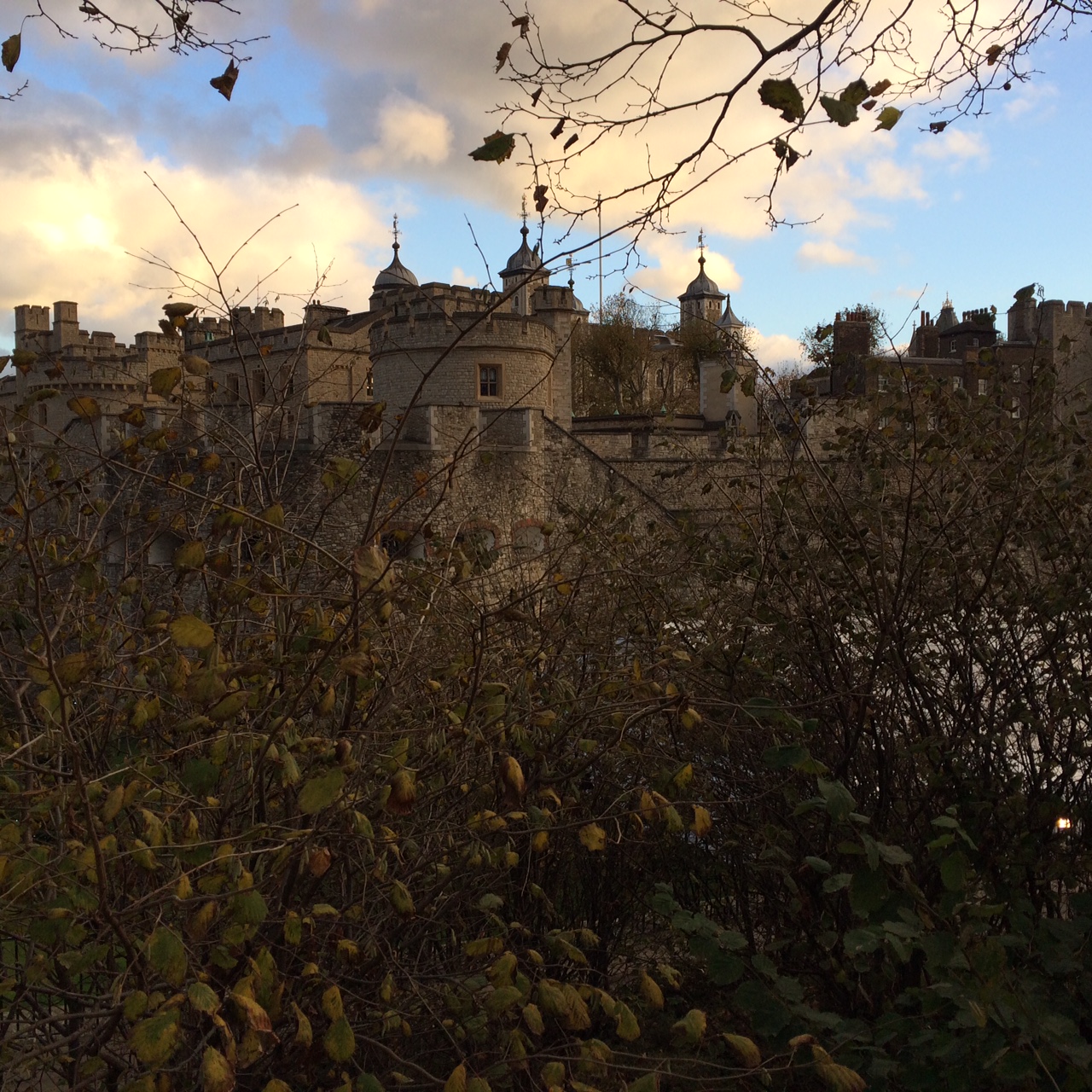
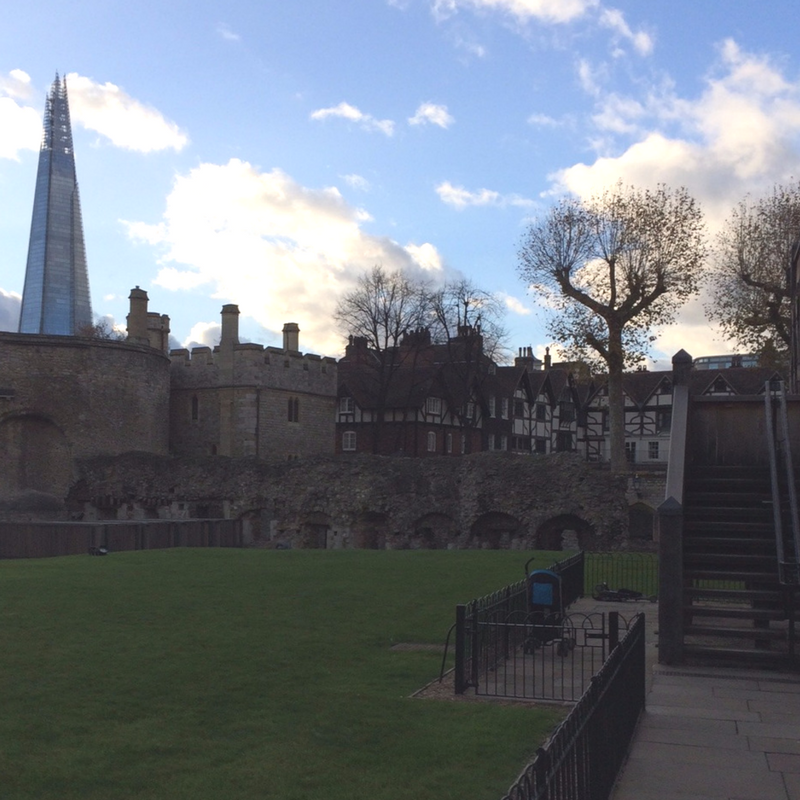
While we were visiting the Tower of London,

Tower 3

I was struck by the architectural layering of history: a row of Tudor-styled buildings stood behind the thousand-year-old crumbling walls of the fortress, and behind them both rose the Shard. All over London, the historical and the modern are intertwined.

Tower and Shard

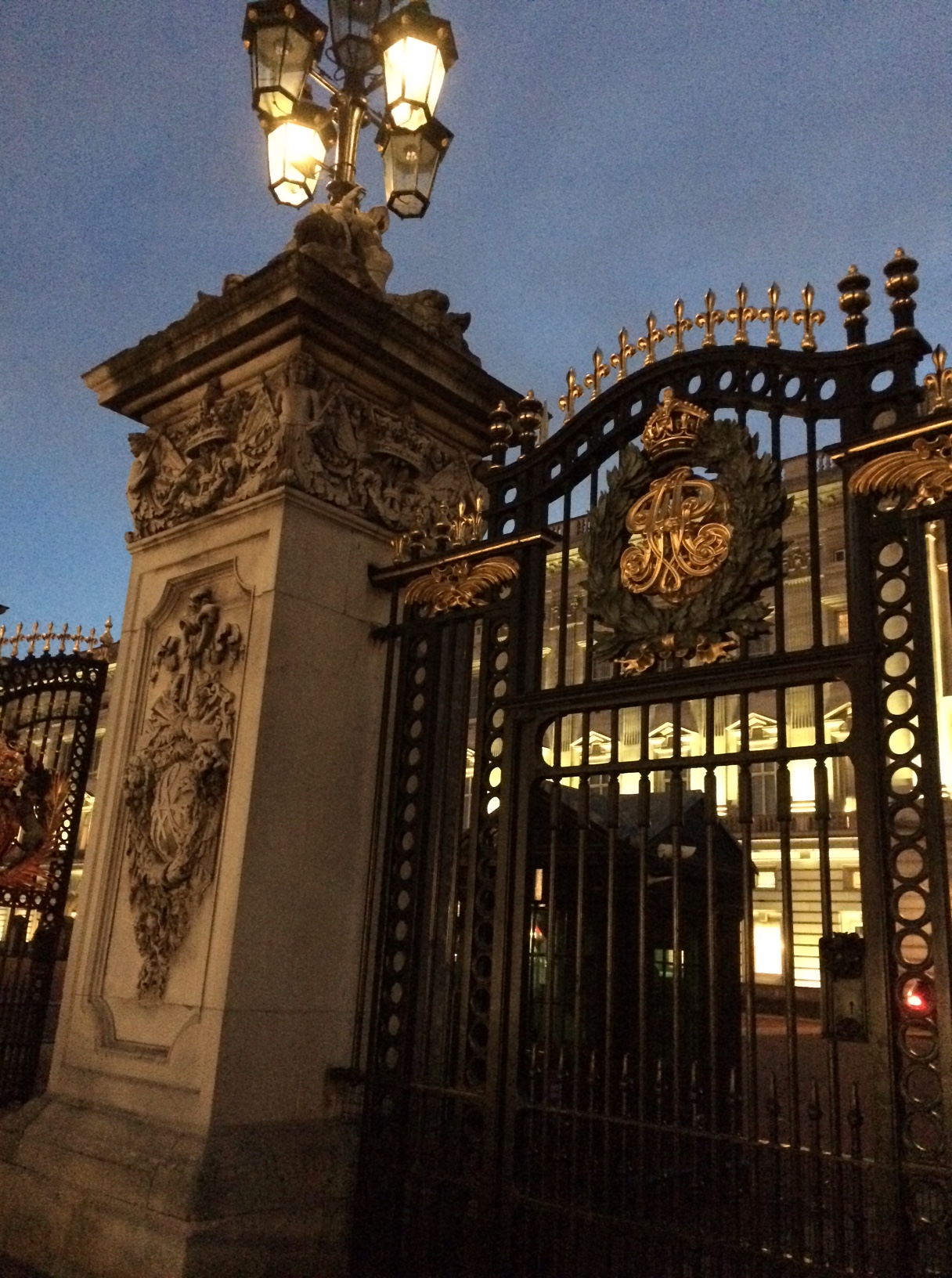
For the most part, my husband and I played tourists, going from one historical site to another: The Tower of London, the Victoria and Albert Museum, Trafalgar Square, the Westminster area (we were disappointed to find Big Ben covered in scaffolding). But Buckingham Palace was beautiful, especially at the end of day when the lights came on.

Buckingham closeup night

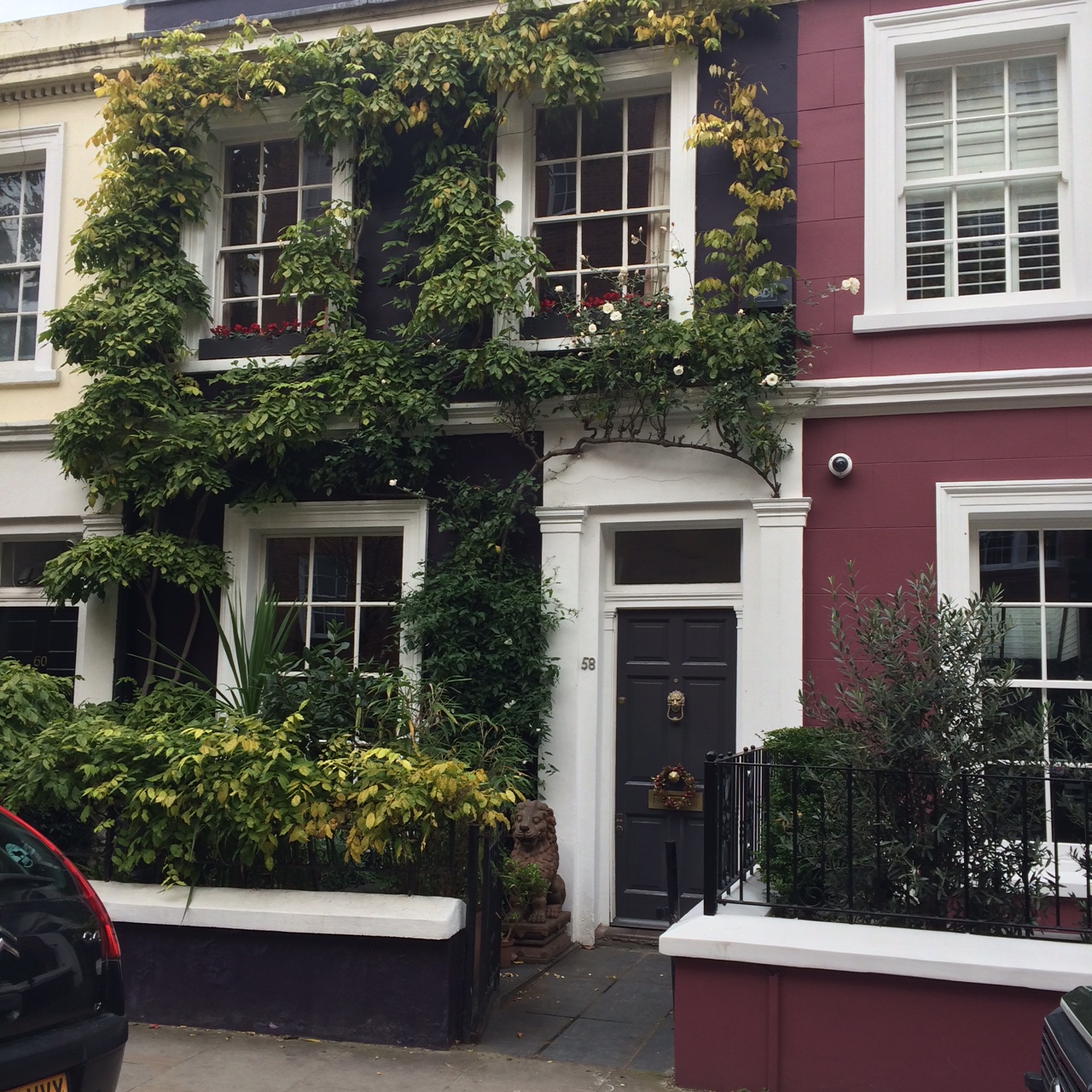
This was the first time I visited Notting Hill, and I was immediately taken with its charm. I would love to see it in the spring when the wisteria is in bloom.

NH window

Another afternoon we spent in the ever-changing Brick Lane neighborhood, full of wonderful Bangladeshi restaurants.
Brick Lane

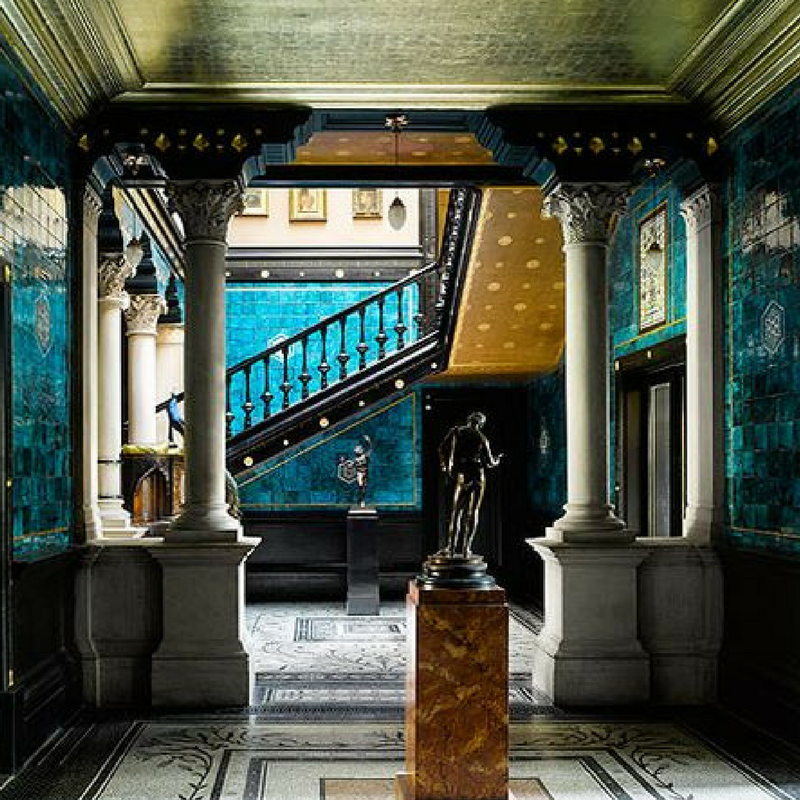
Also new on this trip was a visit to the Leighton House, home of the artist Frederic, Lord Leighton. I fell in love with the exotic tiles and lamps, and the colors he surrounded himself with — rich peacock blue, muted gold, and dark woodwork.

Leighton House tiles

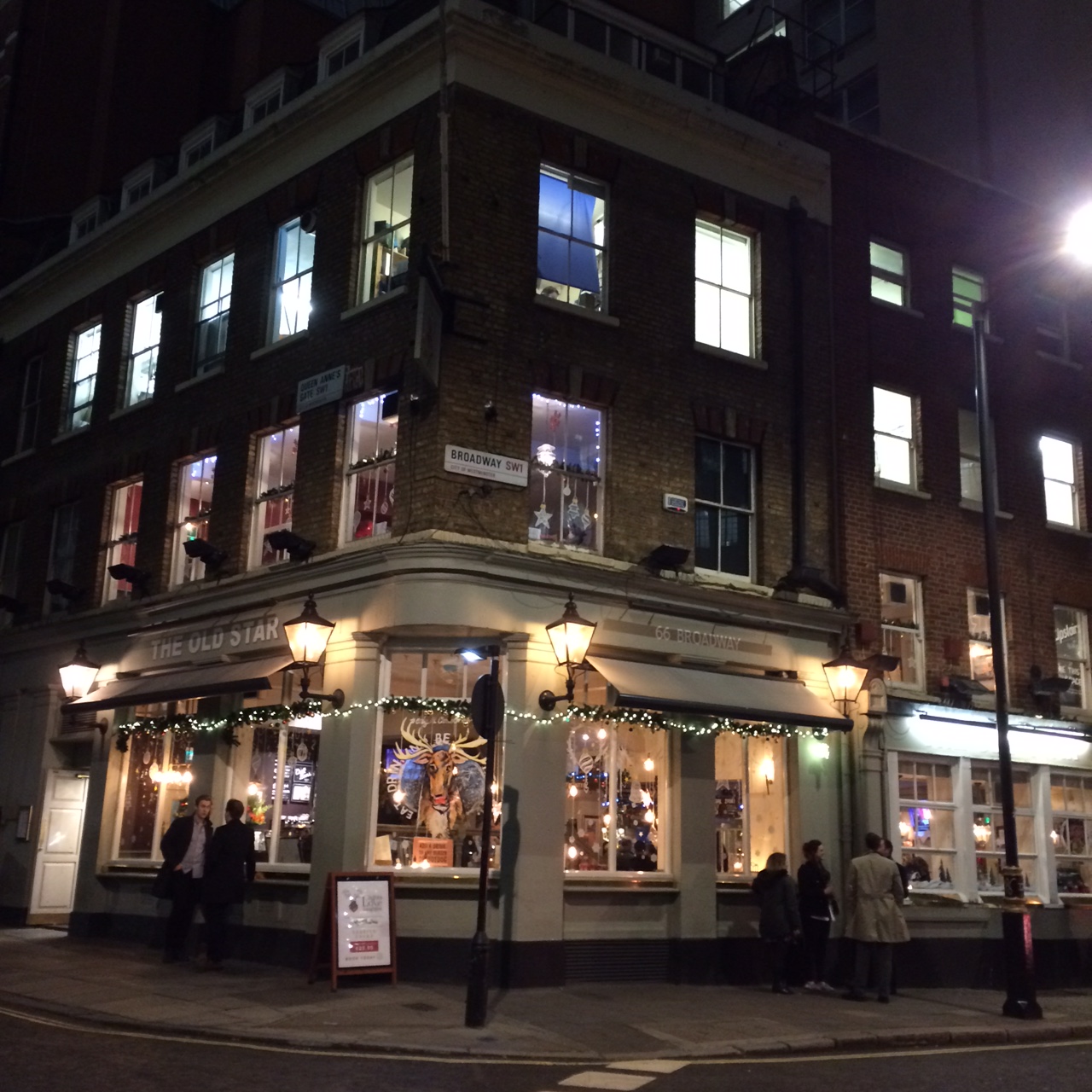
I’m glad we visited London in the late fall. Dusk came early, and by 4:30 the corner pubs and restaurants dotted the evening with golden light and a feeling of coziness and cheer spilled outside onto the sidewalks.

W pub night

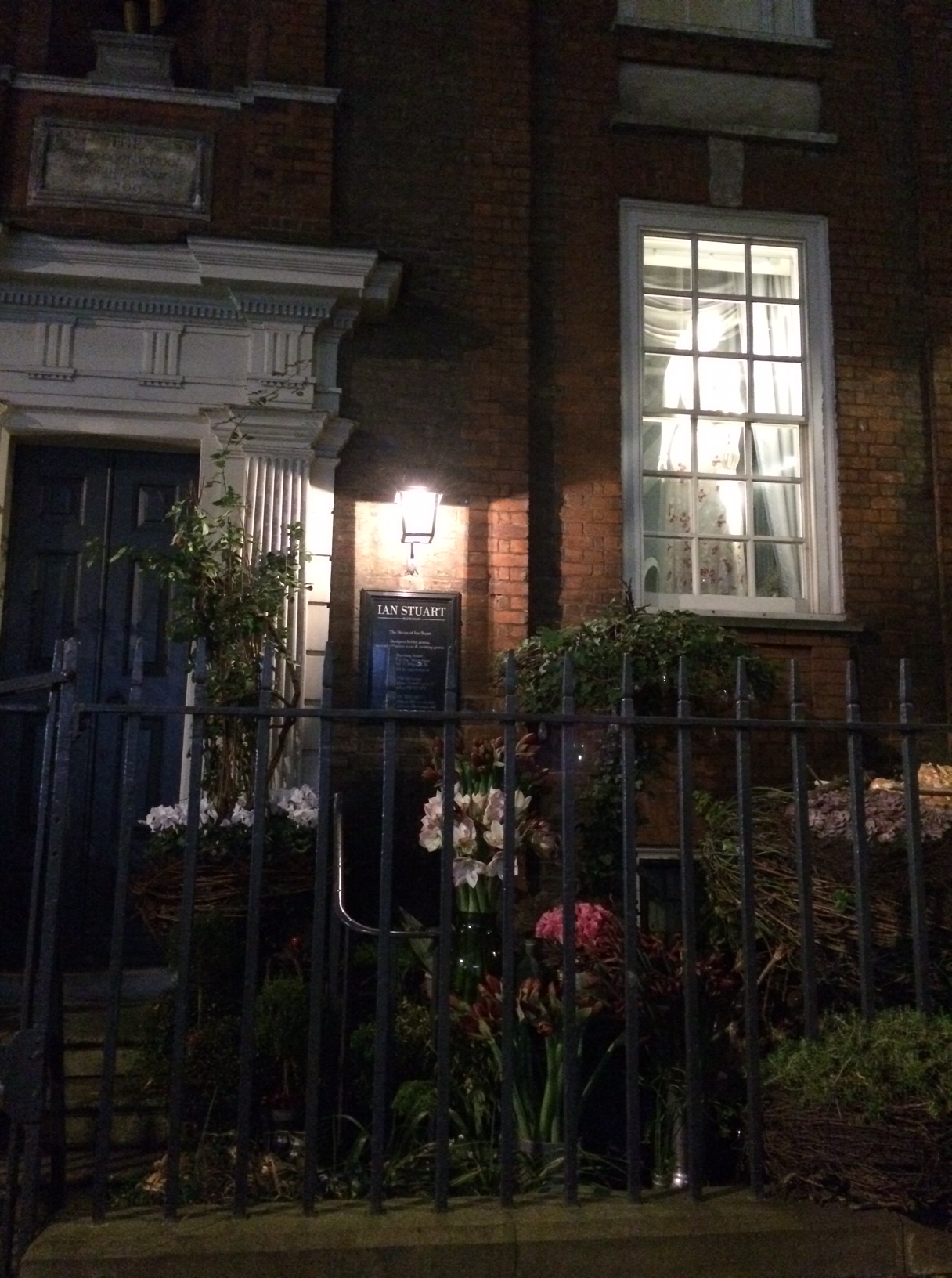
Buildings that were beautiful by day took on a deeper beauty by night.

Ian night 3

The shopping areas of Oxford and Bond Streets, and Picadilly Circus glittered with tiny lights and holiday decorations, and were bustling with red double-decker buses and crowds of happy shoppers. A stroll through Selfridges offered a glimpse of the glamour depicted in the Masterpiece period drama Mr. Selfridge.

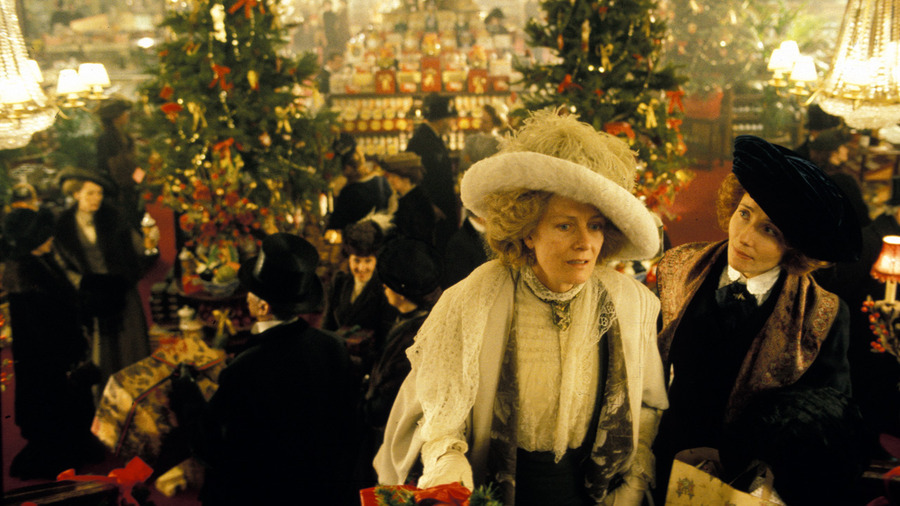
Stores like Harrods and Selfridges brought to mind the wonderful scene from Howard’s End where Mrs. Wilcox and Margaret Schlegel do their Christmas shopping.

howards-end-christmas-scene

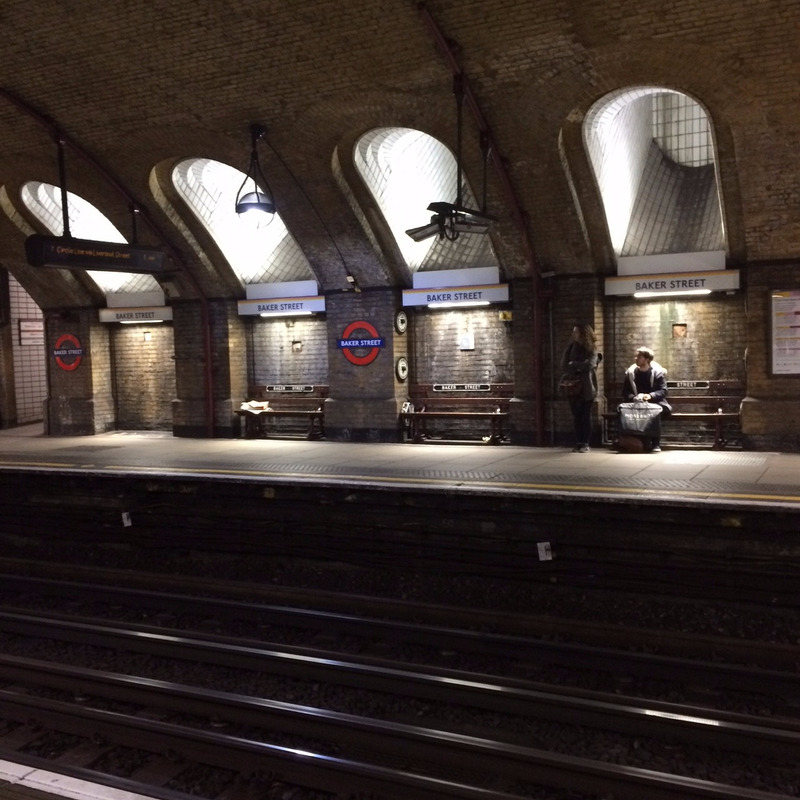
Scenes from movies and books are everywhere. We took a train to the Baker Street Station and above ground saw the Sherlock Holmes Museum (with a long line outside).

Baker Street crop

At King’s Cross station there is Platform 9 and 3/4 from Harry Potter (with an even longer line of children waiting to get their photo taken). Though my list of things to see included the Charles Dickens Museum, the Samuel Johnson House, a stroll through Bloomsbury, and several other sites and parks, five days didn’t allow it.

So I’m already working on another list for my next visit.

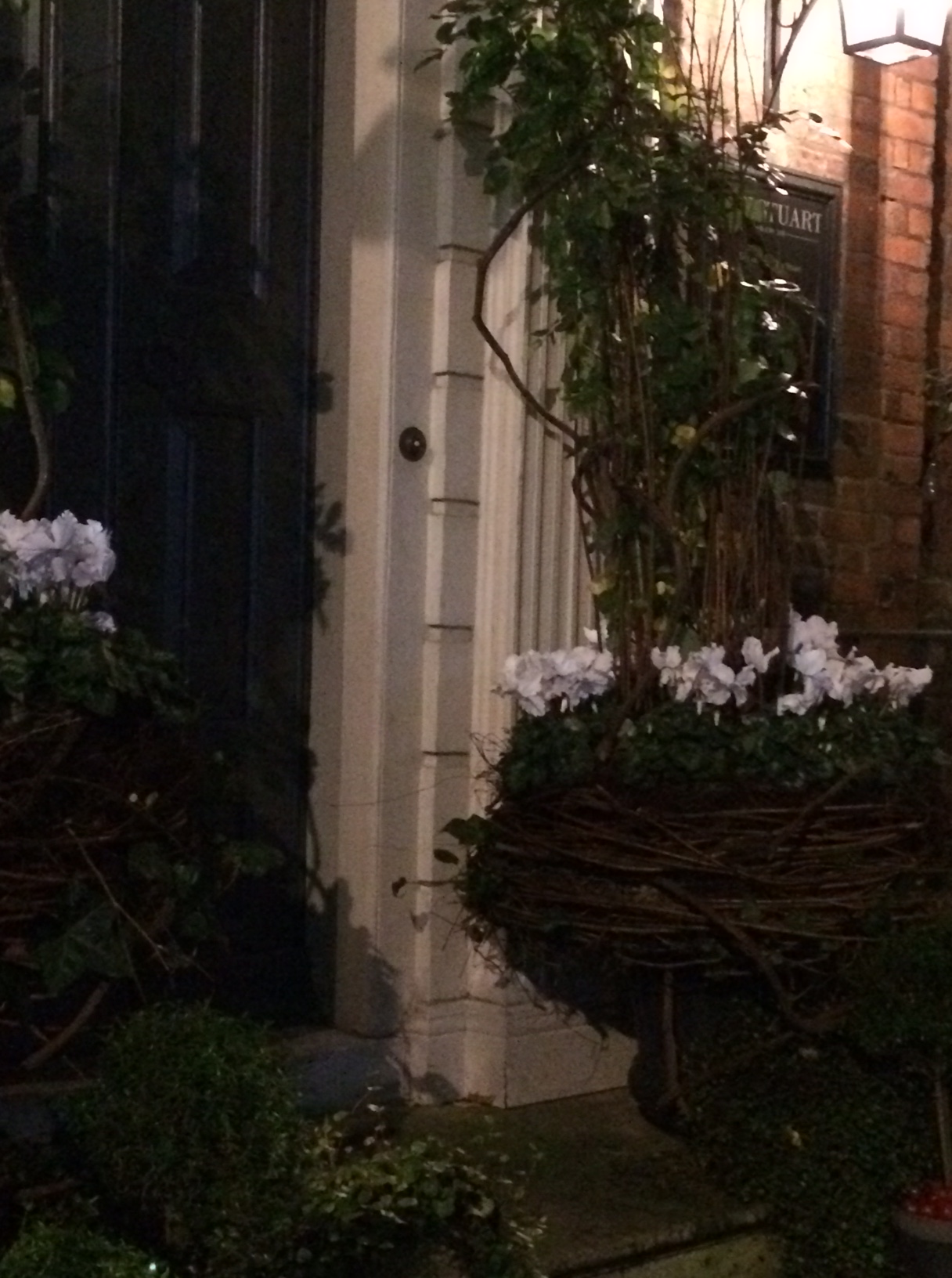
Ian night white flowers


The Plaza Hotel – book cover

All the book covers in the Christmastime series feature an old-looking photograph set in winter. They to help establish a sense of place and give the impression of peering back in time. The images also portray places that are still in existence in Manhattan, so that the reader can feel it’s possible to step into the world of Christmastime by strolling through New York City, whether literally or imaginatively. Hence, the snowy photographs of a brownstone and several scenes from Central Park.

The covers must also reflect the content and tone of the books. I chose increasingly lonesome images and darker colors as the war years wore on, especially for Christmastime 1942 and Christmastime 1943.

Though 1944 was another terrible year, the Allies were clearly gaining the upper hand, and many people believed that the war in Europe would be over by Christmas. (The mid-December surprise count-offensive by the Germans, resulting in the Battle of the Bulge, quashed that hope, and the war raged on.)

But when December arrived, hope was in the air. For the cover of Christmastime 1944, I wanted an image that was lighter, brighter, and more hopeful. When I came across the image of the Plaza Hotel lit up at night, I thought it would be perfect for the story – especially since the hotel figures into one of the plots.

cover Christmastime 1944

If you’re ever in Manhattan, stop by the Plaza Hotel for lunch or tea. Stroll through the lobby to look at the beautiful bouquets of seasonal flowers, the mosaic floors, and the stained-glass ceiling in the Palm Court.


And if you’re in the Christmastime frame of mind, you just might catch a glimpse of a lovely woman in a 1940’s satin and chiffon green dress.

Plaza PP mosaic

October

autumn lake

There’s an old green-covered book I open this time of year. The spine is split in some parts, the lettering on the cover is faded. It’s a book of poems by Robert Frost that my mother gave to me in high school. It was already worn back then. I don’t know if she bought it used somewhere around town or if someone made a gift of it to her years before. It wasn’t a formal presentation or given to mark a special occasion. It was like the other things she gave to us – a sort of “here’s something you might enjoy,” or “take a look at this.” Items that would simply appear on our dressers without any note at all – Classic Comics for my brothers, a porcelain bluebird for my sister’s collection, a red maple leaf, an exotic stamp off a letter from her brother who traveled widely. Things that would delight, pique our curiosity, entertain, or answer to inner longings.

The book of poems resonated deeply with me, especially the ones in the beginning of the book from the section “A Boy’s Will.” The autumn poems in particular became the ones that most spoke to me. “October” might have been the first poem I ever memorized, outside of school assignments. I memorized it because I wanted the words inside me, I wanted to walk through an autumn day and have the words at the ready: “O hushed October morning mild, Thy leaves have ripened to the fall, Tomorrow’s wind, if it be wild, Should waste them all.”

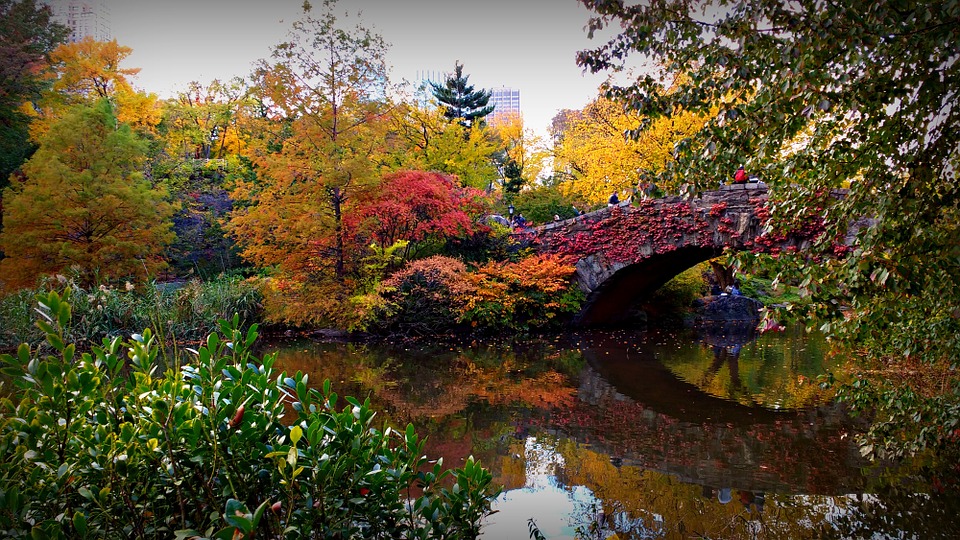
CP autumn bridge

These many years later, the words are still there. As I walk through the neighborhood or cut through Central Park, a solitary leaf might float down from a tree on a mild autumn day, and I hear the words: “Release one leaf at break of day, At noon release another leaf.” The birds in the autumn sky might caw and without any prompting my heart recites: “The crows above the forest call; Tomorrow they may form and go.”

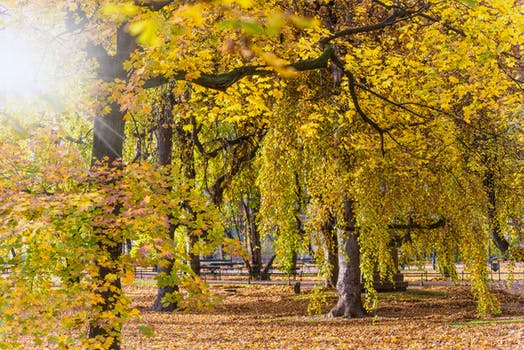
CP yellow elms

The simple book of poems remains the touchstone of autumn for me – it embodies the solitary, the nostalgia and memories of other Octobers, and the deep connection of inner yearning with outer seasonal beauty.

book with leaves

(Thank goodness Robert Frost didn’t stop at October. His poem “My November Guest” soon became my favorite.)

yellow leaf on bench

Autumn and Poetry


leaves on steps

Autumn and poetry go hand in hand. There is something inherently nostalgic and meditative about this time of year that points the mind to introspection. End-of-year wistfulness mixes with the excitement of going back to school, crisper weather, and the coming holidays.

Some poems set this emotionally rich time of year against the splendor of fall, as in John Keats’s “To Autumn” — “Season of mists and mellow fruitfulness…”

Sept pond w bridge

and Robert Frost’s “The Road Not Taken” — “Two roads diverged in a yellow wood…”

a yellow wood

Other poems capture the elegiac melancholy of autumn, as in Gerard Manley Hopkins’s “Spring and Fall”  to a young child:

goldengrove

MÁRGARÉT, áre you gríeving
Over Goldengrove unleaving?
Leáves, like the things of man, you
With your fresh thoughts care for, can you?
Áh! ás the heart grows older
It will come to such sights colder
By and by, nor spare a sigh
Though worlds of wanwood leafmeal lie;
And yet you wíll weep and know why.
Now no matter, child, the name:
Sórrow’s spríngs áre the same.
Nor mouth had, no nor mind, expressed
What heart heard of, ghost guessed:
It is the blight man was born for,
It is Margaret you mourn for.

stone stairs

On these beautiful fall days, curl up with a good book on a mild September afternoon, or in the evenings that now descend earlier. Find a good poem and let the lines run through your head as you kick through the autumn leaves and take in this season of nostalgia, excitement, and beauty.

colored leaves

September

2 -By all these lovely tokensSeptember days are here.--- Helen Hunt Jackson

Back to school. Yellow leaves. Sunny days and chill nights.

back to school

Apples and cider. Sweaters and boots. Chrysanthemums, dahlias, and asters.

Frosty mornings. Acorns and buckeyes. Leisurely walks. The last of the garden tomatoes.

autumn walk

Curling up with a good book. Hot chocolate. Tartans and flannel. Shawls.

autumn cocoa and book

 Curling up with a good book.

book autumn leaf


Travel – Bangladesh

winter-morning-rice field

In the mornings, I stood on the bedroom balcony, and closed my eyes as I listened to the sounds of Bangladesh: bells from the bicycle rickshaws, short beeps from the motorbikes, the alluring call of the muezzin from the nearby mosque. Small birds chirped from trees that rose up past the balcony, and geese squawked and flapped their wings in the neighboring yard.

rickshaw

One day,  as I was writing, I heard music coming from the street, and I ran downstairs to the front veranda to see what it was. I was delighted to find an enchanting procession passing by on the dirt road outside the house. But then I was told that it was a Hindu funeral and they were on their way to the cremation. Carried on the shoulders of six men was a wicker bier on which the body was laid, its head rocking back and forth with the movement of their walking. The men held burning sticks of incense, and the group that followed made rhythmic sounds from bells and tiny brass instruments. It was a day-to-day event, and the other people on the street took little notice.

A group of giggling schoolgirls in uniforms of pale blue and white passed by, their black hair neatly arranged in buns or in braids. Vendors passed the procession, bent only on selling their wares: a stick-thin man with a bamboo pole across his shoulders with baskets of vegetables on either end, the bangle lady enticing the women in the houses with her cries of “churi, churi!” and a man carrying a colorful stack of cloth on his head. Life and death were in easy company on the busy, dusty street.

Folk_Art_Museum_Sonargaon