Summertime – Farms and the Country in the CHRISTMASTIME series

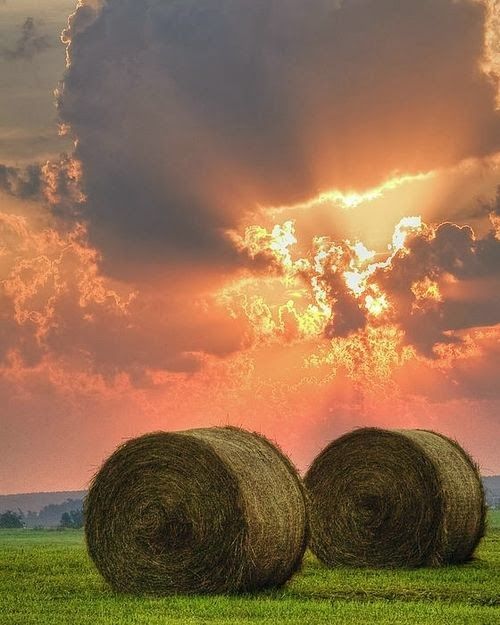
rolls of hay sunset

I was born and raised in small-town Illinois, and the countryside played an important role in shaping my idea of the world – the sense of openness and wide skies, the beauty of the changing seasons, the rhythms of the land.

Though I never lived on a farm, country life was an integral part of the area and its presence was felt in the farms and orchards surrounding the town, in my classmates who lived on farms, in the county fair with displays of livestock and ribbons won for home-baked goods, canning, and 4-H projects.

And though my family lived in town, the country and farms were still a part of our lives. We used to drive out into the country to buy eggs from one farmer, and honey from another old-timer who kept bees. Some of my brothers and sisters earned money over the summer by detasseling corn, and we all learned to drive on those long, straight country roads.

Once, my dad took us out to glean a cornfield. A picture of Millet’s The Gleaners hung in my friend’s living room, and I thought gleaning sounded like an old-fashioned, romantic thing to do –

framed Gleaners

though I imagine the purpose of our outing was to show us the value of a dollar, part of the Midwestern work ethic that was woven into everything back then. We piled into the back of my dad’s pickup and drove out to a farm. With bags and buckets in hand, we began gleaning the cornfield of ears of corn missed by the combine. There was something fun and adventuresome about it, like being on a treasure hunt. After several hours, we emptied our bags into the bed of the truck, and then took our harvest to the grain elevator – we each made $2.

Probably because I never lived on a farm, I’ve always romanticized about it (though I know farming is backbreaking work with long hours, and farmers are at the mercy of the weather). It is that romanticized version the country and farms that made its way into my Christmastime books in the storylines that take place on Kate’s farm in Illinois.

windmill

(images from Pinterest)

header 2 The Cx Series (1)

3D-Christmastime_books_ALL_3

The Christmastime series is available on Amazon, Kobo, B&N, iTunes, and Google and in libraries by request, on Ingram and Overdrive

Amazon —  https://amzn.to/2xFgnt0

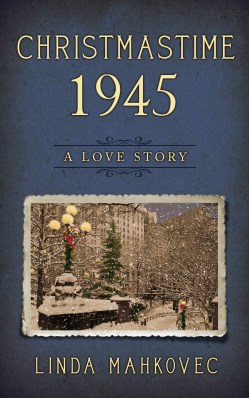
(Christmastime 1945: A Love Story, the final book in the series,

will be available in the fall.)


Christmas in July (and seeking book reviewers)


I’ve always found the idea of Christmas in July a challenging one. After all, summer is the time for picnics on the grass, reading at the beach, backyard cookouts, vacations, lemonade, hammocks… 

However, I know there are many people who start to plan — and shop? — for Christmas in July — people who, though perhaps reluctant to admit it, feel a mild frisson to know that in a few short months, they will be wrapping presents, decorating a tree, and baking Christmas cookies. So for those people, I give you the opening paragraphs of the final book in my Christmastime series: Christmastime 1945: A Love Story (available this fall).

Christmas_1945_6.28.2019 final

Chapter 1

The snow fell softly over Manhattan as Lillian Drooms hurried home. She was still smiling from her meeting with Mrs. Huntington and the art director of children’s books. Her drawings had been well received and Mrs. Huntington hinted that Lillian had a good chance at being selected to illustrate a children’s adventure series – she would love nothing more! Happiness and Christmas were in the air, and wanting to catch even more of the holiday spirit, Lillian decided to walk up Fifth Avenue and then cross through Central Park on her way home.

The crowds thickened as she neared and then turned onto the Avenue. All around her the sense of excitement was palpable – in the carolers and newspaper boys, in the honking and braking of traffic, in the calls from the vendors: “Hot chestnuts! Pretzels!” Workers rushed from jobs, couples walked arm in arm, shoppers ducked in and out of stores, their arms laden with packages and shopping bags, and groups of servicemen explored Manhattan while they awaited their final train or bus ride home.

Lillian took a moment to look around her at the bustling city, so alive! And this was just one avenue. She knew the harbor and piers, and Grand Central and Penn Stations bustled with returning soldiers. The roads into and around New York City were crowded as never before – the city was bursting at its seams with life and happiness. At long last, the war was over! And this first Christmas after the war was sure to be a memorable one.

Bumped and jostled by the throng of people, Lillian tucked herself into a doorway to take in the post-war Christmas euphoria. The very air tingled with promise and future, and she smiled out at the swirl of commotion. She observed the faces passing by, all united by a sense of cheerfulness and gratitude. A soldier and a young woman passed by, briefly stopping to embrace and kiss. Across from her, a family, with the father in uniform, stopped to buy bags of roasted peanuts from a street vendor. An older couple laughed as they nearly collided with a ho-ho-hoing Santa Claus bell ringer. Down the block, a cluster of sailors pointed and gawked at the skyscrapers, and across the avenue, a group of WACs – such smart, confident women – chatted with a group of soldiers.

Lillian stepped back out into the stream of people but continued to look all about her. The signs of Christmas were everywhere – wreaths and decorations appeared in nearly all the windows and doors, along with red ribbons and garlands of shimmery tinsel. After the gray of war, everything seemed to be in color. Was it her imagination? Was it her own happiness coloring the world? No, indeed, the dresses in the department store windows boasted brighter shades, and young women sported bolder makeup, brighter lipstick that suited their flashing smiles. And the lights! Strings of colored bulbs shone everywhere – outlining windows and doorways and awnings. It was the first time Christmas lights were used freely since before the war and no one was holding back.

The war was over, Christmas was in the air, and Charles would be home soon! Lillian took a deep breath, checking herself, not trusting to such perfect happiness. She would muster the calm and pragmatism that had gotten her through the war years. Charles was not home yet – in fact, she hadn’t heard from him for several weeks. It could be January or February or later before his arrival. But he would be home – and he would never have to leave her again.


3D-Christmastime_books_ALL_3

https://amzn.to/2NYcA5a

I hope you enjoyed this bit of Christmas in July.

If there are any readers, book bloggers, or book clubs who would be interested in writing reviews for my series, please let me know (email me at Linda@LindaMahkovec.com) and I’ll send you a link to my ebooks. My goal this year is to increase my reviews, especially on Amazon. To those followers who have already left reviews, THANK YOU!! and let me know if you would like to review my other books — The Garden House, The Dreams of Youth, and Seven Tales of Love.

I hope the rest of your summer is lovely, relaxing, and filled with much happiness.

hammock white wine


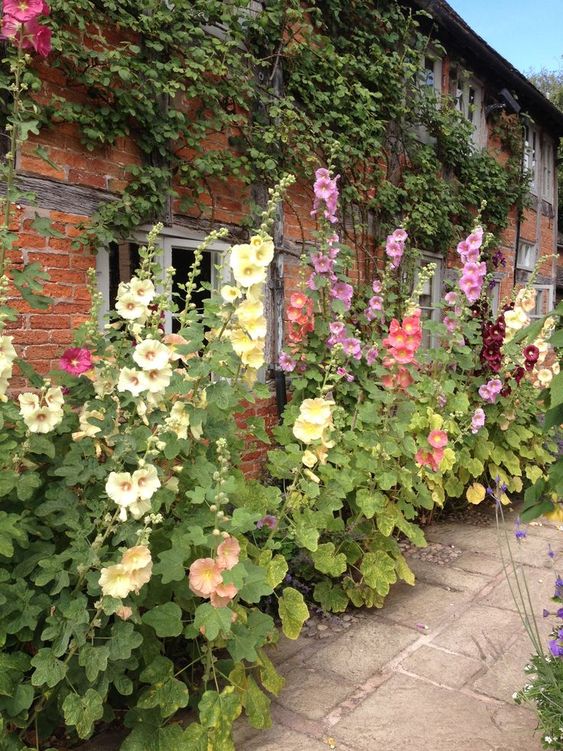
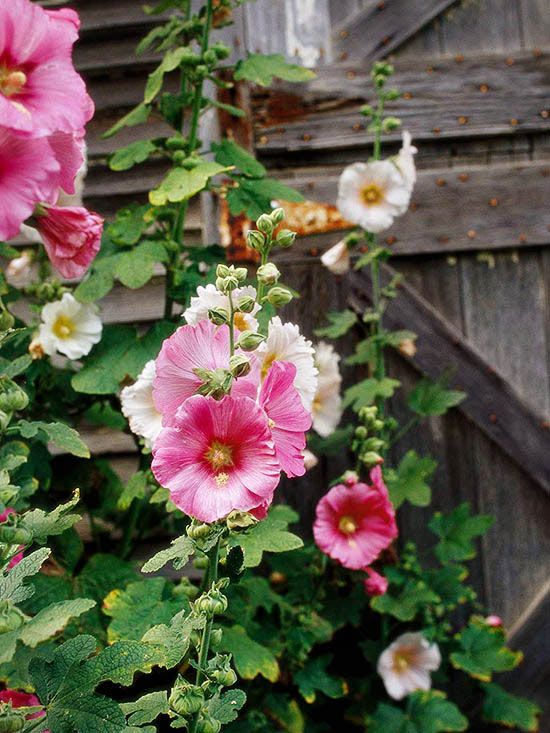
Hollyhocks – summer’s flower

hollyhocks 2


“Hollyhocks are the epitome of cottage garden plants…
hollyhocks 6


Chances are you’ve seen them alongside a barn, in front of a cute cottage-style house, or gracing the front of a white picket fence. This old-fashioned pass-along plant has absolutely caught the hearts of many.” (/www.bhg.com)


hollyhocks Nantucket

Alcea rosea, the common hollyhock…was imported into Europe from southwestern China during, or possibly before, the 15th century…From Middle English holihoc (holy mallow).”  (Wikipedia)

As for marigolds, poppies, hollyhocks, and valorous sunflowers, we shall never have a garden without them, both for their own sake, and for the sake of the old-fashioned folks who used to love them. — Henry Ward Beecher

Certain flowers reappear in my book series, Christmastime, especially for scenes set on Kate’s farm in Illinois. Hollyhocks and lavender, in particular, make an appearance during Lillian’s visits to the farm. Below is an excerpt from the final book, which will be available later this year.

Excerpt from Christmastime 1945: A Love Story, from the “Epilogue: Summer 1948”

A beautiful summer day spread over Kate’s farm. A light breeze carried the fragrance of freshly mowed hay, honeysuckle, roses, and tiny green and floral scents released by the sun’s warmth. White butterflies flitted and landed among the flowers, along with a few dragonflies that briefly hovered and then disappeared. A perfect day, thought Lillian. She sat in the shade of the old oak tree, using her watercolors to capture the profusion of hollyhocks that grew alongside the barn.

hollyhocks 13

Lillian added a few more leaves to the hollyhocks, and then rinsed her brush. She saw Ursula strolling up the country road, returning from one of her solitary walks. Ursula paused to inhale the fragrance of the mass of honeysuckle covering the fence – then she picked one of the small yellow flowers, pinched the bottom off, and tasted the drop of nectar at its base. In her hand she held a bunch of wildflowers.

Ursula walked over to Lillian. “Hello, Aunt Lillian.” She tilted her head to study the painting. “How lovely.”

“I’ve tried to capture their charm,” said Lillian, standing back to view the canvas.

As always, Lillian was struck by Ursula’s beauty that only deepened with the years. Ursula wore a deep blue and purple floral dress that caught the color of her eyes and flowed around her slim figure. Her long hair blew in the summer breeze, revealing her amethyst earrings.

“Simple hollyhocks,” said Ursula. She offered to hold the painting as Lillian gathered her supplies and collapsed the easel. “You’ve captured them exactly – and yet added something. You’ve lifted them and made them even more beautiful. A piece of summer to be treasured.”

Lillian smiled at the comment. “I’ve always loved hollyhocks. An old-fashioned flower. Always leaning towards the sun and blooming in such happiness.” She looked again at the tall stalks abloom with color, tapering off to small buds not yet open. Rising from lush green leaves, flowers of pale pink with dark centers, soft yellow, deep purple, white, bright pink. “Quaint and lovely. Especially growing against the barn like this.”

pink hollyhocks barn

Christmastime 1945: A Love Story, the final book in the Christmastime Series, will be available in the fall.

Christmas_1945_6.28.2019 final


Mrs. Kuntzman’s Kitchen

In the Christmastime series, Mrs. Kuntzman, the elderly babysitter for Tommy and Gabriel, plays a role from beginning to end. Her presence and her cooking infuse the books with a sense of holiday coziness and warmth.

They saw [Mrs. Kuntzman] standing at the door of her brownstone, waiting to welcome them. She was in her late sixties, gray-haired and a bit stooped, and utterly grandmotherly in her affection for Tommy and Gabriel. Even though Lillian had told her it wasn’t necessary, she often had pancakes or cobbler…freshly made for the boys. (Christmastime 1940)

“And,” said Mrs. Kuntzman, holding up a finger – she went to the kitchen and returned with a plate covered with a red and white checked napkin – “I have extra strudel for youse. Still warm. I always make too much.” (Christmastime 1940)

“We brought apples for you from my sister’s orchard. And some cherry preserves.”

“Ach, good! I make cherry krapfen for Tommy and Gabriel. Those boys love donuts best of all.” (Christmastime 1941)

“[Mrs. Kuntzman’s] been supplying me with strudel and cherry krapfen for the spotters all week.” She dropped her voice to add, “Though we’ve renamed them Yankee Cobbler and Allied Donuts. In the same way the restaurants have renamed spaghetti – Liberty Noodles, they call them.’”

“Yes, I’ve seen that,” laughed Lillian.

“And she’s promised one of her famous Christollens. Hmm. I’ll have to come up with another name for it.” (Christmastime 1941)

stollen

Lillian looked at [Mrs. Kuntzman’s] knobby hand against the flour-dusted red apron, the smiling eyes and nearly white hair, and felt a rush of affection for this woman who had become like a grandmother to Tommy and Gabriel – watching over them before and after school, baking treats for them, praising their schoolwork, offering words of comfort.

“And the soup will help,” Mrs. Kuntzman added. “Love in a jar. I don’t want our Tommy sad.”(Christmastime 1942)

Mrs. Kuntzman opened the door, wearing a red Christmas apron with a pattern of poinsettias. The smell of butter and cinnamon and cloves greeted them. (Christmastime 1943)

When Lillian knocked at the babysitter’s door, Mrs. Kuntzman greeted her with a tin of freshly baked cookies.

“These are ones we didn’t eat,” she said, laughing along with Tommy and Gabriel. (Christmastime 1943)

Mrs. Kuntzman opened her door to the young playwrights, and they were greeted by her smiling face, her flour-dusted green apron, and a warm waft of cinnamon and apples.

“Come in, come in! I have apple strudel for youse all, fresh from the oven!” (Christmastime 1944)

Christmas — in the details

The scent of pine, a shimmering ornament, a melody from a Christmas carol running through your mind — part of the magic of Christmastime is in the small details that pervade the season.

In the air there’s a feeling of Christmas…

The holly and the ivy…

I heard the bells on Christmas Day, their old familiar carols play…

Silver and gold, silver and gold…

The stars are brightly shining…

It’s beginning to look a lot like Christmas…

How lovely are thy branches…

All is calm, all is bright…

May your days be merry and bright…

Cx snow globe

Annette’s orchard — seasonal charm

orchard dinner

In the Christmastime series, Lillian Hapsey visits her sister, Annette, in upstate New York, close to where they grew up. Annette and her family live on an orchard, which provides Lillian a welcome change from the bustle of Manhattan. Though Lillian only visits once or twice a year, the orchard offers her a wider scope of seasonal beauty and an opportunity to be with family.

Lillian and her boys, Tommy and Gabriel, have fond memories of spending Thanksgiving and Christmas at Annette’s. Depending on the weather, they take hikes through the woods, sometimes taking the logging roads. The boys and their cousins explore the woods and run wild through the orchard, and with the help of their Uncle Bernie, they gather firewood to make bonfires at night, sometimes roasting marshmallows. If there is snow, they go sledding and take sleigh rides.

When the sisters are together, they take long walks along the country roads, gathering bunches of bittersweet and pine cones. At night, they fix a cup of tea and stay up late talking in front of a crackling fire.

One of the things Lillian most looks forward to is preparing wonderful meals with Annette. Part of their tradition is to make dishes that their mother used to make when they were girls.

To the delight of the children, they also make special seasonal treats — apple cider donuts and caramel apples, holiday cookies, and snow ice cream.

And every time Lillian visits, Annette packs a basket for her to take back home with her, full of wholesome goodness from the orchard: honey and beeswax candles, maple syrup and jars of apple butter, bottled pears, jellies and jams — and apples.

When Lillian returns home to Manhattan, she often adds Annette’s orchard gifts to her breakfast and dinner table — besides being a tasty addition, they serve as a reminder of their days up at the orchard.

Annette’s orchard is a haven for Lillian and her boys — a cozy, welcoming place, full of good food and adventures. For Lillian, it gives her a sense of stepping back into her beloved girlhood days, and is a lovely way for her to enjoy the seasons.

(Photos from Pinterest. You can visit my book boards at: https://www.pinterest.com/lindamahkovec/)

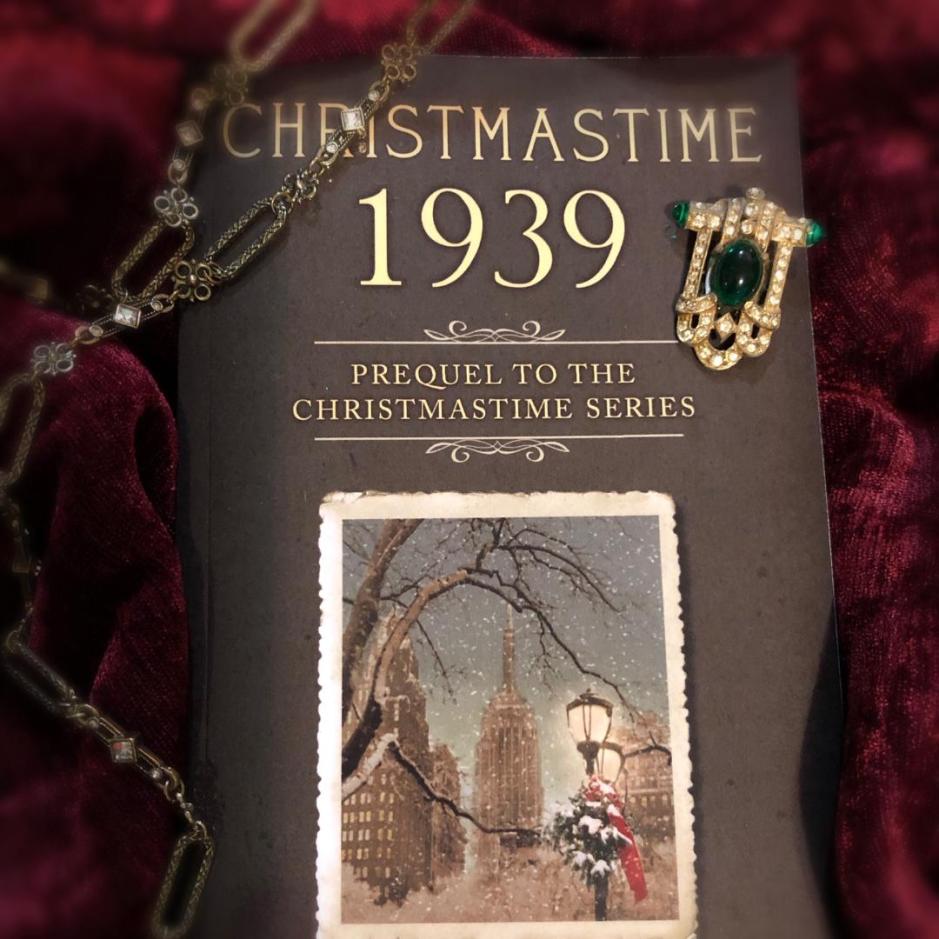
The Making of a Book Cover — Christmastime 1939: Prequel to the Christmastime Series

I was lucky to find a great book cover designer, Laura Duffy, for all my books. The Christmastime series, in particular, required several drafts.

Laura patiently added snow, made streetlights glow, erased modern buildings, and cropped and colored and added details until I had the image I wanted.

The cover for Christmastime 1939: Prequel to the Christmastime Series posed the most challenges. Early on, we decided that it would have a few subtle differences. As a prequel, it would not be part of the color sequence of the other books — green, red, blue. And Laura suggested that the “photograph” be vertical rather than horizontal.

I wanted the cover to evoke a sense of happiness and hope, with just a hint of the shadow cast by the war in Europe. After searching and searching for a photograph that would capture the main character’s (Lillian Hapsey) longing to move to Manhattan and start life anew, I found an image that might possibly work — with a little magic from Laura Duffy.

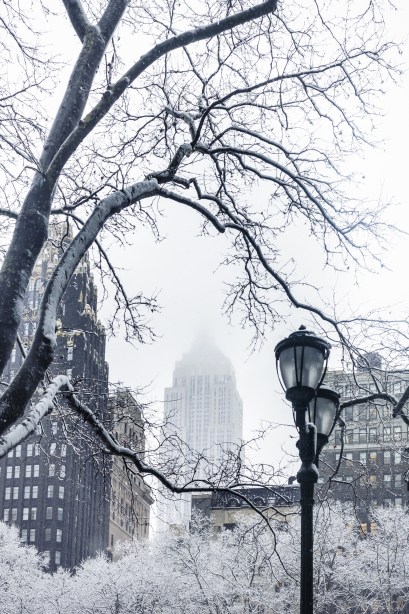
The photo had certain elements I was looking for: snow, a source of light (a lamppost), and it was immediately recognizable as Manhattan, with the Empire State Building in the center of the photo.

shutterstock_548493256

But it needed some work.

First, the lamplights needed to be “turned on.” It took a few attempts to get the right shade of soft gold. Then we looked at several Christmas wreaths, pine boughs, and red ribbons to attach to the lamppost. We decided on the one below. I purchased the photo and Laura added and aged it.

Next, the Empire State Building needed to be more pronounced. The original photo depicted a foggy day (I wanted snow), and the outline of the building was obscured.  So Laura found and superimposed a clearer photo of the Empire State Building and added a light snowfall.

Empire State Bldg superimposed

We were getting closer, but it didn’t yet capture the charm and promise of new beginnings. I imagined a scene at dusk, people hurrying home after work, the Christmas season in the air — and Lillian pausing to look at the view of the Empire State Building and having a visceral feeling of connection — Manhattan embodied everything she wanted.

So Laura turned day into evening, showing lights in the office windows, and patiently adjusting my requests for “less blue, a little grayer, more dusk-like, a little darker, more snow?” — until finally, it clicked — and I entered the world of Christmastime.

The image captures a moment in the story when Lillian becomes a part of the city she so loves. I could see her dressed in 1930’s shoes and coat, her face raised in happiness, knowing that her two little boys would also love the magic of the city. I felt the image now had charm, a sense of excitement, and the feel of Christmas.

1939

Thank you, Laura!

Check out the variety of Laura’s covers here: https://www.lauraduffydesign.com/ 

Christmastime 1939 is now available (the softcover will be available any day now).

(The final book in the series, Christmastime 1945: A Love Story,  will be published in 2019.)


Spring on Kate’s farm (the Christmastime novels)

Though most of the scenes in the Christmastime series (WWII stories of love and family that take place on the home front) occur in the month of December, there are a few flashbacks to spring, summer, and fall. The final book in the series, Christmastime 1945: A Love Story, will have two scenes that take place in the previous spring.

I often imagine what the rural scenes might look like — sometimes drawing on the memories of growing up in small-town Illinois. (A few years ago I took the photo below of a farm outside of town. The tractor had plowed all around the dilapidated house, leaving the poignant patch of history.)

worn farmhouse

Other times I search for images on Pinterest that to help set the rural tone — a few early spring flowers that bloom along the fences and in the meadow,

or signs of spring in the barnyard and nearby trees.

And always, I imagine the interior scenes that take place with Kate and her daughters,  Ursula and Jessica —

warming up with a cup of tea in the farmhouse kitchen, a blanket reached for against the chill spring nights, a few notes plucked on the piano, the comforts of a hot bath and lavender-scented sheets after a long, hard day.

Life on the farm was hard, especially during the WWII years, but Kate and her daughters made sure to enrich their day-to-day living with small beauties and the comforts of home.

Amzaon Link: http://a.co/bZvcQIt

To be released later this year: Christmastime 1939: a prequel to the Christmastime series and Christmastime 1945: A Love Story.


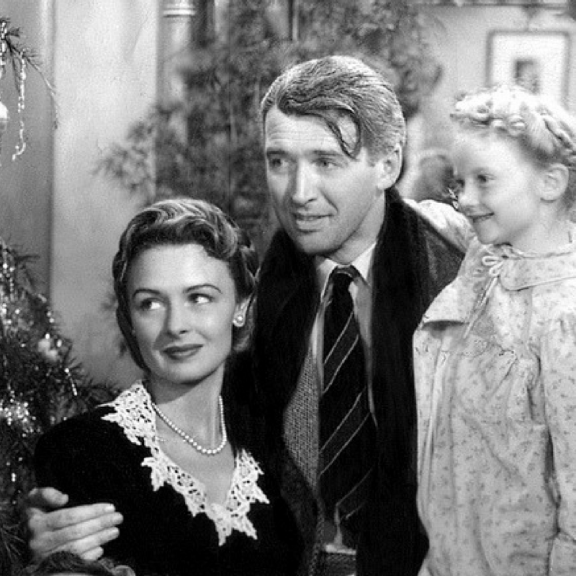
It’s A Wonderful Life — a Christmas classic (and an inspiration for indie writers)

crop It's A Wonderful Life (1)

People often ask me what movies or books my Christmastime series is most similar to. For many reasons, the movie It’s A Wonderful Life comes to mind. It’s set during and just after WWII, it’s a story about love and family, the importance of friends and neighbors, and it’s about transformation.

Clarence

I happened to catch it on TV the other night, and though I know the movie by heart, I found that I loved it as much as ever.

on phone

The story behind the movie is also “wonderful,” and offers an inspirational example for today’s independent writers. The movie is based on a short story by Philip Van Doren Stern (1900 – 1984), an American author, editor, and Civil War historian.

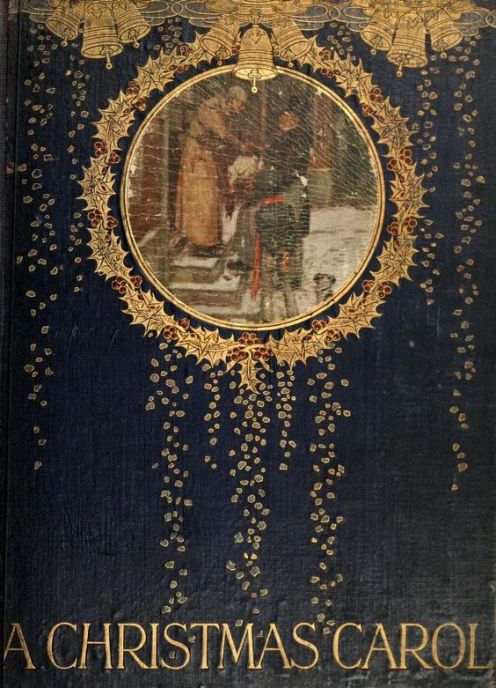
The story goes that in “February 1938, Stern awoke with the story in mind. Inspired by a dream that was reminiscent of Charles Dickens’ 1843 A Christmas Carol, Stern wrote a 4,000 word short story called The Greatest Gift. He began work on it in 1939 but didn’t finish until 1943.

Dickens

Unable to find a publisher for his story, he printed two hundred copies of the story and distributed them as Christmas cards in 1943. One of the original palm-sized booklets came to the attention of a producer at RKO Pictures who purchased the rights, and then sold them to Frank Capra in 1945.” (Wikipedia)

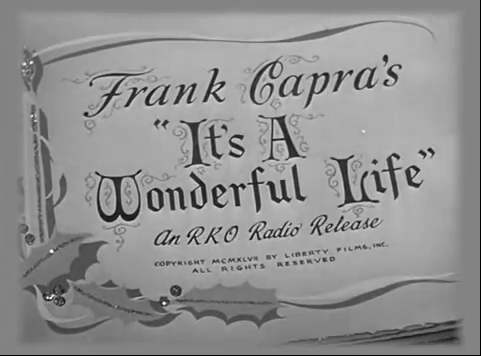
Frank Capra title

“From this humble beginning, a classic was born. Stern’s story captivated Capra, who said he ‘had been looking for [it] all [his] life.’ Capra’s beloved adaptation, It’s a Wonderful Life, was released in 1946,” (Zoetrope – www.all-story.com) and has become part of the American Christmas tradition.

bell on tree


The Christmastime stories — rural and small-town Midwest

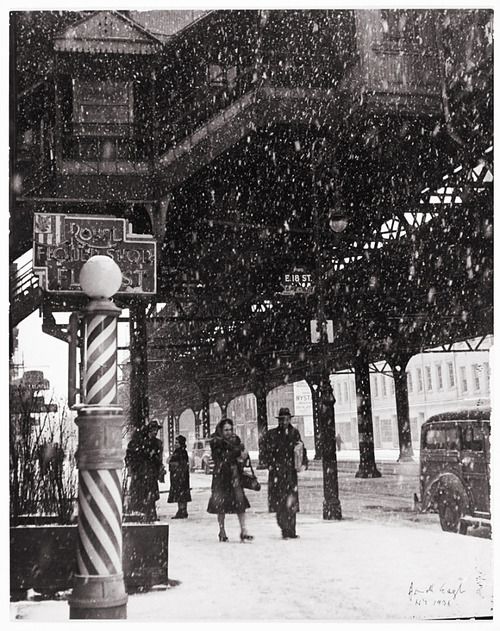
The Christmastime books, stories of love and family on the home front during the World War II years, portray an America with one foot firmly in the past and the other poised on the threshold of change. The setting for these stories, for the most part, is New York City. However, a few storylines are set in the rural Midwest.

I was born and raised in small-town Illinois and the beauty of the landscape there — old farm houses set among fields and pastures, trains running to and from the small towns, the  woods and orchards that change with the time of year — has always had a strong pull on me. The seasons are rich and distinctive, and the snowy winter setting perfect for the Christmastime stories.

In the first book of the series, Christmastime 1940, we find that Charles Drooms’ past is deeply rooted in rural Illinois, and there are a few flashbacks to his boyhood and life on the farm that explain many of his decisions later in life.

In a later book, there’s a scene where Lillian works on a series of illustrations depicting the role of women on the farm. With so many men enlisted, women had to step into the workforce and fill jobs that had recently been held by men. Lillian draws on her memories of visiting Kate’s farm in the summer of 1941.

postere farm woman

Beginning in Christmastime 1943, a key storyline takes place on Kate’s farm involving her daughters, Ursula and Jessica, and the German POWs who work on the farm while Kate’s sons are away at war. The scenes depict the connection of living close to the land with the rhythms of the seasons, and the rigor and back-breaking work required by farm life.

The farm scenes help to portray a period when time moved more slowly, and a place where most foods were locally grown and cooking was done from scratch.

A time when the home arts played an important role in day-to-day living,

and small-town life offered simple charm and the opportunity for visiting and shopping.

The tension between the beauty and bleakness of the Midwestern winter landscape also serves to reflect the complexities in Ursula, a young woman often driven by opposing impulses.

And on a larger scale, the small town and farm scenes offer a counterpoint to the New York City scenes. The tranquility and wholesomeness of the countryside serve as a reminder of how much was at stake in the war.

The rural setting also represents the tens of thousands of young men, such as Kate’s four sons, who left their small towns and farms to fight in Europe and the Pacific. For many of them, it was the first time ever leaving home. For them, the very idea of “home,” and everything it symbolized, became a deeply cherished and protected ideal.

pie and chair

(For more images evocative of the world of Christmastime, please visit my Pinterest boards at http://www.pinterest.com/lindamahkovec/)